
A yoga trek is simple to describe. You walk in the mountains by day, and you practise yoga and meditation each morning and evening along the way. But the two are more than a trek with a yoga label added on. Done well, they help each other. Yoga prepares your body for walking and helps it recover, breathwork makes the thin mountain air easier, and the quiet daily practice turns a hard walk into something calmer and deeper.
This guide covers the whole picture: why the two go together, what a yoga trek is like day to day, the kinds of practice you do, how to prepare and pack, how altitude works, the best time to go, and how to choose your route in the Annapurna region near Pokhara.
Why combine them?
Yoga prepares your body to walk and helps it recover, breathwork helps you handle the thinner air, and meditation makes the trek calmer and more present.
What to expect.
A short, gentle practice before breakfast, a few hours of walking, and a quiet meditation at the teahouse in the evening. The practice helps you rest and settle, not tire you out.
Where do you stay?
Simple village homestays, mountain lodges, teahouses, with local vegetarian meals on the trail.
Who does it suit?
All levels, including people new to trekking or yoga. The pace is gentle, and the practice adapts to you.
What is a yoga trek, and how does it differ from an ordinary trek?
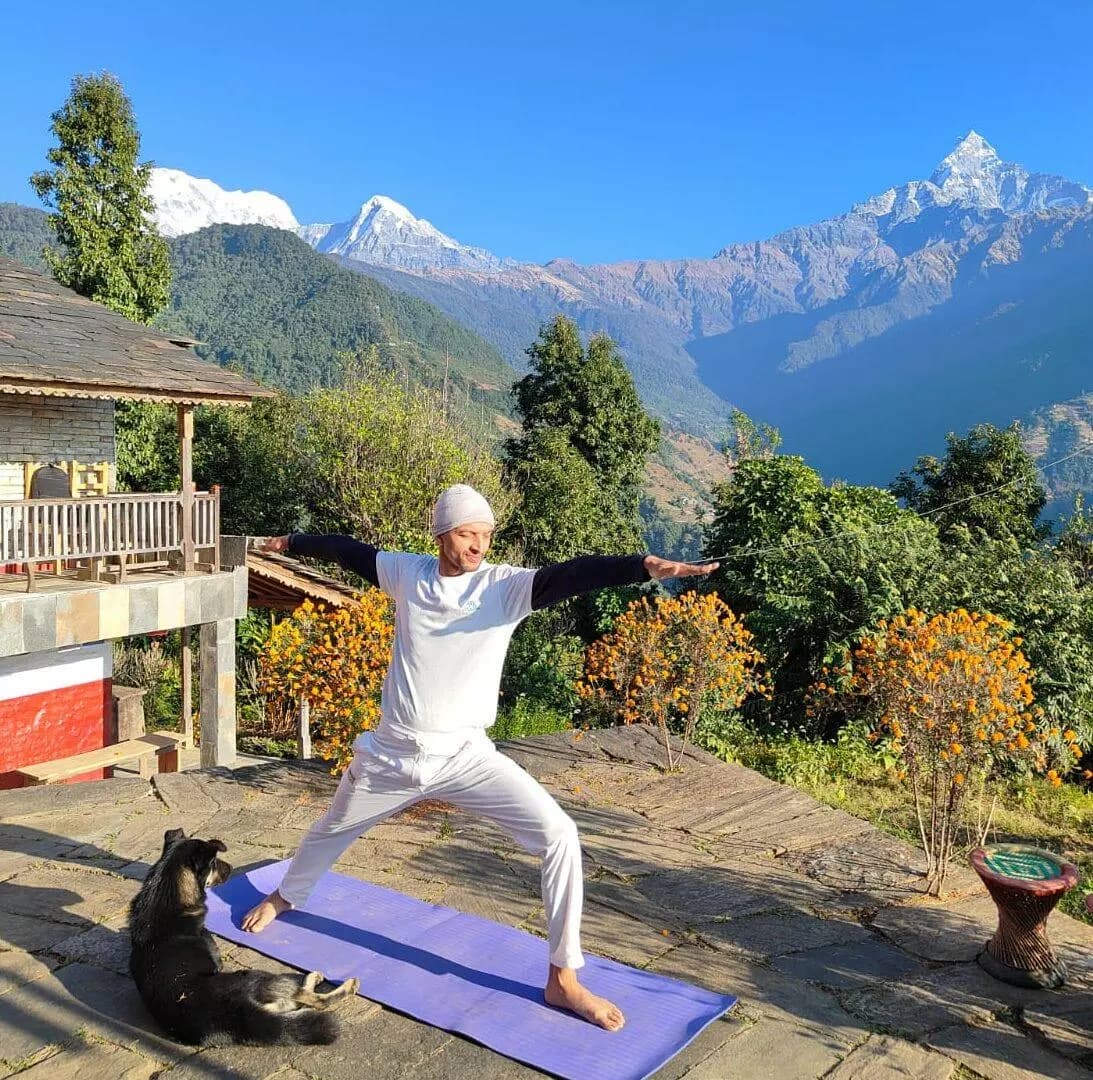
On an ordinary trek, you walk, you eat, you sleep, and you walk again. A yoga trek keeps all of that and adds a daily practice that is woven into the day rather than squeezed in. A yoga teacher walks the trail with you, not just a porter or guide, and the practice happens where you are: at a lodge, on an open ridge, or at a viewpoint as the sun comes up.
The key difference is in how the trek feels. An ordinary trek is mostly about reaching the next point. A yoga trek is about how you walk and how you arrive, slower, steadier, and more aware. Walking is still the main effort of the day. Yoga is there to support it.
Why combine yoga and trekking
Here are the real reasons the two belong together. Each one is practical.
Yoga prepares your body to walk. Trekking asks a lot of your legs, hips, and back over many days. A short morning practice warms the body, loosens stiff joints, and wakes up the muscles you are about to use. Over time, yoga also builds the strength and balance that help on rough ground: strong legs for the climbs, and a strong core that supports your spine and steadies you under a daypack.
Evening yoga helps you recover. This is where trekkers feel it most. After hours of walking, the muscles are tight and tired. A gentle evening practice eases that stiffness, helps clear the fatigue of the day, and leaves you looser for the next morning. Without it, soreness builds up day after day. With it, you recover as you go.
Breathwork helps with the thinner air. As you climb higher, there is less oxygen in each breath. This is where yoga's breathing practices, called pranayama, genuinely help. Slow, controlled breathing helps you use your lungs more fully and keep a steady supply of oxygen to your muscles, which supports both your stamina and your body's adjustment to height. Learning to breathe steadily also helps you hold a calm, even pace on the steep parts instead of gasping and stopping.
What to expect, day to day
The shape of a yoga trek day is steady and calm on purpose.
- Morning: You wake early and do a short, gentle practice before breakfast, some easy movement and breathing to warm the body for the day's walk.
- Daytime: You walk for a few hours, usually around four to six, at a relaxed pace, with breaks and lunch on the trail. Walking is the main effort of the day.
- Evening: At the teahouse, before dinner, there is a quieter session: guided meditation and gentle stretching to recover, often with mantra, deep rest, or a little yoga talk.
The practice is light and flexible. It is meant to help you rest and settle, not to add a second workout on top of the walking. You practise wherever the day puts you, at a lodge, on a ridge, or at a viewpoint, rather than in a studio.
The kinds of yoga you practise on a trek
A yoga trek usually includes several simple practices, each suited to life on the trail:
Gentle asana (postures). Slow, classical movement to warm up in the morning and to stretch out tired muscles in the evening. It is kept easy and adapted to the day, not a hard class.
Pranayama (breathwork). Breathing practices that calm the mind and support your breathing at altitude.
Guided meditation. A quiet sitting practice, often in the evening, to settle the mind after a day of walking.
Yoga nidra (deep rest). A lying-down practice that gives the body deep recovery, which is very welcome after a long day on the trail.
Mantra and chanting. Simple sound and repetition that calm the mind and add a gentle, traditional touch to the evenings.
Yoga philosophy. Short, easy talks about the ideas behind the practice, which fit naturally into the slow rhythm of the mountains.
You do not need to know any of these beforehand. They are taught simply and gently as you go.
Where you sleep and what you eat
Nights are spent in simple village teahouses along the trail, usually in twin-share rooms. They are basic but warm and friendly, and part of the experience of walking through the mountains.
The food is local and vegetarian. The staple is dal bhat, which is rice, lentils, and vegetables, plain, filling, and good fuel for walking. On a yoga trek, the meals are usually kept light and sattvic, which simply means simple, fresh food that keeps the body light and the mind calm. Warm soups, bread or rice, fruit, and herbal teas are common. Eating simply on the trail is part of why a yoga trek leaves you feeling clean and rested.
How fit do you need to be, and how to prepare
You do not need to be an athlete, and you do not need trekking or yoga experience. These trails involve steady walking with some uphill, but no climbing or technical skill. If you can walk for a few hours a day at an easy pace, you can do it.
A little preparation makes the days far more comfortable:
- Walk before you come. In the weeks before, take regular walks, ideally some with hills and a light pack. This is the single best preparation.
- Build some leg and core strength. Simple exercises for the legs and core help on the climbs and steady you under a daypack.
- Start with a little yoga and breathing. Gentle yoga improves your balance for rocky paths, and some breathing practice prepares you for the thinner air.
- Arrive rested. Do not turn up exhausted from a hard month. Give yourself a calm day or two in Pokhara first.
What to pack for a yoga trek
You do not need a lot, but a few things matter. The key idea for the Himalayas is layers, because the temperature changes a lot between walking in the sun and resting at a cold teahouse.
- Layered clothing. A wicking base layer, a warm mid-layer like a fleece, trekking trousers, and a warm down jacket for the higher, colder parts.
- Good footwear. Comfortable, broken-in trekking shoes or boots, with a few pairs of proper socks.
- A daypack. A comfortable pack with a waist strap for your daily things.
- A sleeping bag. A warm bag for the teahouses. These can be rented at an affordable rate in Nepal if you do not own one.
- A headlamp. Useful for early starts, such as a pre-dawn climb to a sunrise viewpoint.
- Sun and weather basics. Sun hat, sunglasses, sunscreen, a light rain layer, and a reusable water bottle.
- Comfortable clothes for yoga. Soft, loose clothes you can move and stretch in. A light mat is usually provided, but it is worth checking.
- Keep your bag light. A heavy pack makes every climb harder.
Altitude, and how to stay safe
Altitude is the one thing to take seriously on any Himalayan trek, so here is the honest picture. As you climb above about 2,500 to 3,000 metres, the thinner air can make some people feel unwell. This is called altitude sickness, or Acute Mountain Sickness (AMS).
The early signs are a headache, unusual tiredness, and loss of appetite, and they usually appear several hours after reaching a new height. The way to avoid it is simple: go up slowly and give your body time to adjust. Good itineraries gain height gradually and build in easy days rather than rushing upward. You should also drink plenty of water, around three to four litres a day higher up, eat well, walk at a steady pace, and tell your guide honestly how you feel. If symptoms get worse, the right answer is always to stop going up, and to go down if needed.
The good news is that the two routes most people start with are moderate. The Poon Hill trail reaches around 3,210 metres, and the Mardi Himal trail goes to about 4,200 metres, both high enough for grand views but well within reach for a fit beginner who climbs steadily and rests along the way. The daily breathwork and gentle yoga support that calm, steady approach.
When to go? Best Season for Yoga Trekking

The best months for a yoga trek in Nepal are spring, from March to May, and autumn, from October to December. In these seasons the weather is stable, the air is clear, and the mountain views are at their best. The heavy summer rains and the deep winter cold make the trails harder and the views less reliable. These are the same seasons that suit a stay at the ashram, so if you are combining a trek with a retreat, our guide to the best time for a yoga retreat in Nepal is worth a look.
Yoga trek or yoga retreat: which is which
People sometimes mix these up, so here is the simple difference. A yoga retreat keeps you in one place, an ashram or a centre, with a steady daily routine of yoga, meditation, and rest. A yoga trek is on the move: you walk a new trail each day and carry the practice with you. A retreat is deeper stillness in one spot. A trek is practice plus adventure, with a changing view every day. Many people do one of each, a few quiet days at the ashram before or after the trek, which balances the movement of the trail with proper rest.
Choosing your trek in the Annapurna region
Around Pokhara, in the Annapurna region, two routes are the natural starting points for a yoga trek, and they suit different people.
The Poon Hill Yoga Trek is the gentler and more accessible of the two, and a wonderful first Himalayan trek. It winds through rhododendron and oak forest and village teahouses, climbs before dawn to the Poon Hill viewpoint for sunrise over the Annapurna and Dhaulagiri ranges, and ends with a soak in natural hot springs. It is the easier choice for beginners and for a shorter time.
The Mardi Himal Yoga Trek is quieter and a little higher. It climbs out of the forest onto an open ridge with fewer trekkers and more solitude, up to a viewpoint that sits almost directly below Machhapuchhre, the Fishtail mountain. It suits those who want more height, more quiet, and a slightly longer walk.
Frequently asked questions
- What is a yoga trek?
A yoga trek is a multi-day walk in the mountains with a daily yoga and meditation practice built in. A teacher walks the trail with you, and you do a short, gentle session in the morning before walking and a quieter one in the evening at the teahouse. The practice happens outdoors, at lodges and viewpoints, and it is there to help you rest and settle rather than to add a workout.
2. Why combine yoga and trekking?
Because they help each other. Morning yoga warms up the body for the walk, evening yoga eases sore muscles and aids recovery, and breathwork helps you handle the thinner air and keep a steady pace. The daily meditation also makes the trek calmer and more present, so you take in the mountains instead of just covering ground.
3. Do I need yoga or trekking experience?
No. Yoga treks on the popular Annapurna routes welcome complete beginners. The walking needs no climbing or technical skill, and the yoga is gentle and adapts to your level. Some general fitness beforehand helps, but you do not need to be experienced in either to enjoy and finish one.
4. How fit do I need to be?
You need enough general fitness to walk a few hours a day at an easy pace with breaks. There is some uphill, but no climbing. Taking regular walks in the weeks before, ideally with hills, is the best preparation. The pace on a good yoga trek is relaxed and set so no one is left behind.
5. Are the yoga sessions compulsory?
No. The sessions are there for you, not as a duty. They are gentle and optional, so if you are tired one evening or want to rest, you can. Most people find that the morning and evening practices are exactly what help them feel good through a multi-day trek, so they choose to join.
6. Does yoga really help with altitude?
It helps, though it is not a magic fix. Yoga's breathing practices help you use your lungs more fully and keep oxygen flowing to your muscles, which supports your body as it adjusts and helps you keep a calm, steady pace. The main protection against altitude sickness is still a slow climb with time to adjust, plenty of water, and being honest with your guide about how you feel.
7. What should I pack for a yoga trek?
Layered clothing for changing temperatures (a wicking base layer, a fleece, trekking trousers, and a warm down jacket for higher up), comfortable trekking shoes, good socks, a daypack, a warm sleeping bag, a headlamp, sun protection, a water bottle, and soft clothes you can do yoga in. Keep your bag light. Anything you are missing can usually be bought or rented cheaply in Nepal.
8. What is the food and accommodation like?
You sleep in simple village teahouses, usually twin-share, and eat local vegetarian food. The staple is dal bhat, which is rice, lentils, and vegetables, with soups, bread, fruit, and herbal teas. On a yoga trek the food is kept simple and light, which suits the practice and leaves you feeling clean and rested.
9. When is the best time for a yoga trek in Nepal?
Spring, from March to May, and autumn, from October to December. These seasons bring stable weather, clear air, and the best mountain views. The summer monsoon and the deep winter make the trails harder and the views less reliable, so it is worth planning around the two good seasons.
10. What is the difference between a yoga trek and a yoga retreat?
A yoga retreat keeps you in one place with a steady daily routine of yoga, meditation, and rest. A yoga trek is on the move, walking a new trail each day with the practice carried along. A retreat is deeper stillness, a trek is practice plus adventure. Many people enjoy doing both, with a few quiet days at the ashram around the trek.
11. Which trek should a beginner choose?
For most first-timers, the Poon Hill route is the gentler and more accessible choice, with shorter days, a lower high point, and a famous sunrise. The Mardi Himal route is quieter and a little higher, and suits those who want more solitude and are ready for a bit more height. Both are doable for a fit beginner who takes it steadily.