Nepal suits yoga in all twelve months of the year. There is no closed season here, no month when the ashram shuts, and no month in which a serious practice is not possible. We teach in January, and we teach in July. If you want the case for the country itself, it is made on its own page. This one is only about the date.
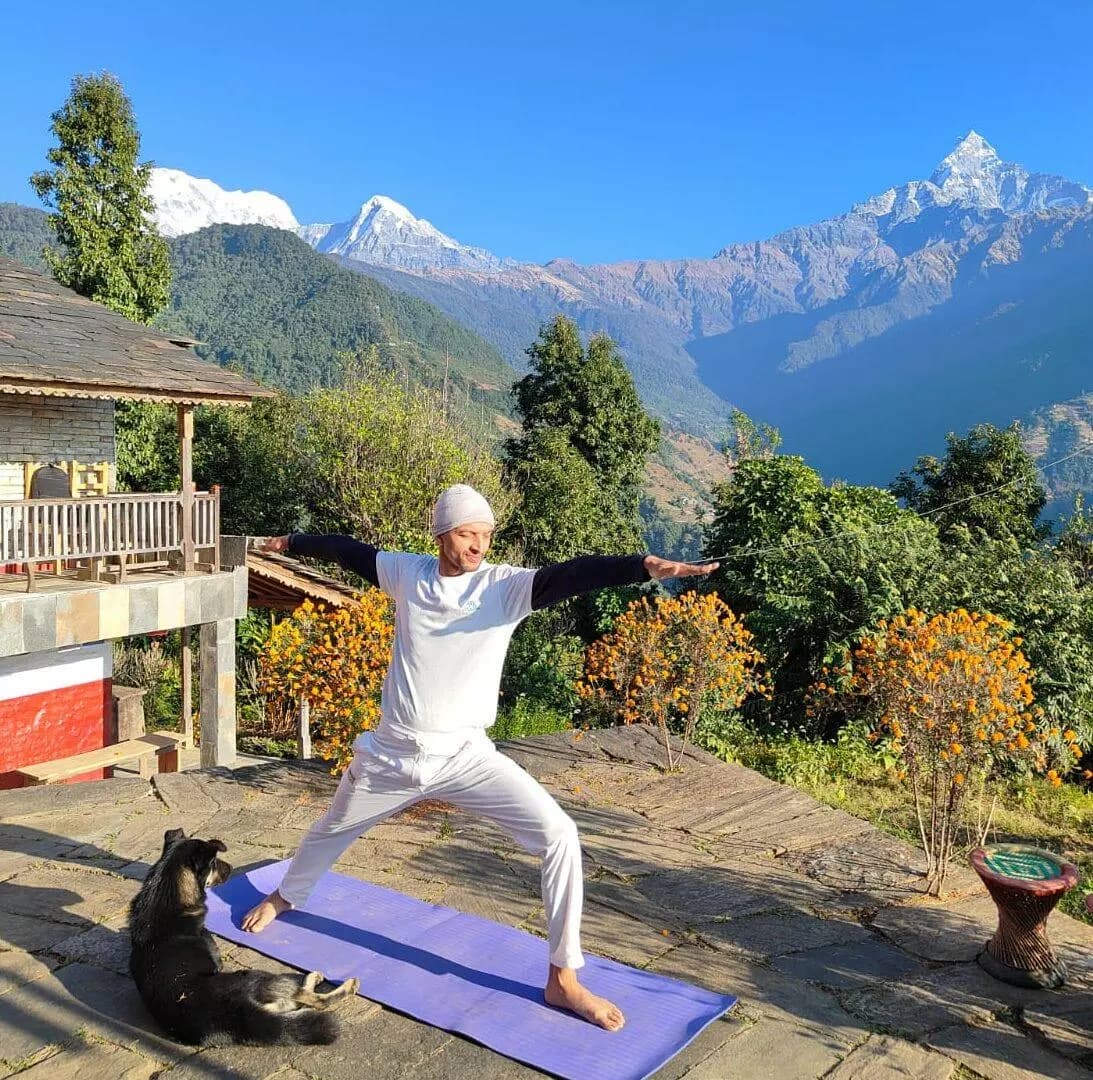
Because the date does change things. Someone walking out for the six o'clock practice in November stops in the middle of the path, because Machhapuchhre is standing there with the first light on it, and nobody warned them. The same person arriving in the second week of April can spend a whole week here and never see that mountain once. Not bad luck. The month.
So the question is never whether to come. It is which Nepal you are booking. The country does not have one climate that gets slightly better or slightly worse as the year turns. It has four or five quite different countries that take turns, and every one of them is generous with something and careful with something else.
Answer first: pick your month from what you want
If you read nothing else, read this table. Find the row that sounds most like you and take the month next to it.
| What you are actually coming for | Go in | Why |
| The Himalaya, guaranteed, as the main reason | Late October to early December | Cleanest air of the year, driest skies, mountains out most mornings |
| Your first ever ashram stay | February, March, October or November | Mild days, cool nights, easy to sleep, easy to practise, nothing extreme |
| Warmth, flowers, long days and green hills | Late March to early May | Rhododendron on the ridges, warm terraces, long evenings |
| Deep quiet, few other guests, low prices | Late June to August | The rains empty the country of visitors |
| Silence, stillness and long sitting | December to early February | Cold, clear, dark early, almost nobody around |
| A cleanse or detox | Late February to April | The one time of year the classical texts actually recommend it |
| A yoga trek in the mountains | October, November, March, April | Stable weather on the trails and open views |
| A 200 or 300 hour teacher training | Start in late September, or mid February | The course runs through the steadiest stretch of the year |
| The lowest total cost of the trip | July and August | Cheapest flights, cheapest rooms, cheapest everything |
| Nepali culture at full volume | Mid October to mid November | Dashain and Tihar, the two biggest festivals of the year |
Peak season and off season, and why both work
Two windows carry most of the year's bookings, and both of them have earned it.
- Autumn, roughly late September to early December. The rains have gone, the air has been washed clean, the days are warm and the nights are cool. This is the peak, and it is peak for a good reason.
- Spring, roughly late February to early May. Warm, green, flowering, long daylight, stable weather, and the trekking trails reopen properly.
- Both of those are true, and both get more interesting the closer you look. Each of them has a weaker half worth knowing about, and the two seasons that get less attention have a real case of their own.
- The less reliable half of spring is April. The weather is lovely. The visibility often is not, and that one fact shapes more bookings than anything else on this page.
- The less reliable half of autumn is late September. The monsoon does not stop on a date. It thins out over two or three weeks, so a late September booking is often made in the belief that it is an autumn one.
- The strong case for the monsoon is that the hills are at their most alive, the ashram is quiet enough that you get something close to private teaching, the practice turns inward exactly when the weather asks it to, and the whole trip costs less.
- The strong case for deep winter is that the air is at its clearest of the entire year, the sky over the Annapurnas is often flawless, the country is empty, and the cold is the honest kind, cold mornings and warm afternoons rather than cold days.
Neither of those is a consolation prize. They are simply two of the four Nepals, and the one you want depends on the two questions above.
How Nepal actually divides the year
Before the seasons themselves, it helps to know that there are three different calendars operating here at once, and they do not agree with each other.
The Nepali calendar, Bikram Sambat
Nepal runs officially on Bikram Sambat, which is about 56 years and 8 months ahead of the Gregorian calendar and starts its year in mid-April. Its twelve months begin in the middle of our months rather than on the first, which is why Nepali seasons always seem to be offset by a fortnight from the ones a visitor expects.
| Nepali month | Roughly covers |
| Baisakh | Mid April to mid May |
| Jestha | Mid May to mid June |
| Ashadh | Mid June to mid July |
| Shrawan | Mid July to mid August |
| Bhadra | Mid August to mid September |
| Ashwin | Mid September to mid October |
| Kartik | Mid October to mid November |
| Mangsir | Mid November to mid December |
| Poush | Mid December to mid January |
| Magh | Mid January to mid February |
| Falgun | Mid February to mid March |
| Chaitra | Mid March to mid April |
Most festivals are set by the lunar month rather than the solar one, which is why Dashain can fall in late September one year and late October the next. If a festival matters to your booking, check the date for your specific year rather than assuming.
The six seasons of Ayurveda, and why they change the advice
The classical texts do not divide the year into four seasons. They divide it into six, each of about two months, and they attach a different regimen to each. This is called ritucharya, the seasonal routine. Vagbhata gives it the whole third chapter of the Sutrasthana in the Ashtanga Hridayam, and Charaka covers the same ground in Sutrasthana chapter six.
| Ritu | Season | Roughly | What is rising |
| Shishira | Late winter, cool and dewy | Mid January to mid March | Kapha builds up quietly |
| Vasanta | Spring | Mid March to mid May | Kapha flares, so this is the cleansing season |
| Grishma | Summer, the hot pre monsoon | Mid May to mid July | Vata builds up, agni is at its weakest |
| Varsha | The rains | Mid July to mid September | Vata flares, digestion is unreliable |
| Sharad | Autumn | Mid September to mid November | Pitta flares as the sun returns to a clear sky |
| Hemanta | Early winter | Mid November to mid January | Everything settles, agni is at its strongest |
The pattern underneath that table is the useful part, and it is simple once you see it. Nothing in the body goes wrong all at once. It builds up quietly first. Then it tips over. Then it settles down again. Each of the three doshas goes through that same three-step cycle once a year, and each one does it at a different point in the year.
The three steps have names, and they are worth knowing because you will hear them here. The quiet build-up is chaya. The tipping over is prakopa. The settling is prashama.
The three doshas explain them properly, and Ayurveda for beginners covers the wider system.
Nepal season by season
Four seasons, each with a data strip, what it is like to be here, what the season does to practice, the festivals inside it, and what it suits. Temperatures are for the ashram at 1,320 metres, so they run about three degrees below any Pokhara forecast. If you want the figures for one particular month, they are in the table above.
Spring: March to May
- 24 to 27 C days
- 10 to 17 C nights
- 45 mm of rain in March rising to 330 mm in May
- March is the sunniest month of the year
- Clear early, hazier later
Spring starts beautifully and gets heavier as it goes.
- Early March. The best of it. Warm days, cool nights, long light, hills going green, rhododendron above 2,000 metres, air still mostly clear.
- Late March and April. The pre-monsoon pattern sets in and brings haze with it.
- May. Heat and humidity build, with thunderstorms several evenings a week. The morning after a storm can give light on the Annapurnas as clean as anything in November.
The haze, which decides more spring bookings than anything else. Burning across the region combines with dust that has had no rain to wash it away, and the layer can sit over the country for weeks.
- Some years, visibility in the Pokhara valley drops below eight kilometres, closing the airport on and off in peak season
- April 2025: readings above 300, the band classed as hazardous, and around 1,300 forest fires logged in the month to 5 April
- Mornings beat afternoons, Ghachowk sits above the worst of the valley layer, and a thunderstorm clears the air for a day or two
- The Mardi Himal route climbs above much of it
If the mountains are the main reason for your trip, April is not the month to count on them.
In the Ayurvedic year, March and April are vasanta, the cleansing season. The kapha gathered all winter loosens as snow melts, and the answer is light food, less sleep, more movement, and the cleansing practices, including neti. Our detox retreat is built on that logic, and March is when it fits best.
The three big days of spring
| Festival | 2027 date | What happens |
|---|---|---|
| Holi, or Fagu Purnima | 22 March | Powder and water thrown at everyone. Pokhara becomes a day long water fight |
| Baisakh 1, Nepali new year | 13 April | A family and public holiday, not a religious one |
| Buddha Jayanti | 20 May | Full moon marking the Buddha's birth, awakening and passing. It carries more weight here because Lumbini is in Nepal |
Nepali festivals move with the lunar calendar, so check a current calendar before booking flights around one.
Suits: cleansing and detox work, flowers and green hills, comfortable mid-altitude trekking, long warm evenings.
Monsoon: June to September
- 26 to 28 C days
- 18 to 19 C nights
- 600 to 943 mm of rain a month
- 3 to 4.5 hours of sun
- Mountains rarely visible
- Early June, before it breaks. The least rewarding stretch of the year: the heat and haze of May without the rain that clears them.
- Mid June. The monsoon normally arrives on 13 June. Within a week the dust goes, the hills turn a green that is hard to describe, waterfalls appear on cliffs that had none, and the valley fills with cloud each morning and clears by lunch.
- July. The wettest month, nearly a metre of rain across twenty days.
- August. Much the same, slightly less water, considerably more happening.
- September. Thins out. The last week is often one of the best of the whole year.
In the Ayurvedic year, this is varsha, when vata flares and digestion is unreliable, so food turns warm, light, well cooked and never raw. The texts also advise against hard fasting and heavy cleansing in exactly this season, which surprises people who arrive expecting the opposite.
The festivals here belong to the village rather than to visitors, which is part of why the monsoon shows you more ordinary Nepali life than the busy months do.
| Festival | Date | What happens |
|---|---|---|
| International Day of Yoga | 21 June | Public events across the country |
| Guru Purnima | First full moon after the summer solstice | The ashram's most significant day, given to the teacher and student relationship. Quiet, no procession, nothing to watch |
| Janai Purnima | 17 August 2027 | The sacred thread renewed, and a protection thread tied at the wrist |
| Teej | 22 August 2027 | The women's festival. Red saris, fasting, singing and dancing for most of a day |
Autumn: late September to November
- 21 to 26 C days
- 9 to 18 C nights
- Rain falling from 200 mm in October to 30 mm in November
- 7 hours of sun
- The clearest views of the year
Autumn is the season Nepal is famous for, and it earns it. The air has just been washed by four months of rain, the ground is still green, days are warm without being hot, nights are cool enough for real sleep, and the Annapurnas are out almost every morning.
- Late September. Still the monsoon in its last weeks rather than autumn proper, since the monsoon withdraws around 2 October. People book these dates believing they have booked autumn. If your dates flex by even five days, push them later.
- October. The busiest month in the country by a clear margin. Nepal received 128,443 international visitors in October 2025, the highest of any month that year.
- November. Crowds thin while the air keeps getting drier and clearer. Given a free choice, this is the month we name.
In the Ayurvedic year, October is sharad, when pitta rises as the sun returns onto a wet landscape, so people arriving from a hot summer at home often need a few cooling days rather than the strong heating practice they expect. By mid-November comes hemanta, when strength and digestion are said to be at their highest, which is why the more demanding courses sit well here.
The two largest festivals of the year, and they behave very differently
| Festival | 2026 dates | What happens |
|---|---|---|
| Dashain | 11 to 25 October, Tika on 21 October | Ten days. The ashram keeps running, though the village around it is on holiday |
| Tihar | 6 to 11 November | Five days of lights. Oil lamps along every wall and doorway, marigold garlands, children going house to house singing, and crows, dogs and cows each honoured on their own day. The gentlest of the great festivals, and it barely affects travel |
Winter: December to February
- 17 to 19 C days
- 4 to 6 C before dawn
- Almost no rain, as little as 12 mm in December
- Mountains almost every morning
Winter is the season people underestimate. The country is quiet, flights are cheaper, and it gets written up as an off-season. The air says something else. No monsoon moisture, no pre-monsoon dust, no smoke yet, so the Annapurnas are simply there when you walk out. Visibility through December and January is the best of the year alongside November.
The cold is real but narrow. Days are pleasant and often warm enough to practise outside by mid-morning. It is the two hours before sunrise you feel it, because buildings here are built for heat rather than cold. And to answer the question everyone asks: it does not snow at 1,320 metres. Frost on the grass is as far as it goes. The snow you are looking at is on the ridges above you.
In the Ayurvedic year, this is Hemanta running into shishira, the strongest part of the year, when digestion peaks and the body takes hard work well. It matches what we see, since people eat more here in December than in any other month. By February, kapha is quietly building, felt as heaviness in the morning and thickness in the chest and sinuses, which is why the cleansing practices start in late February rather than waiting for spring.
Three days sit in this season
| Festival | Date | What happens |
|---|---|---|
| Tamu Losar | 30 December | The Gurung new year. Ghachowk is a Gurung village, so it happens on our doorstep. Family food, gathering and dancing rather than temple ritual |
| Maghe Sankranti | 14 or 15 January | Marks the sun's turn north, and is eaten rather than performed: sesame sweets, yam, ghee and khichari |
| Maha Shivaratri | 6 March 2027 | The great night of Shiva. The fast runs through the day, the chanting through the night. The biggest night of the year in our own lineage, and Pashupatinath draws sadhus from across the subcontinent |
Match the season to the practice you are coming for
The right month depends less on the weather than on what you intend to do here. This is the part of the decision that travel calendars cannot help with.
If you are coming mainly for asana.
Cool air is better than warm air for a strong physical practice, and cold air is worse than both. October, November, February and March are the sweet spot, when you can practise on an open terrace without needing a long warm-up and without overheating by the third round of surya namaskar. In December and January, expect the teacher to give you noticeably more warm-up than you would get in October, because cold muscles need it and the risk of pushing a cold body into a deep stretch is real. In the monsoon, practice moves indoors, and the humidity means you will sweat more with less effort. The intense yogasana retreat is best taken in the cooler half of the year.
If you are coming mainly for meditation and silence.
The weather barely matters, and the daylight matters a great deal. Short days and long dark evenings support sitting practice, which puts December and January first, with November and February close behind. The monsoon comes next, because rain keeps you in. The worst months for sitting are the long, hot, bright ones from late April to early June, when the body wants to be outside and the pre-dawn hour lands before four in the morning.
If you are coming for a cleanse.
If you are coming for Ayurvedic treatment or massage. The oil-based therapies are most comfortable in the warm, dry parts of the year and in the settled cool of autumn. The Ayurveda healing retreat and the sound healing and Ayurvedic retreat run all year, but October, November, March and April are when the body takes oil work most easily.
If you are coming for sound healing or a singing bowl course.
Season is close to irrelevant. It is indoor work with no weather dependency at all, which makes it one of the better things to book in the monsoon, when the ashram is quiet, and the teaching becomes almost private.
If you are combining yoga with trekking.
October, November, March and April, in that order. Poon Hill at 3,210 metres is walkable in most months but only rewards you when the sky is open. Mardi Himal goes considerably higher and is a spring and autumn route. The one exception is the Mustang side of the range, which sits in the rain shadow behind the Annapurnas and stays dry through the monsoon, which is why the Muktinath route works in summer when nothing else does. There is more on the pairing in why yoga and trekking belong together.
How long you are staying changes which month to pick
This is the factor almost nobody accounts for, and it matters more than any single weather statistic.
A short stay of three or four nights.
Season matters most here, because you only get three or four mornings and there is no second chance at a clear one. On a short stay, book October, November or December and accept that you are paying peak prices for certainty. A three-night stay in July is a lovely quiet break, but it is not the trip to book if you want the mountains.
A week.
A week is long enough to absorb one or two bad days. Any month from late September to early May works. The week-long immersion is the length most people take, and it is also the length at which the monsoon starts to make sense, because a week of rain with three or four other guests is a genuinely different and deeper experience than a week of sunshine with twenty.
Two to three weeks, including a 100- or 200-hour training.
Now you are almost certain to cross a weather change, so pick a start date rather than a season. The steadiest three-week windows in the year are roughly the start of October to the end of December, and the middle of February to the middle of April. Avoid a start date that puts the middle of your course in the middle of June or the middle of September, because those are the two seams where the weather is least predictable. The 200-hour training]() runs 21 days, so a late September start finishes in the best part of October, and a mid-February start finishes in the best part of March. Those are the two dates we would pick.
Twenty-five days or more, including the 300-hour.
At this length you should stop optimising for weather and start optimising for your own capacity. A long course in the hot months is harder work than a long course in the cool ones, and the classical view agrees, since strength and digestion are highest between November and January. If you are considering a stay of a month or more, the long stay option explains how that works, and the teacher training overview covers course dates.
A whole season. People do this, and if you can, the four months from October to the end of January are the finest stretch of the year to be here, from the clean air of autumn straight through the winter clarity into the deepest sitting months.
The visa, and why the length matters
Nepal issues a tourist visa on arrival for most nationalities, at the airport or at a land border. It comes in three lengths, 15, 30 and 90 days, and the fee rises with the length. Extensions are possible: you apply online, then attend an immigration office in person, and they are charged as a minimum block of fifteen days plus a daily rate after that.
Fees and rules change, so check the current ones with Nepal's Department of Immigration before you book flights. What follows does not change.
Frequently asked questions
- What is the overall best time for a yoga retreat in Nepal?
You can come at any time of year, because Nepal has no closed season for this and the ashram runs all twelve months. If you want the single easiest month, it is November, followed closely by October and then December. Those three give you dry weather, clean air, mountains visible almost every morning, warm days and cool nights, which is the combination that makes a retreat restorative rather than tiring. The second window is mid-February to mid-March, which is quieter and cheaper and only slightly less reliable. If a mountain view is not the reason you are coming, this answer changes completely and the quiet months become the better ones.
2. Is the monsoon really a bad time for a yoga retreat?
No, and the assumption that it is comes from thinking of a retreat as a holiday with views. If you are here for meditation, philosophy, pranayama, chanting, sound work or silence, the rains are one of the best times of year, because you are indoors anyway and the ashram holds three or four guests instead of twenty. What you lose is the mountain view, high altitude trekking, and reliable travel days. What you gain is close to private teaching, steep green hills, a much cheaper trip, and a quality of quiet that the peak months simply do not have.
3. Which month has the clearest mountain views?
November, then December, then January, with late October close behind. The reason is simple: the monsoon has washed the dust out of the air, and the pre-monsoon burning has not started yet. In those months, the Annapurnas and Machhapuchhre are visible on most mornings from the ashram terrace. Mornings are almost always clearer than afternoons in every month of the year, so if the view is important, be up early rather than sleeping in.
4. Does the ashram close during Dashain or Tihar?
No. The schedule continues through both, and being here during Tihar in particular is a genuinely beautiful thing. What changes is the village and the country around us. During the week around Dashain Tika day, shops close, buses and domestic flights fill with people travelling home, and much of the workforce is away with family. Plan your arrival and departure days outside that week if you can, and expect a quieter village if you are here through it.
5. What is the best month for a first ashram stay?
February, March, October or November. Those months ask nothing difficult of you physically, which means your attention goes to the practice rather than to being too hot, too cold or too wet. February and March have the additional advantage of being quiet, so a new arrival gets more of a teacher's attention than they would in a full October week. If you want to know what those first days actually feel like, our guide to your first week at an ashram describes it honestly.
6. Is it worth coming for only three or four nights?
Yes, but the month matters far more on a short stay than on a long one. With three mornings, there is no second chance at a clear one, so a short booking should sit in October, November or December if the setting is part of what you are coming for. If you are coming for the practice rather than the view, a short stay works in any month, and a quiet monsoon week gives you more individual teaching in four days than a full October week gives in seven.