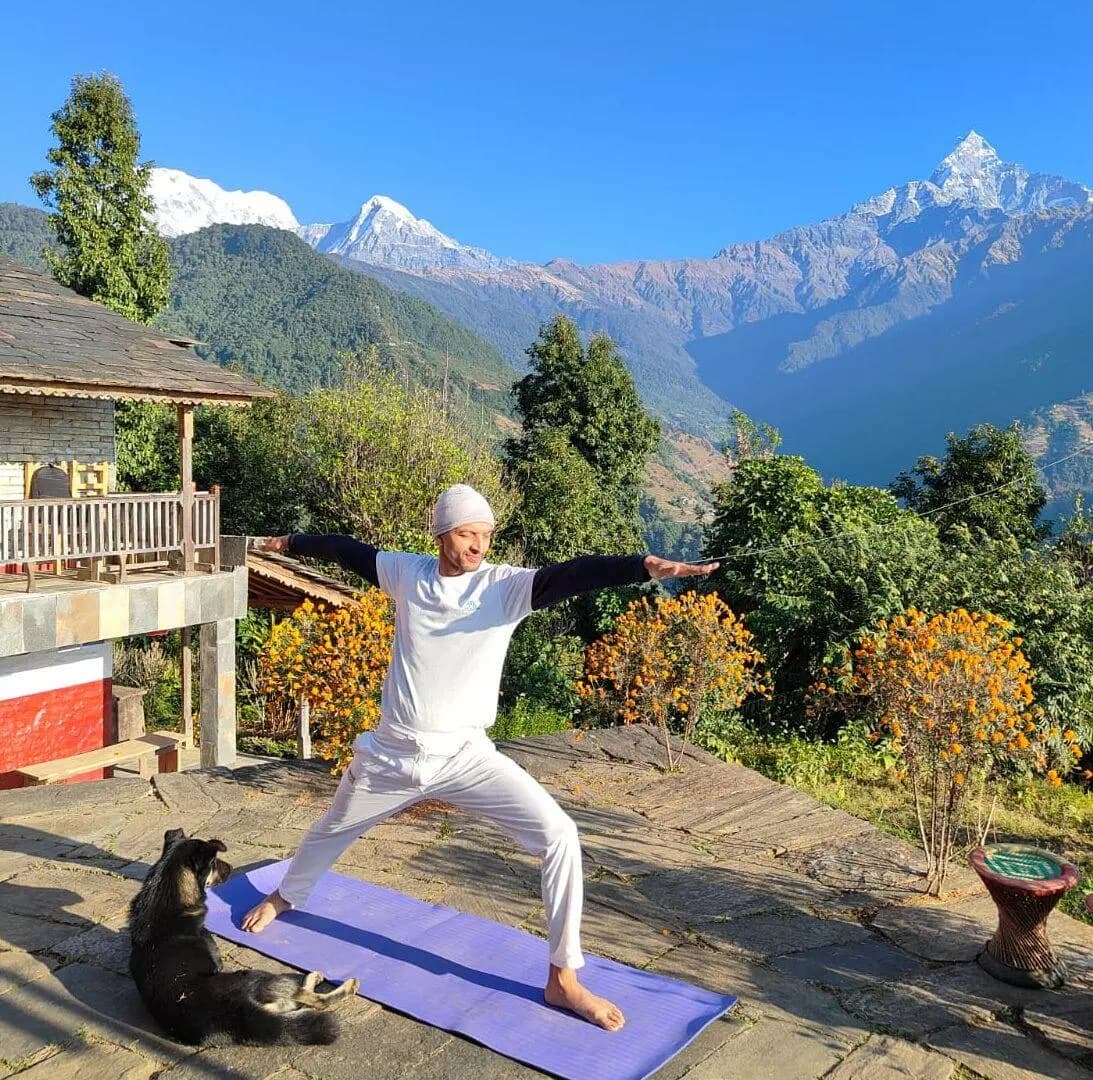
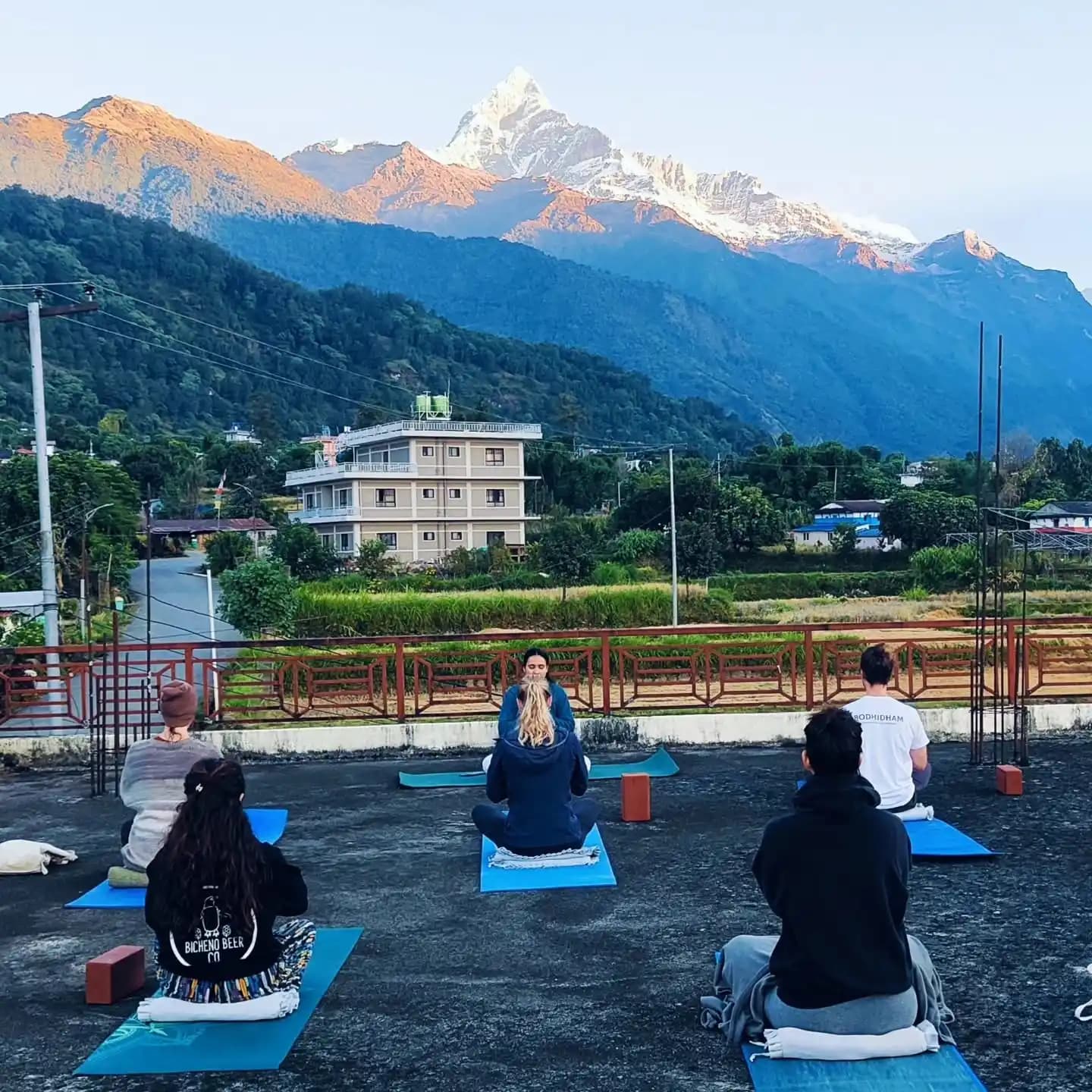
A gentle 15-minute morning yoga routine for beginners: 11 simple poses done before breakfast, based on how we start the day at our ashram near Pokhara.
Morning yoga for beginners works best as a short, gentle routine done before breakfast. This one takes about 15 minutes and uses 11 simple poses, with no experience needed. It starts seated with slow breathing, warms the spine on hands and knees, moves through three rounds of Surya Namaskar and finishes lying down. You need a mat or a rug, a little floor space and an empty stomach.
The routine follows the shape of a morning at Bodhidham, our ashram near Pokhara in Nepal, where practice comes before breakfast. This is a short version you can do at home before work.
The 15-minute morning yoga routine at a glance
Move slowly and breathe through the nose. The times are a guide.
- Seated breathing in easy pose (Sukhasana): 2 minutes
- Cat and cow (Marjaryasana and Bitilasana): 1 minute
- Child's pose (Balasana): 1 minute
- Downward-facing dog (Adho Mukha Svanasana): 1 minute
- Low lunge (Anjaneyasana): 1 minute each side
- Sun Salutation (Surya Namaskar): 3 slow rounds, about 3 minutes
- Mountain pose (Tadasana): 30 seconds
- Tree pose (Vrksasana): 30 seconds each side
- Standing forward fold (Uttanasana): 1 minute
- Seated forward bend (Paschimottanasana): 1 minute
- Corpse pose (Savasana): 1 to 2 minutes
Before you start
- Practise on an empty stomach. First thing in the morning is easiest. A glass of warm water or a cup of herbal tea beforehand is fine. Leave breakfast until afterwards.
- Use a mat or a rug on a floor that does not slip. A folded blanket helps under the knees and as a cushion to sit on.
- Keep it gentle. The body is stiffer in the morning than in the evening. Bend your knees in the folds and stop at a mild stretch, short of pain.
- Breathe through the nose, and never hold your breath to get deeper into a pose.
- Take care if you are pregnant, or have high blood pressure, a heart condition, a hernia, or a back or wrist injury. Practise gently, use the easier versions below, or learn with a teacher first. Stop if you feel pain or dizziness.
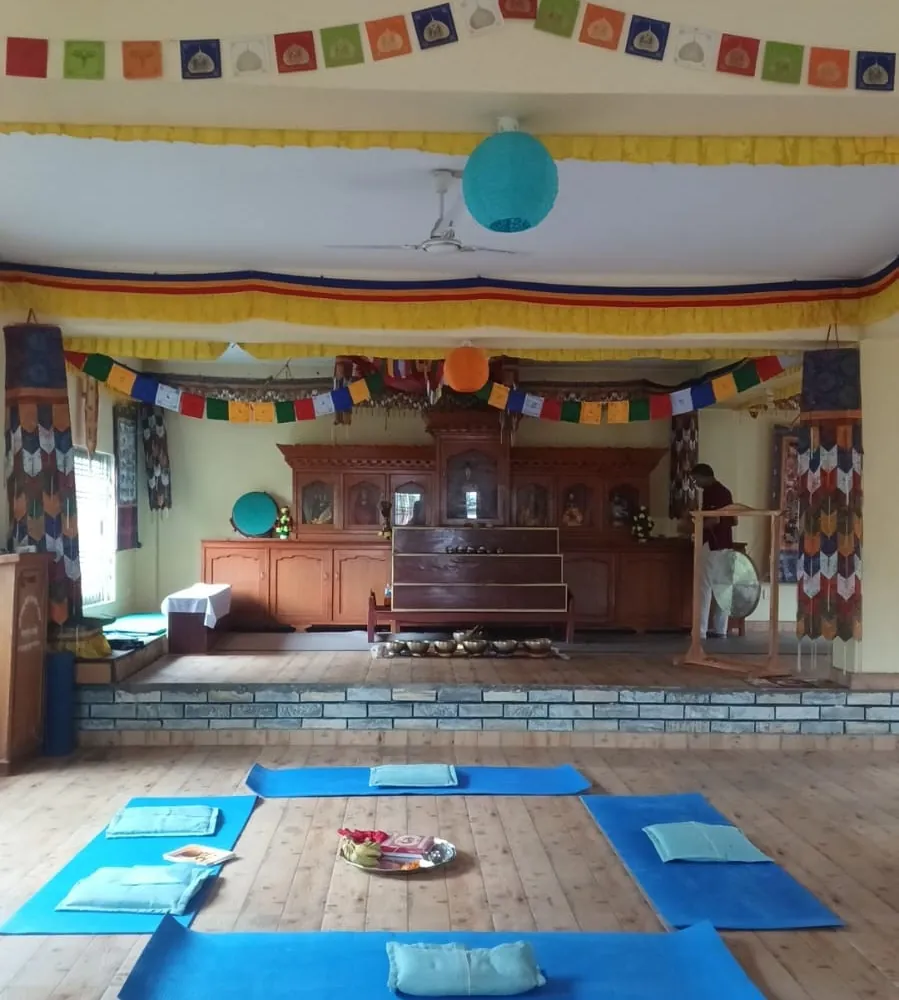
The routine, step by step
1. Seated breathing in easy pose (Sukhasana)
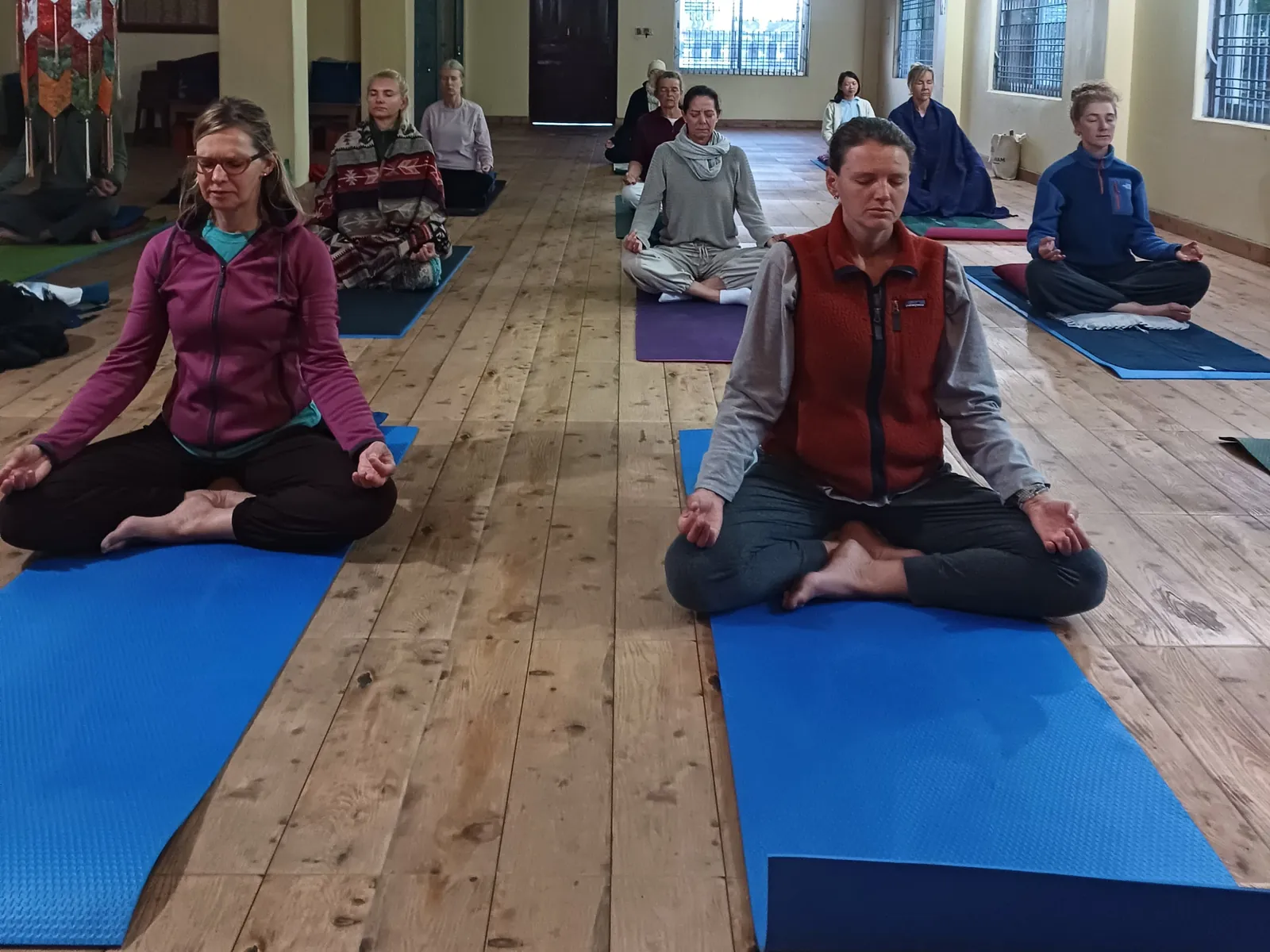
Sit cross-legged on a folded blanket, so your hips are a little higher than your knees. Lengthen your spine and close your eyes. Rest one hand on your belly and the other on your knee. Breathe in slowly through the nose and let the belly rise, then breathe out and let it fall. Stay for about 2 minutes, roughly 12 slow breaths.
Easier: sit on a chair with both feet flat on the floor.
Common mistake: slumping. If your lower back rounds, sit higher on the blanket.
This is the deep belly breathing from our pranayama guide for beginners, and every other step in this routine builds on it.
2. Cat and cow (Marjaryasana and Bitilasana)
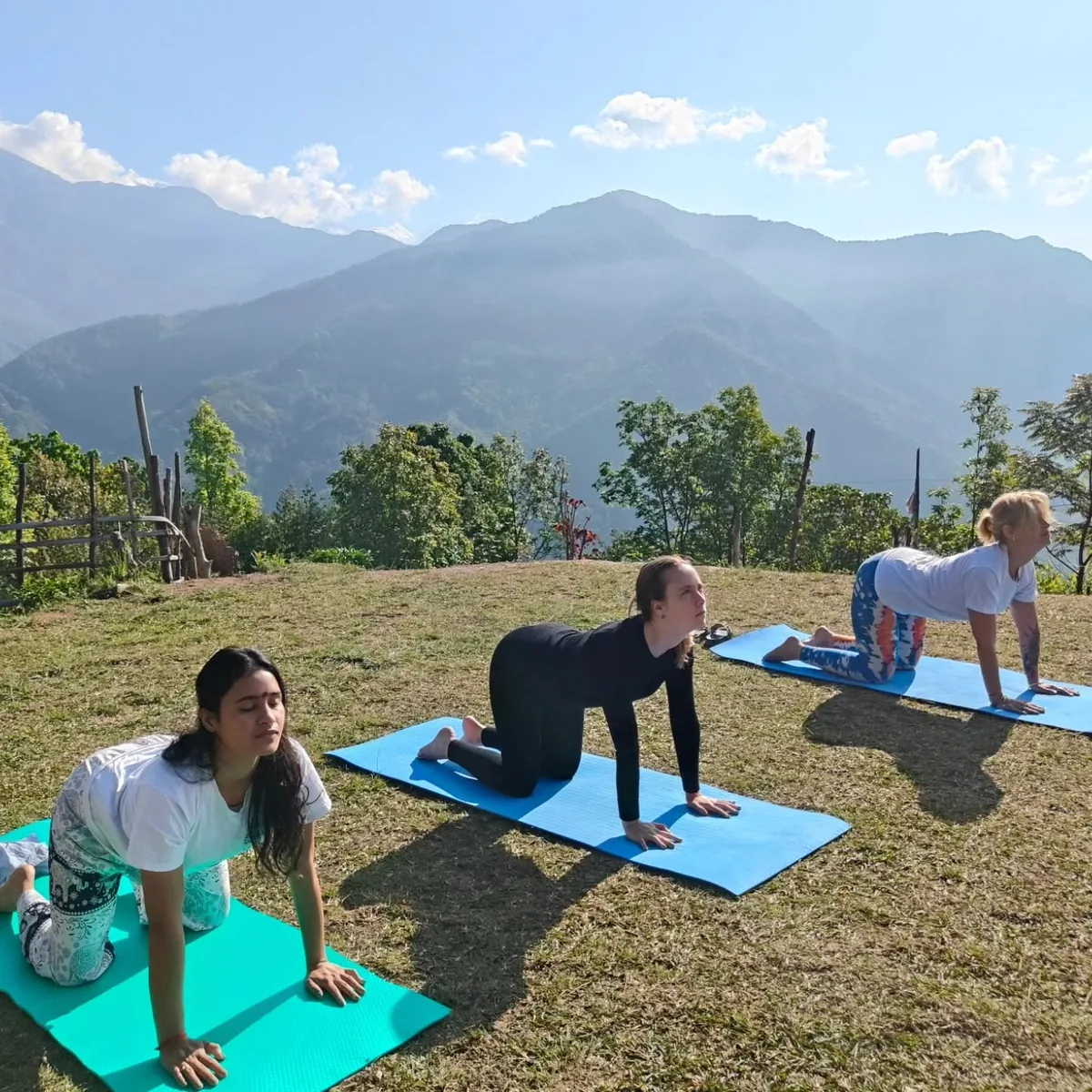
Come onto your hands and knees, wrists under shoulders and knees under hips. As you breathe in, let the belly drop and lift the chest and gaze (cow). As you breathe out, round your back and tuck your chin (cat). Move with the breath for 6 to 8 slow rounds.
Easier: put a folded blanket under your knees, or do it seated on a chair with your hands on your thighs.
Common mistake: moving faster than the breath. Let each breath set the pace.
3. Child's pose (Balasana)
From hands and knees, bring your big toes together, widen your knees a little and sit back towards your heels. Fold forward and rest your forehead on the mat, with your arms stretched out in front or resting by your sides. Breathe slowly into your back for about 1 minute.
Easier: put a cushion between your heels and your buttocks, or under your forehead.
Take care if you have a knee injury. Lie on your back and hug your knees to your chest instead.
4. Downward-facing dog (Adho Mukha Svanasana)
From hands and knees, tuck your toes and lift your hips up and back, so your body makes an upside-down V. Spread your fingers and press the floor away. Keep your knees bent at first and let your heels move towards the floor without forcing them down. Pedal your feet slowly, bending one knee and then the other. Stay for about 1 minute, then lower your knees.
Easier: keep your knees well bent, and rest on your knees between breaths if you need to.
Common mistake: straightening the legs too soon, which rounds the back. A long spine matters more than straight legs or heels on the floor.
Take care if your wrists hurt. Come down onto your forearms instead.
5. Low lunge (Anjaneyasana)
From downward dog, step your right foot forward between your hands and lower your left knee to the mat. Keep the front knee over the ankle. Lift your chest, rest your hands on your front thigh and let your hips sink forward until you feel a stretch at the front of the left hip. Stay for 6 to 8 slow breaths, then switch sides.
Easier: put a blanket under the back knee, and keep your hands on the floor either side of the front foot.
Common mistake: letting the front knee move past the toes. If it does, step the front foot further forward.
6. Sun Salutation (Surya Namaskar), 3 rounds
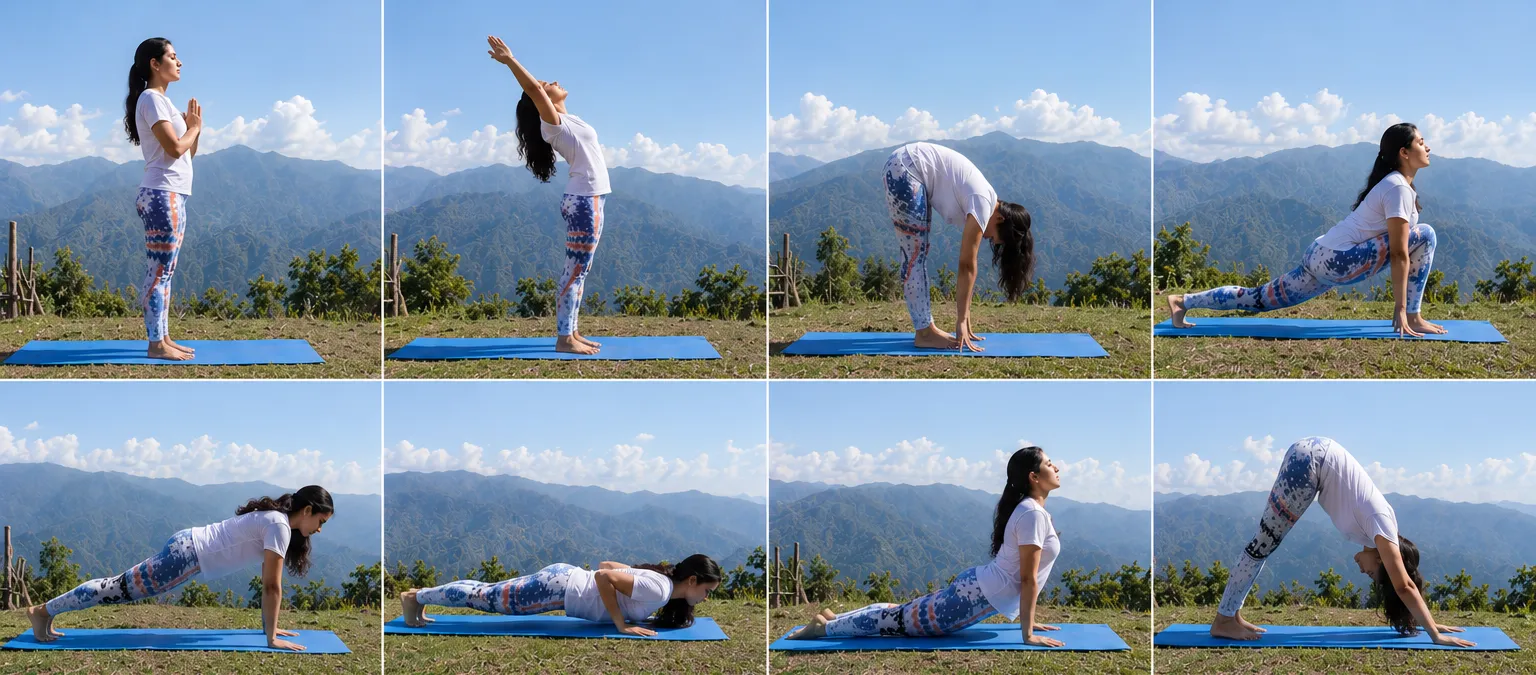
Now that the body is warm, link the poses into a flow. Surya Namaskar is twelve poses joined into one round: you move from standing down to the floor and back up again, breathing in as you open and lift, and breathing out as you fold and lower. It includes the downward dog and low lunge you have just practised.
Do three slow rounds, changing the leading leg each round. Our step-by-step Surya Namaskar guide takes you through all twelve steps and the breath for each one.
Easier: lower your knees to the floor from plank, and lift only a little way into cobra.
Common mistake: rushing. Keep every movement as long as its breath.
7. Mountain pose (Tadasana)
Come to standing at the front of your mat with your feet hip-width apart and your weight spread evenly through both feet. Let your arms hang by your sides and soften your shoulders. Take 3 to 5 slow breaths and notice how the body feels after the Sun Salutations.
Common mistake: locking the knees. Keep them soft.
8. Tree pose (Vrksasana)
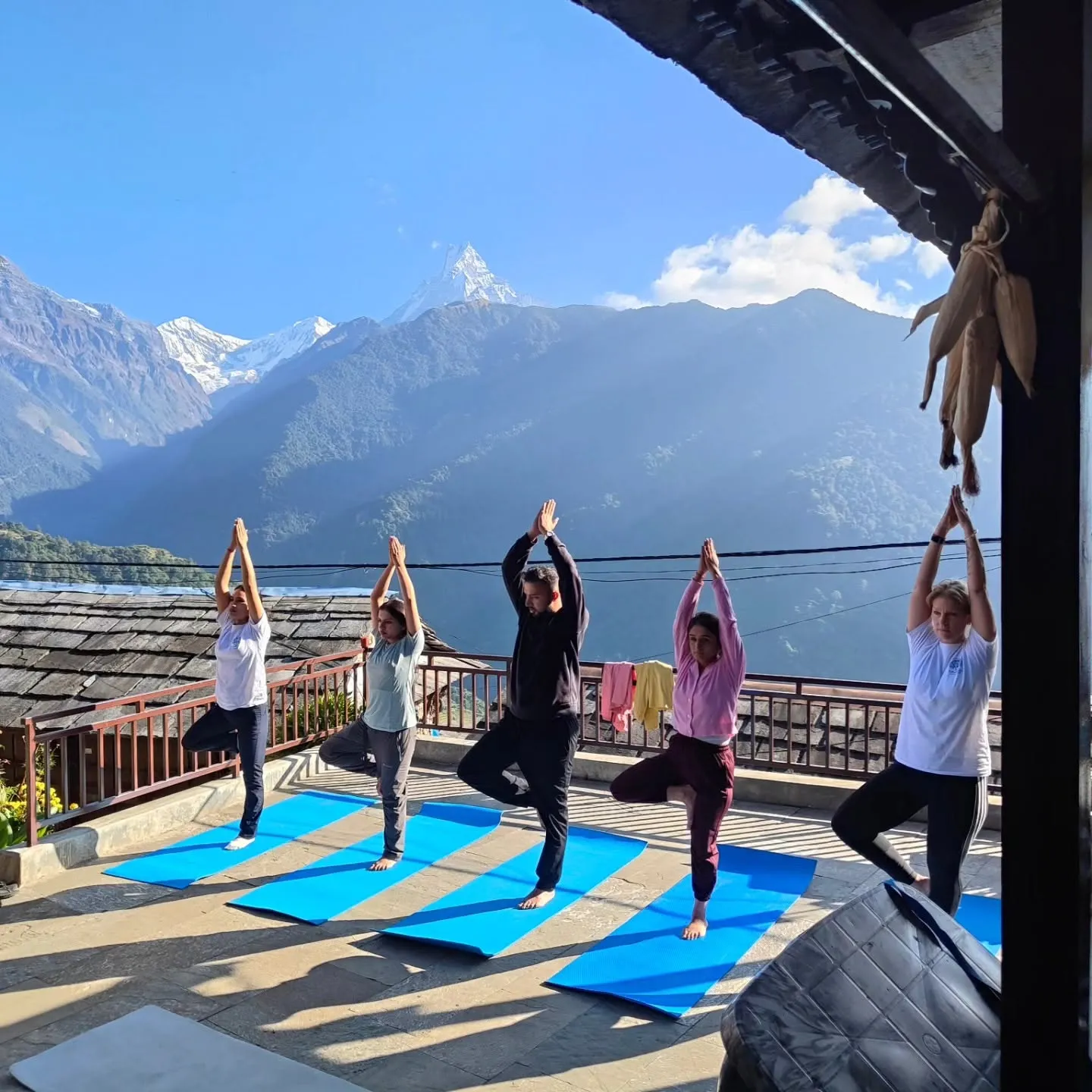
Shift your weight onto your left foot. Place the sole of your right foot on your inner left calf or inner thigh, avoiding the knee joint itself. Bring your palms together at your chest or raise them overhead. Fix your gaze on one still point. Stay for 3 to 5 breaths, then switch legs.
Easier: keep your right toes on the floor with the heel resting on your left ankle, or stand next to a wall.
9. Standing forward fold (Uttanasana)
Stand with your feet hip-width apart, bend your knees generously and fold forward from the hips. Let your head and arms hang, or hold opposite elbows. Stay for about 1 minute, then roll up slowly, with your head coming up last.
Common mistake: locking the knees to reach the floor. Bent knees let the spine release.
Take care if you have high blood pressure or get dizzy. Fold only halfway with your hands on your thighs, and come up slowly.
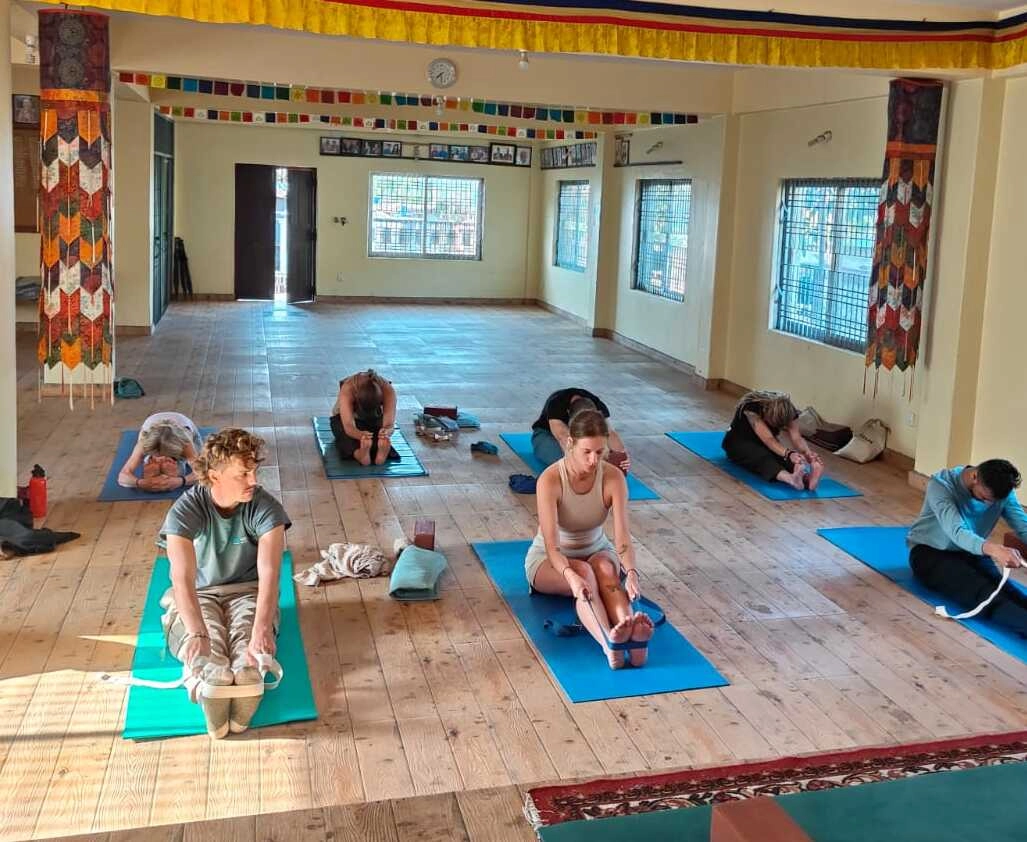
10. Seated forward bend (Paschimottanasana)
Sit on the edge of a folded blanket with your legs straight out in front of you. Breathing in, lengthen your spine. Breathing out, fold forward from the hips and hold your shins, ankles or feet, wherever you reach comfortably. Keep your knees soft. Stay for about 1 minute, letting the fold deepen a little with each breath out.
Easier: loop a strap or a scarf around your feet and hold the ends, keeping your back long.
Take care if you have a slipped disc or sciatica. Keep your knees well bent and fold only a little, or skip this pose.
11. Corpse pose (Savasana)
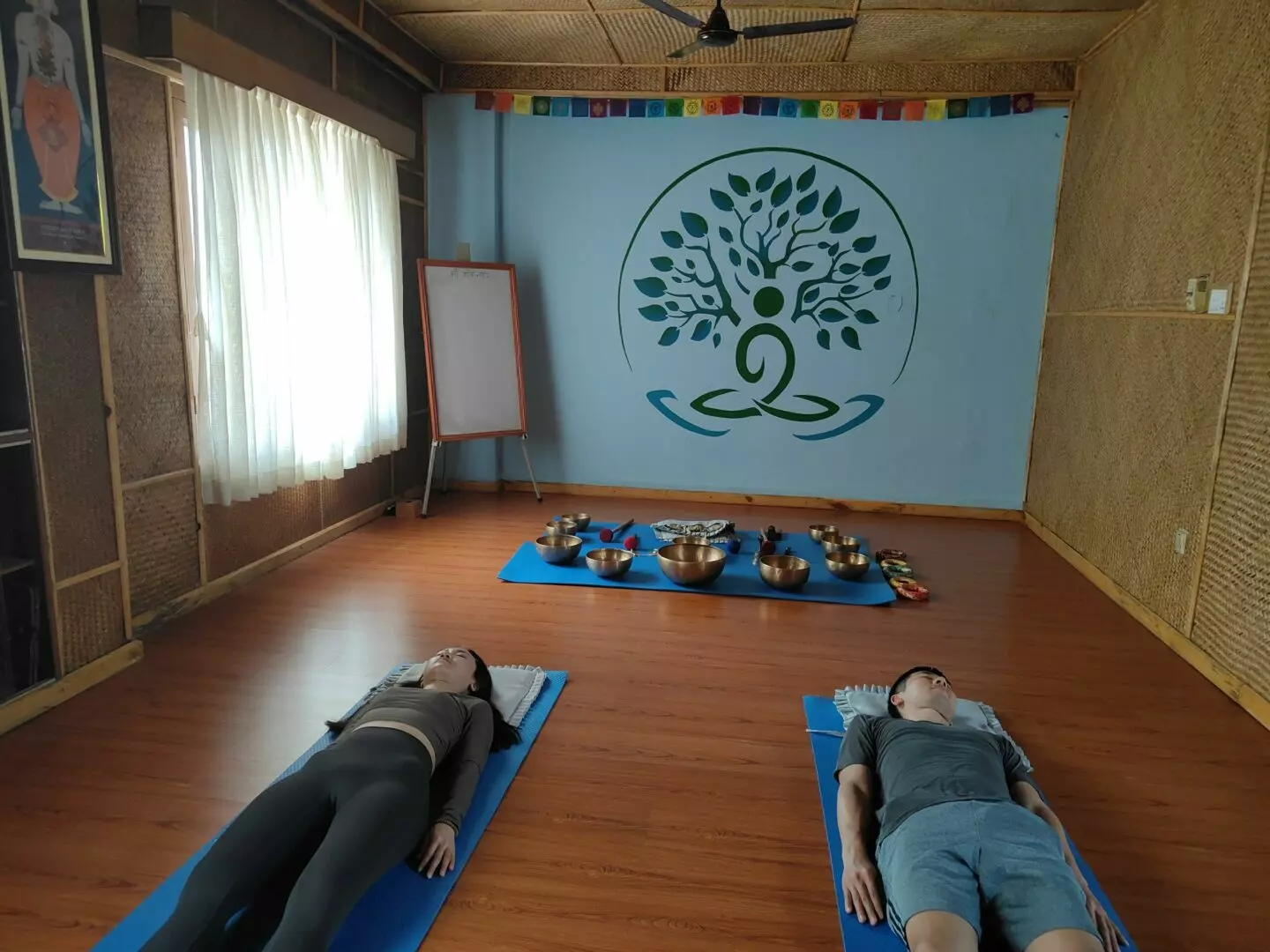
Lie on your back with your legs a little apart and your arms by your sides, palms up. Close your eyes and let your breathing return to normal. Let the whole body go heavy for 1 to 2 minutes. Roll onto your right side before you sit up.
Common mistake: skipping it. A minute of rest lets the practice settle before you start the day.
How mornings start at Bodhidham
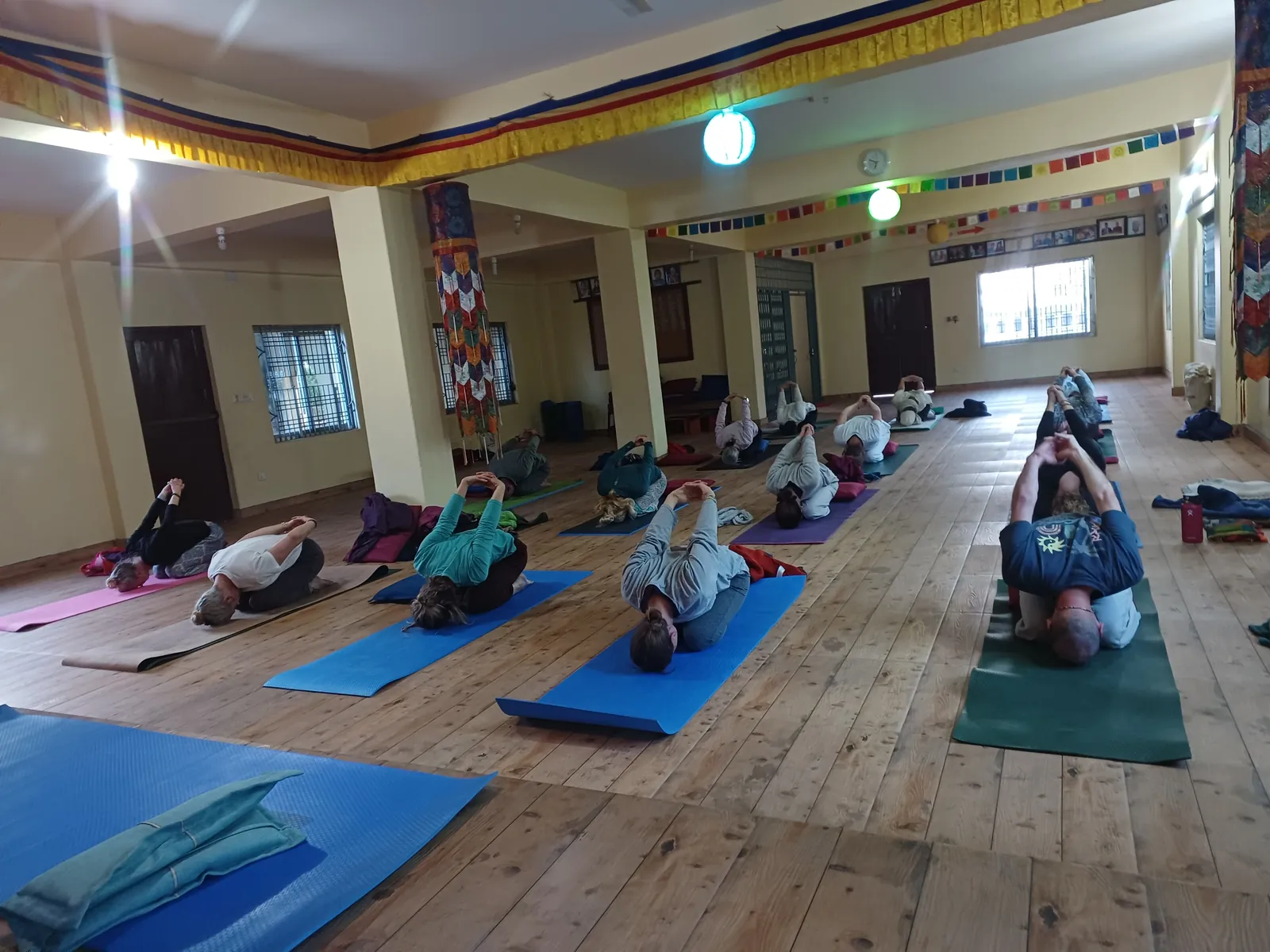
At the ashram the day starts early. Guests wake around 5:30 and begin with a cup of herbal tea. Classical Hatha starts at 6:30, and breakfast comes at 9, after practice. Guided meditation follows in the evening at 6.
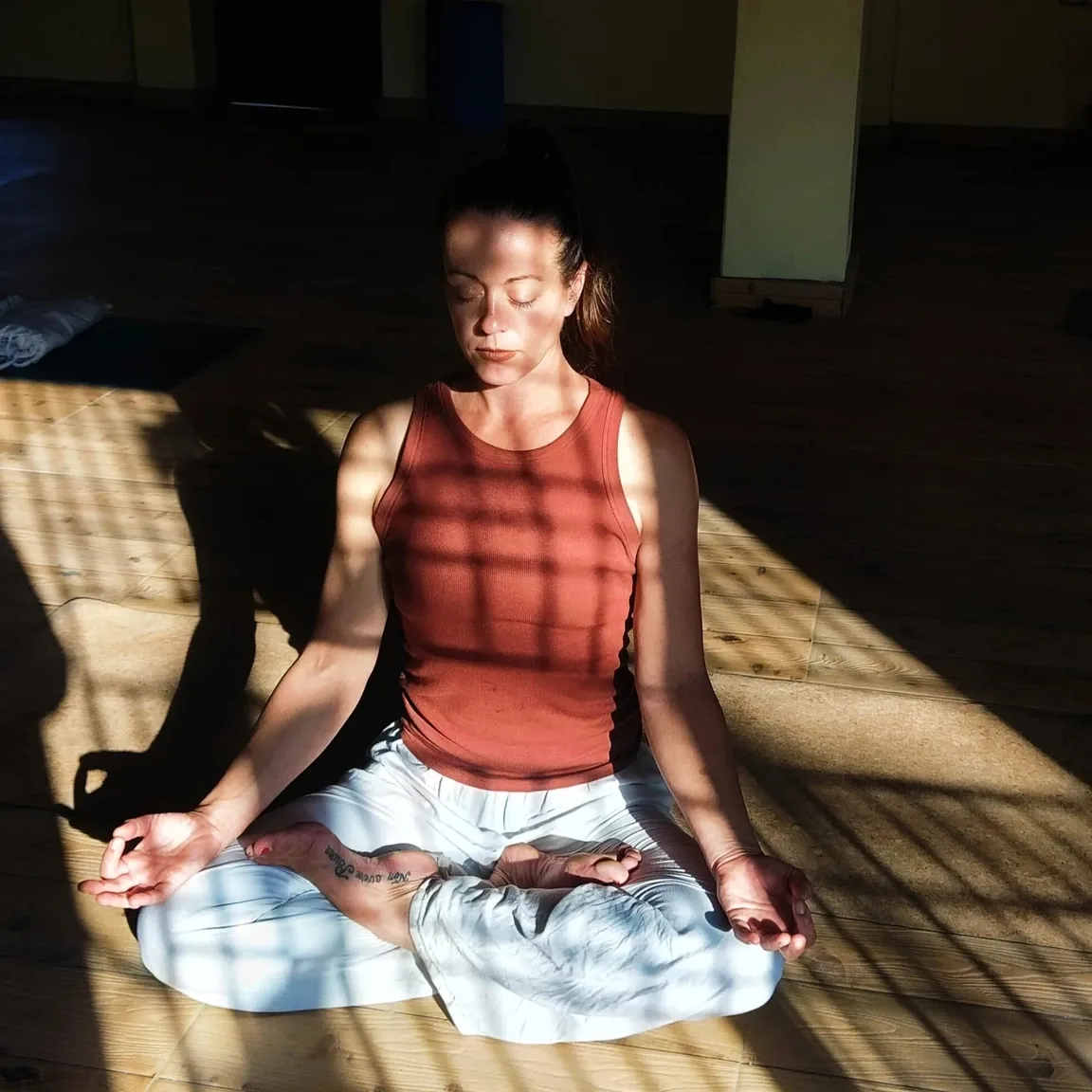
We keep asana for 6:30 rather than before dawn, because the body is coldest and stiffest in the hours before sunrise. Our guide to the best time for meditation explains how we set the schedule, and the Ayurvedic daily routine covers the rest of a traditional morning, from waking to bathing.
Making morning yoga a habit
- Same time, same place. Practise at the same time each morning, and leave your mat where you will see it.
- Shorten it on busy days. Do only seated breathing, cat and cow and one round of Surya Namaskar. That takes about five minutes.
- Build up slowly. After a few weeks, add a round or two of Surya Namaskar, or hold each pose for a few more breaths.
- Add a breathing practice. When the routine feels easy, add alternate nostril breathing (Nadi Shodhana) after savasana. Our pranayama guide for beginners explains how.
Learn it in person in Pokhara
If you would like a teacher to check your alignment and your breathing, our Standard Yoga Retreat in Pokhara is a good place to start. It runs for 5 days at the ashram, with daily Classical Hatha, pranayama, evening guided meditation and vegetarian meals, and it suits complete beginners.
Frequently asked questions
Is it better to do yoga in the morning or the evening?
Both work. The morning is the traditional time, because the stomach is empty and the mind is quiet, and a short practice sets you up for the day. The body is stiffer in the morning, so keep the stretches gentle and save longer holds for the evening.
Should I do morning yoga before or after breakfast?
Before. Practise on an empty stomach, and wait 3 to 4 hours after a full meal or 1 to 2 hours after a light snack. Water or a cup of herbal tea beforehand is fine.
How long should morning yoga be for a beginner?
10 to 20 minutes is enough to start, and this routine takes about 15. Practising for a short time most days helps more than one long session a week.
Can I do this routine every day?
Yes. It is gentle enough for daily practice. If you feel sore or tired, use the easier versions, or do only the seated breathing and savasana that day.
What if I am very stiff in the morning?
Bend your knees in every fold, sit on a blanket or cushion, and move slowly. Stiffness usually eases with regular practice.