Around four hundred thousand foreign visitors come to Pokhara every year, and most of them see the same Pokhara.
They stay on Lakeside. They take a boat out to Tal Barahi, which is the single most popular thing to do in the city. They go up to Sarangkot for the sunrise, walk across to the World Peace Pagoda, look into Gupteshwor cave, and buy something in the evening market. Many of them paraglide, and Pokhara is genuinely one of the best places on earth for it. Some raft the Seti, some take the zip line, some go bungee jumping in the river gorge.
A great many arrive here to start the Annapurna Base Camp or Annapurna Circuit trek, or come back down off Poon Hill, Ghandruk, Dhampus or Australian Camp.
All of that is good. It is why the town has the reputation it has.
There is one more option in Pokhara, and almost nobody puts it in a guidebook.
Yoga
Not a class squeezed between two other activities. Not a photograph on a rock at sunrise. The real thing, taught properly, in the country where this practice has been going on without interruption for a very long time.

Pokhara is one of the best places anywhere to spend a few free days practising yoga and meditation, and most visitors leave without ever knowing it was available.
If you have never done it, that is not a problem. If you cannot touch your toes, that is not a problem either. Beginners are the normal case here, not the exception.
Why Pokhara
Three reasons, and they are practical rather than poetic.
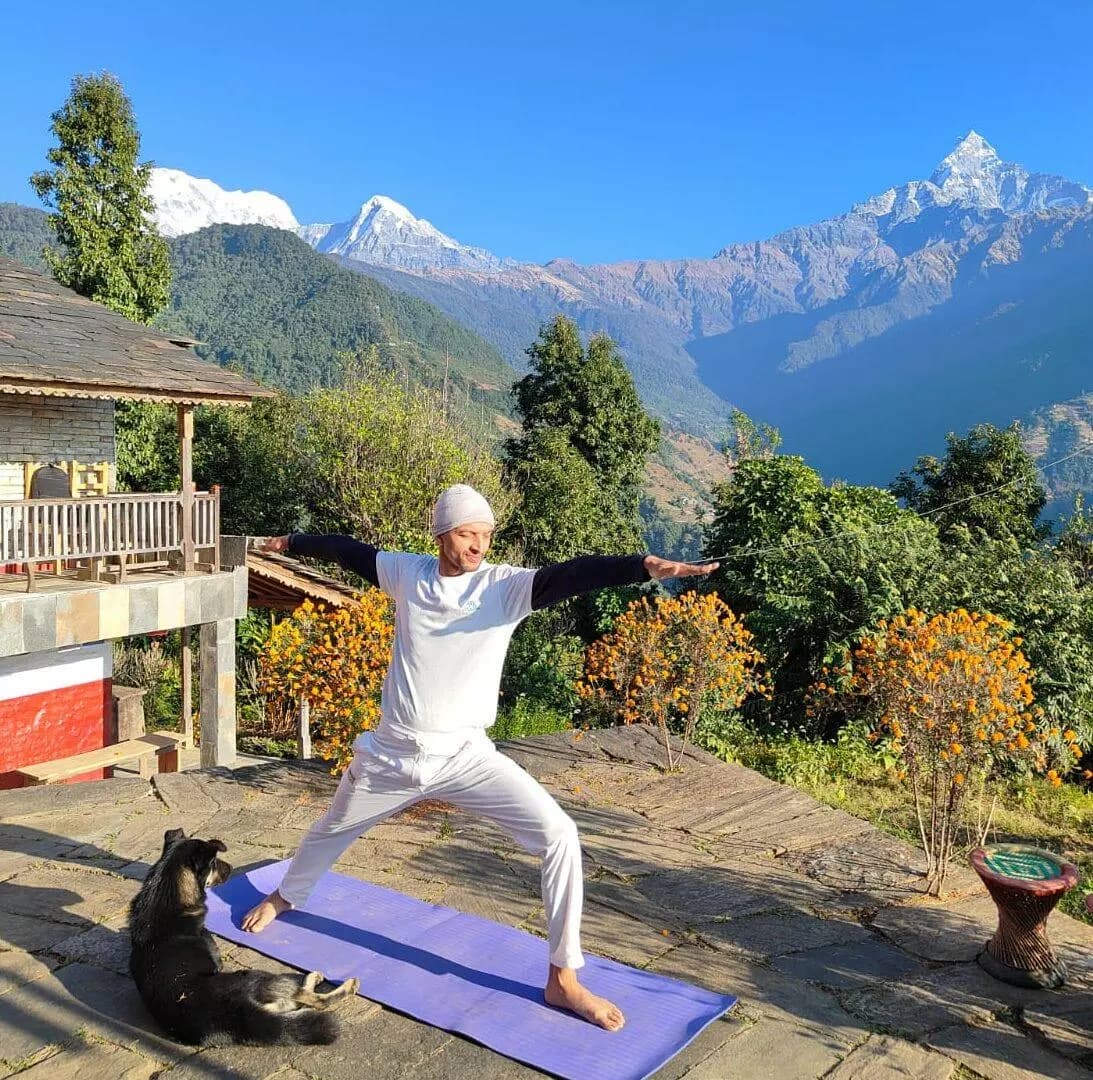
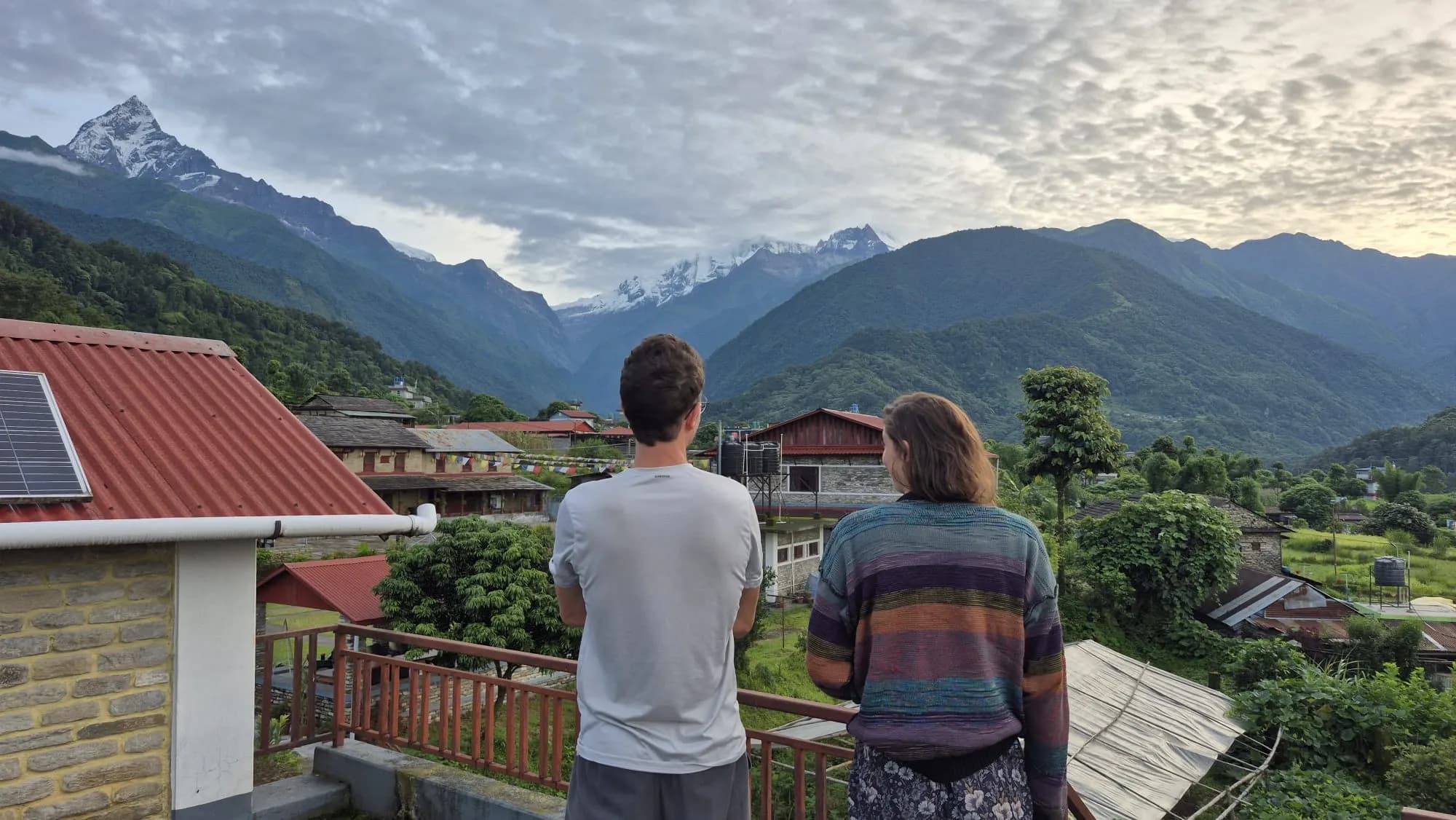
The mountains are close. Not a white line on the horizon, but Machhapuchhre at 6,993 metres standing directly north of the valley, with Annapurna South at 7,219 and Hiunchuli at 6,441 beside it. Practising at sunrise facing a wall of snow peaks is a different experience from practising in a room, and it is the thing people describe years afterwards.
The climate suits practice. Cool, clean mornings, warm middays, and a real drop in temperature once the sun goes behind the ridge. December mornings sit around 8 degrees and January around 7, climbing to about 20 by the middle of the day. The tradition places the best practice in the hour before dawn, and here that hour is genuinely pleasant instead of an act of endurance.
And the altitude helps without hurting. The valley sits at 822 metres and the hill villages above it at 1,300 to 1,600. High enough that the air is clean and thin and your breathing feels different in the breath practices. Nowhere near high enough to need acclimatisation or cause any difficulty.
Lakeside, or the hills: Which part of Pokhara for Yoga and Meditation
Here is the part that matters most, and it is the reason some people have a disappointing time.
Lakeside is a tourist strip. Shops, restaurants, boats, traffic, music in the evening and people selling you things as you walk. It is lively and enjoyable, and it is exactly what many visitors want. It is also the worst possible environment for the thing you would be trying to do.
Thirty minutes up the road, everything changes.
Ghachowk is a Gurung farming village at 1,320 metres, in the first proper rise of the Annapurna foothills. Terraced fields cut into the hillside in long curving steps. Oak and rhododendron forest above the highest fields. The Mardi River below, carrying water straight off the snow. Machhapuchhre directly in front of you.

There is no traffic. There are no shops. There is nothing to buy and nowhere to go, and after the first day that stops feeling like a lack and starts feeling like the point.
This is where Bodhidham is, and it is why it is here rather than on the lake. The place does half the work. You can practise anywhere, but somewhere quiet, cold in the mornings, with clean air and no decisions to make, the practice goes deeper faster than it does in a studio between two cafes.
The days this is actually for
People do not usually plan this. They end up here because of how their trip went. See if one of these is you.
- You have finished the list. Lake done, Sarangkot done, Peace Pagoda done, cave done. Two days left and nothing on them. This is the most common one by a wide margin.
- You have just come down from a trek, and your legs do not work. You are the best candidate on this page, and there is a whole section further down for you.
- The weather closed in. You came to trek, or to fly, and the cloud came down and stayed. Those days are now open, and there is not much you can do outside. This happens constantly in the shoulder seasons and it is the perfect use of a spoiled week.
- You are waiting. For a permit, a flight, a friend arriving on Thursday, a bus you already booked. Waiting days are dead days in most towns. Here they do not have to be.
- You are travelling with family and want two days that are yours. This is more common than people admit and it is a completely reasonable thing to want. A short stay fits inside a family trip without wrecking it, and if the rest of the family wants to come, the village homestay style suits mixed groups better than a formal programme.
- You are passing through Nepal. Kathmandu, maybe Chitwan, Pokhara, out. Three days here and you want them to count for something more than photographs.
- You have been here too long. A month in Lakeside, the cafes are all the same now, and you are restless in a way that another boat ride will not fix.
- You are travelling alone, and it has gone quiet. Week three of solo travel is when a lot of people run out of steam. A place with a schedule, a routine and other people in it is exactly the right medicine, and you do not have to make a single decision for three days.
On how long. The shortest programme here is three days and two nights, and that is deliberate. A single day gives you a good class and an hour of feeling better, which is genuinely worth having, but it cannot give you the second morning, and the second morning is where the change actually happens.
What kind of yoga you would actually be doing
What you will meet in a traditional Nepali school is Hatha yoga. That is the original form, and every modern style descends from it.
- In practice, that means slow. Poses are held for a long time rather than flowed through. There is space between them. You are given time to find the alignment, to feel what a posture is actually doing, and to keep the breath steady while you are in it. Nothing is rushed, and nothing is choreographed to music.
- It is not power yoga, and it is not vinyasa. Vinyasa keeps moving, linking one posture to the next without stopping, which is enjoyable but assumes you already know the shapes. Power yoga is built around strength and endurance. Both are good things, and neither is what a traditional school teaches.
- Hatha is generally considered the most beginner-friendly style there is, precisely because it is slow and because it holds still long enough for you to learn something. There are no physical requirements. People of every age and every level of stiffness do it.
The other thing to know is that the postures are only one part. A traditional session includes breath practice and sitting, and in the older understanding, those were the point while the postures were the preparation for them. If you have only ever done yoga as exercise, this is the part that will feel unfamiliar, and it is usually the part people end up valuing most.
Meditation
For some visitors, this is the part they actually came for without knowing it.
You do not need to be a certain kind of person to meditate, and you do not need to believe anything. What you need is a quiet place and somebody who can tell you what to do with your attention. Both are easier to find here than almost anywhere.
There are a few forms you will meet.
- Breath awareness, which is where nearly everyone starts. You sit, you watch the breath, and you begin again every time you notice you have wandered off. It sounds like nothing, and it is the foundation of everything else.
- Pranayama, the yogic breathing practices, which come before sitting rather than after it. Alternate nostril breathing to steady the mind, and the humming bee breath to settle it. Done in the cool, clean air of a hill morning, these feel noticeably different from how they feel at sea level.
- Yoga nidra is a guided practice done lying down, sometimes called yogic sleep. You stay awake but completely still, following a voice through the body. If you have been travelling hard or trekking, this is often the single most restorative thing on offer.
- Silence. Some retreats include periods of noble silence, where nobody speaks for a set number of hours or days. It sounds intimidating, and it is usually the part people say afterwards did the most.
You do not have to choose one. On a short stay you will meet several and find out which suits you, which is exactly the right way round.
Sound, and the singing bowls
This one deserves its own note, because it is often sold badly and the reality is more interesting than the marketing.
A Himalayan bowl is struck or rimmed and produces a long tone with layered overtones that keep shifting as it fades. Sometimes the bowls are placed on or around the body so you feel the vibration as well as hear it. A session usually runs half an hour to an hour, and you spend it lying down doing nothing.
There is real research behind it. Controlled studies have found that singing bowl sessions improve heart rate variability and shift the nervous system toward the parasympathetic state, the one associated with rest and repair. Brainwave measurements show reduced beta activity and increased theta, which is the pattern of deep relaxation. Trials have also reported reductions in tension, anxiety, fatigue, and low mood, along with lowered heart rate and blood pressure.
It is not a cure for anything, and nobody honest will tell you it is. But as a way of reaching a deeply relaxed state without having to be good at meditating, it works, and the measurements agree. It is also the easiest entry point for people who find sitting still difficult.
Which one are you?
Five people reach this question from different directions. Find yourself.
1. You are on holiday in Pokhara with days to fill
Four to six days here. The lake is done, the Peace Pagoda is done, and you would like the rest of it to be something other than more sightseeing.
What suits you: you have the most freedom of anyone reading this, and you benefit most from giving it more than a day. Three days and two nights is a real experience. Five to seven days is where people start describing the trip differently a year later.
Pick from: three days and two nights if you want to keep the rest of your itinerary intact, or a full week if you would rather this became the trip. If the mountains are what drew you here, there is a version facing the range.
The honest advice: this group under-books more than any other. They give it two days, enjoy it, and say afterwards they wish they had given it five. Adding days at the start is easy. Extending once you are committed elsewhere is not.
2. You have just walked down out of the mountains
Annapurna Base Camp, Poon Hill, Mardi Himal, or the Circuit. You are back in Pokhara, your legs do not work, and you have a few days before your flight.
You are in the single best position of anyone here to get something out of this, and the full detail has its own section further down because it deserves more than a paragraph.
Short version: gentle practice is the fastest route through post-trek soreness, deep rest is most of what your body actually needs, and a short residential stay is made of exactly those two things.
3. You are on a family trip
Nobody writes for this reader, so here it is plainly. There are two versions.
You want one thing that is yours. A few days out of a family holiday, alone, doing something entirely for you. This is far more common than people admit, and it is completely reasonable. A short stay fits inside a family itinerary without derailing it.
You want something everyone can do. Harder, and it needs an honest answer. A teacher training is not a family activity. Neither is a silent retreat. What does work for mixed groups is the gentler, more social end: staying with a village family, where the days are built around sunrise yoga, village walks, farm visits, cooking together and evenings of conversation and music. A partner or teenager who does not want to practise has plenty to do and is not sitting through something they did not choose.
4. You are passing through Nepal
Kathmandu, maybe Chitwan, Pokhara, out. Two or three days here and you want them to count.
What suits you: a short residential stay of three days and two nights is designed almost exactly for you. You get a full arc rather than a taster, and it fits a moving itinerary.
The trap: squeezing a morning class into a day that also holds a boat, a cave, a museum and a bus booking. You will get an hour of stretching and remember none of it. Give the practice one clean block or leave it out.
5. You live here, work here, or are staying a long time
Volunteers, remote workers, people who came for two weeks and are still here in month three.
What suits you: you are the one group who can treat this as ongoing sadhana rather than an experience. Repeat short stays work. Going deeper works better. And if you have been in Pokhara long enough to be tired of Pokhara, a period of mauna, silence, is a different order of thing entirely.
The full menu, by how much time you have
Including the options not offered here, because you should know what exists.
- One hour: a drop-in class in Lakeside. Several studios in town run these, and an hour is a good use of an hour. This is not something offered here. Bodhidham is residential, and the shortest programme is three days. So if a single class is what you want, look in Lakeside rather than up the hill, and ask for a gentle or beginner's class rather than a strong one.
- One hour: a sitting at a monastery. Free, and more interesting than most people expect. The afternoon puja at Jangchub Choeling is open to visitors.
- Half a day: an Ayurvedic treatment. Abhyanga, the warm oil massage, or shirodhara, the oil poured steadily on the forehead. Widely available in Pokhara and genuinely good after a trek. Not yoga, but it belongs here.
- Half a day: a sound session. Singing bowls and gong, deep relaxation, useful for people who find sitting difficult and want the effect without the effort. There is a residential version paired with Ayurveda in the sound healing programme.
- Two to three nights: a short residential retreat. The shortest thing that produces a change rather than a pleasant hour. The next section explains why.
- A week or more: where most of what people call transformative actually happens.
- Ten days: Vipassana at Dhamma Pokhara. Free, silent, demanding, and completely different from everything above. If you want the hardest and purest version of sitting practice available in this valley, that is it. Book well ahead, because courses fill up.
And at home, for nothing: there is a free practice library on this site with guided sequences, a posture reference with contraindications, pranayama and mantra recordings, all filmed here. No booking, no cost.
Practical questions
Do I need experience?
→ No. Beginners are the normal case. Say when you book that you are new and the teaching will be pitched for you.
Do I need to be flexible?
→ No, and this is the most common reason people talk themselves out of coming. Flexibility is a result, not a requirement. Stiff people usually get more out of it than bendy ones.
How far is it from Lakeside?
→ About thirty minutes by road, climbing out of the valley up to Ghachowk at 1,320 metres.
What should I bring?
→ Clothes you can move and sit in, modest enough to walk through a village in. Warm layers for the early mornings in any season, because sitting still before dawn is colder than moving. A shawl for sitting, walking shoes rather than sandals, a water bottle and a head torch. Mats and props are provided.
Can I book at short notice?
→ Often yes, especially outside October, November, March and April. The simplest thing is to message and ask what is running this week.
Is it religious?
→ The teaching comes from a real tradition and does not pretend otherwise. Chanting and ritual are offered, never required, and people sit them out all the time without anyone thinking twice.
Frequently asked questions
- Can you do yoga in Pokhara for just one day?
Yes, at drop-in studios in Lakeside, and an hour-long class is a good use of an hour. What you cannot do in a day is a residential retreat, because the shortest programme here is three days and two nights. If a single class is what you want, look in town. If you have two spare nights, the residential option is a different experience rather than simply a longer one.
2. Is a 3-day yoga retreat long enough to be worth it?
Yes, and it is the shortest length that is. The reason is the second morning. On day one your mind is busy watching the schedule, and almost nobody settles. You sleep, things let go without you doing anything, and the second morning is noticeably different. By the third day, most people notice their sleep has changed. One day cannot produce that at all. What three days will not do is rewire you, and anyone promising that is selling something.
3. Do I need any yoga experience?
None. Complete beginners are normal on short retreats, and beginner sessions are kept small. Tell us when you book and the teaching will be pitched for you.
4. Can I bring my family, or a partner who does not do yoga?
Often yes, and the homestay style of retreat works best for mixed groups, because the days are built around village walks, farm visits, cooking and evenings together as well as practice. Someone who does not want to practise is not left sitting through something they did not choose. Ask before booking, because it depends on the programme and the dates.
5. Are children allowed at a yoga retreat?
It depends on the programme and their age. Intensive and silent formats are not suitable. Gentler village-based stays sometimes are. Please ask rather than assume.
Most people come to Pokhara for the mountains and leave having looked at them.
A few come, look at them, and then spend three days getting up before dawn to sit in front of them. Those are the ones who talk about this valley differently a year later.
You do not need to be flexible, experienced, spiritual, or certain. You need two spare nights and a bit of curiosity, and you almost certainly already have both.
Our every programme and its full schedule are listed under the retreats here, and there is more detail in our FAQ. If you are already in Pokhara and want to know what is running this week, or whether a short stay would suit you at all, please message us.