

- Bank
- Nepal bank — details shared on enquiry
- Account name
- Bodhidham Yoga School and Spiritual Retreat
- Account number
- Provided on booking confirmation
- SWIFT
- Provided on booking confirmation
- Branch
- Pokhara, Nepal
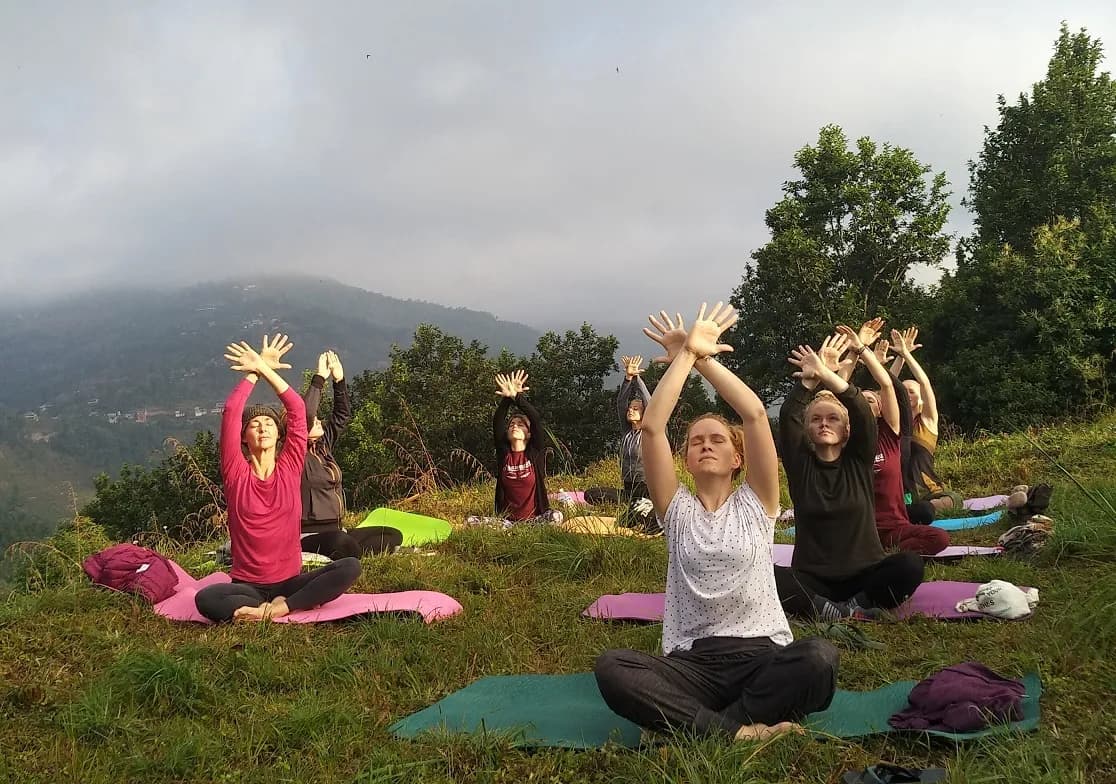
Sound Healing & Ayurvedic Retreat
Duration3 nights / 4 days
IncludedAll-inclusive
FocusHealing
Overview
Sound Healing & Ayurvedic Retreat — 3 Nights / 4 Days
A holistic retreat combining Tibetan singing bowl sound healing, Ayurvedic consultation and treatments, yoga, and Himalayan herbal nutrition for deep physical and energetic restoration.
The Sound Healing and Ayurvedic Retreat at Bodhidham offers a deeply restorative experience grounded in two of the world's oldest healing traditions. Tibetan singing bowls, native to Nepal and Tibet, are used in daily sound healing sessions to balance the body's energy centres (chakras), reduce stress, and promote cellular healing. These sessions are combined with Ayurvedic consultation (prakriti assessment), customised herbal treatments, Abhyanga (oil massage), dietary guidance, and daily yoga and pranayama. The program is designed to reset the nervous system, support detoxification, and restore harmony between body, mind, and spirit.
Why this retreat?
Daily sound healing with Tibetan singing bowls, crystal bowls, and gong
Single personalised Ayurvedic massage treatment
Complementary Ayurvedic Medicine
Gentle yoga, pranayama, and guided meditation each day
A short, unhurried retreat, easy to fit into a longer trip
3 nights on the ashram, three organic meals a day, and pickup from Pokhara
Daily plan
Your day, spelled out.
The shape of every day at Bodhidham is the same as it has been for over a decade.
A typical day
the rhythm every day follows- 1Morning yogic cleansing
- 2Gentle hatha yoga and pranayama
- 3Sound meditation session
- 4Breakfast
- 5Ayurvedic massage treatment or dosha consultation
- 6Lunch
- 7Journaling, self-study, and rest
- 8Afternoon sound healing session
- 9Herbal tea
- 10Mantra chanting circle
- 11Guided meditation
- 12Dinner
- 13Group sharing circle
- 14Rest
Day by day
open any day for the full scheduleDay 111:00 am – 7:00 pm
Day 1 schedule 11:00 am Welcome at the city meeting point and introduction to the retreatAyurveda massage for relaxation and rejuvenationDrive to the mountain retreat location · Around 40 minutes by cab · 21 km distance1:00 pm Lunch and beginning of the retreat program2:00 pm Journaling and personal reflection timeSound healing session to relax the mind and body4:00 pm Core yoga asana practice · 1.5 hours5:30 pm Tea break and rest time5:45 pm Guided meditation session · 45 minutes7:00 pm Healthy dinnerDay 2 & 35:00 am – 7:00 pm
Day 2 & 3 schedule 5:00 am Wake up and begin the day in silence and peaceShower and personal preparation time5:30 am Self-meditation practice6:00 am Morning tea6:30 am Classical yoga asana practice · Duration: 75 minutes8:00 am Introspection and mindful self-reflection9:00 am Healthy breakfast10:00 am Self-study, journaling, and quiet personal time11:00 am Nature walk in the peaceful surroundings12:00 pm Free time for rest and personal reflection1:00 pm Lunch2:00 pm Journaling and quiet self-timeSound healing session to calm the mind and body4:00 pm Core yoga asana practice · Duration: 1.5 hours5:30 pm Tea break and relaxation time5:45 pm Guided meditation session · Duration: 45 minutes7:00 pm Healthy dinnerDay 45:00 am – 9:00 am
Day 4 schedule 5:00 am Wake up and begin the final morning peacefullyShower and personal preparation time5:30 am Self-meditation practice6:00 am Morning tea6:30 am Classical yoga asana practice · Duration: 75 minutes8:00 am Introspection and mindful reflection9:00 am Healthy breakfastFarewell gathering followed by drop-off to the city
Retreat Overview.
The 4 day Sound Healing and Ayurvedic Massage Retreat at Bodhidham is a short, restful retreat in Ghachowk, near Pokhara, drawing on two traditional practices. Sound therapy uses the tones of Tibetan singing bowls, crystal bowls, and gongs to help release tension and guide the mind into stillness. Ayurvedic massage works alongside it, using warm herbal oils and techniques chosen to suit your individual constitution, or dosha.
Over four days you are guided through an unhurried rhythm of healing practices, gentle yoga, sattvic meals, and rest. The retreat is intentionally small, with limited places, so each person receives proper individual care from the practitioners. It suits both newcomers to sound healing and Ayurveda and those who already know these practices and want a calm few days to return to them.
What you experience
- Sound healing. Sessions with Tibetan singing bowls, crystal bowls, and gongs, used to ease tension and settle the mind.
- Ayurvedic massage (Abhyanga). Warm herbal oil massage, with techniques chosen to suit your dosha.
- Dosha consultation. A personal Ayurvedic assessment of your body-mind constitution, with simple recommendations to take home.
- Pranayama and meditation. Gentle breath work and daily guided meditation to support the rest.
- Mantra chanting. Guided chanting and group sound circles.
Why sound and Ayurveda are together
Plenty of places bundle two treatments and call it holistic. It is a fair question why these two belong on the same four days, so here is the actual answer rather than the marketing one.
They work on the same system from opposite ends
Both of these traditions are, in modern terms, doing the same thing: shifting a body out of alert and into repair.
- A sound session works from the outside in. You lie still, the tones arrive, there is nothing to decide, and attention has somewhere easy to rest. Breathing slows on its own because nobody is asking anything of you.
- An oil treatment works from the inside out. Sustained warm touch over a long unbroken period is one of the oldest and most reliable ways to signal safety to a nervous system. The body reads it before the mind has an opinion about it.
Neither is doing anything mystical. Both are unusually good at producing the same state, and the reason to put them in one retreat is that they compound. A body that has just had an hour of warm oil settles into a sound session faster. A mind that has been in a sound session takes to stillness more readily the next morning.
Ayurveda already had a theory of sound
The pairing is not a modern invention. Ayurveda and yoga come from the same ground, and sound is not foreign to either.
The tradition treats sound as one of the qualities carried by akasha, space, the subtlest of the five elements. Mantra sits inside Ayurvedic practice as a legitimate intervention alongside diet, herbs and routine, not as a decorative add-on to them. The mantra chanting circle and the group sound circles on this retreat sit in that older lineage rather than in the modern wellness one. If that side of it draws you, the ashram also runs a dedicated mantra yoga and meditation retreat built entirely around it.
Where the honest line is
What we will not tell you is that a bowl tunes an organ, that oil removes toxins in any literal sense, or that four days corrects a constitution.
Ayurveda is a system for arranging a life, mostly through food, routine and season. Four days is not long enough to arrange a life. What it does is give you an accurate reading of where your body currently sits, a set of recommendations you can actually use, and three days of the kind of rest most people have not had in years. That is a genuinely useful thing and it does not need inflating.
What the sound sessions are actually like
You lie down, usually covered with a blanket, and a practitioner plays around and near you. There is nothing to do, nothing to concentrate on, and no way to do it wrong. Sessions happen twice a day, once in the morning and once at two in the afternoon.
Three instruments are used, and it is worth knowing the difference, because a room with all three in it behaves differently from a room with only bowls.
Tibetan singing bowls
Hand-hammered bronze, and the sound is complex rather than clean. A struck bowl gives you a fundamental note plus a cluster of higher tones sitting above it, and because a hammered bowl is never perfectly round, two of those tones sit close enough together to beat against each other. That slow pulsing wobble in the sustain is the characteristic sound, and it is the part the mind finds easy to follow.
These are the instruments this country makes, which is part of why a session in Nepal is not quite the same as a session anywhere else.
Crystal bowls
Quartz, fused at very high temperature, and a completely different animal. Where a metal bowl is layered and rough, a crystal bowl holds close to a single pure sustained tone, much louder and much longer.
In a session, the two are used together for a practical reason. The crystal bowl holds a floor of steady tone underneath, and the metal bowls move across the top of it.
The gong
The one people remember, and the one they are usually nervous about.
A gong is broadband and inharmonic. Its fundamentals sit very low, roughly 30 to 500 Hz, with overtones running up past 10,000, and unlike a bowl, the sound never settles into a shape. It keeps moving. A bowl concentrates sound upward, and a gong pushes it outward, so the gong is what you feel in the chest and the sternum rather than only hear.
Sessions usually begin softly and build, which is deliberate. A gong opened at full volume is a shock rather than a treatment.
If you find you would rather be the one playing than the one lying down, the ashram runs a four-day singing bowl course that teaches the technique. There is more background on our sound healing page.
The Ayurvedic side
The consultation comes first
Everything Ayurvedic on this retreat follows from one conversation, a prakriti assessment.
Prakriti is your constitution, the proportions of vata, pitta and kapha you were born with, which the tradition treats as fixed. Vikriti is where you are today, which is not fixed and is usually the reason people feel wrong. Almost everybody who arrives on a retreat is carrying some vikriti, and naming it accurately is most of the work.
The reading is done through observation and questioning: build, skin, digestion, sleep, temperature, appetite, how your energy moves through a day, how you respond to stress. In Ayurvedic practice, the pulse, nadi pariksha, is also read. You leave with simple recommendations rather than a complicated regime, because a complicated regime does not survive contact with an ordinary week at home.
Abhyanga
Abhyanga is a warm herbal oil massage, worked over the body in long strokes, and it is nothing like a sports massage or a spa treatment.
It is old, and it is ordinary. The classical texts list it inside dinacharya, the daily routine, alongside cleaning your teeth. In the tradition, this is maintenance rather than luxury, on the reasoning that a body which moves needs lubricating the way anything else that moves does.
The oil is the part that gets personalised. Sesame is the traditional base and is warming, which suits vata. Coconut is cooling and suits pitta. Lighter oils suit kapha. Which one you get, and what is infused into it, follows from the consultation rather than from a price list.
Practically: it is genuinely oily. Wear old, loose clothing that day and expect oil in your hair. Tell the practitioner beforehand about skin sensitivities, allergies or any health condition.
On this retreat, the Abhyanga happens on day one, in Pokhara, before the drive up to the ashram.
The food is part of the treatment
Meals here are vegetarian, organic, mostly grown on the ashram farm, and on this retreat they are prepared the Ayurvedic way. Sattvic cooking is the base of it, which is a real distinction rather than a phrase.
Ayurvedic cooking is built around agni, digestive fire, on the principle that what you can digest matters more than what you eat. So food is warm, cooked rather than raw, simply spiced, and served at fixed times with the largest meal at midday when digestion is strongest. Dinner is early and light, which is a large part of why people sleep so well here.
What this retreat is not
It is not panchakarma. Panchakarma is a serious multi-week clinical purification programme with a preparation phase, a supervised main phase and a long recovery, and it is not something anybody can deliver in four days.
If the Ayurvedic side is the reason you are coming, the Ayurveda Healing Retreat runs a full week and is built around treatments and consultation rather than fitting them around sound work. And if cleansing is the goal, the Detox Yoga Retreat is the one designed for it.
Is this retreat right for you?
It suits you if
- You are tired in a way that a holiday has not fixed, and you want a few days where nothing is asked of you
- You have never tried either practice and want an honest introduction to both rather than committing a full week to one
- You are already travelling in Nepal and have four days to spend well
- You want to be looked after rather than taught, and the absence of homework is the appeal
- You sleep badly and want to find out whether this kind of thing helps
- You are curious about Ayurveda and want a proper reading of your constitution rather than an online quiz
Something else will suit you better if
Each of these is a good retreat. They are simply built around a different aim, and you can compare them all on the retreats page.
- You want to learn to play the bowls yourself. The Singing Bowl Course is four days of hands-on tuition rather than four days of receiving.
- Ayurveda is the main reason you are coming. The Ayurveda Healing Retreat gives it a full week and far more treatment time.
- You want to work physically. This retreat is deliberately gentle, and the Intense Yogasana Retreat is the demanding one.
- You want the chakra material in depth. The Chakra Workshop and Healing Retreat runs eight days on exactly that.
- You want a longer week with variety and mountain views. The Mountain View Retreat runs seven days with a different activity each afternoon.
Ready to step out of the noise?
Reserve your seat at Bodhidham.
 4.9★ from 140+ studentsVerified
Reviews from our students
Pricing & what’s included
Everything in. Nothing hidden.
Every plan includes sessions, sattvic meals, accommodation and free Pokhara pickup. Pick the room that fits you.
Available start datesYear-round, weekly start
Shared / Couple
Sharing room
€210per person
- Best for couples & solo travellers
- Twin beds, shared bath
€240 private room / €150 shared room
What is offeredWhat the retreat includes.
Show allHide
What is offered
What the retreat includes.
Included in your fee
- One personalised Ayurvedic massage treatments (Abhyanga)
- Daily sound healing sessions with Tibetan singing bowls, crystal bowls, and gong
- Daily pranayama and guided meditation
- Mantra chanting and group sound circles
- 3 nights accommodation on the ashram
- Three organic vegetarian meals a day, prepared the Ayurvedic way
- Herbal teas throughout the retreat
- Course materials and handouts
- Free pickup and drop-off in Pokhara
- Complementary Ayurvedic medicine
Not included
- International and domestic flights
- Nepal visa
- Personal expenses
- Travel insurance
- Additional Ayurvedic treatments
The teaching team
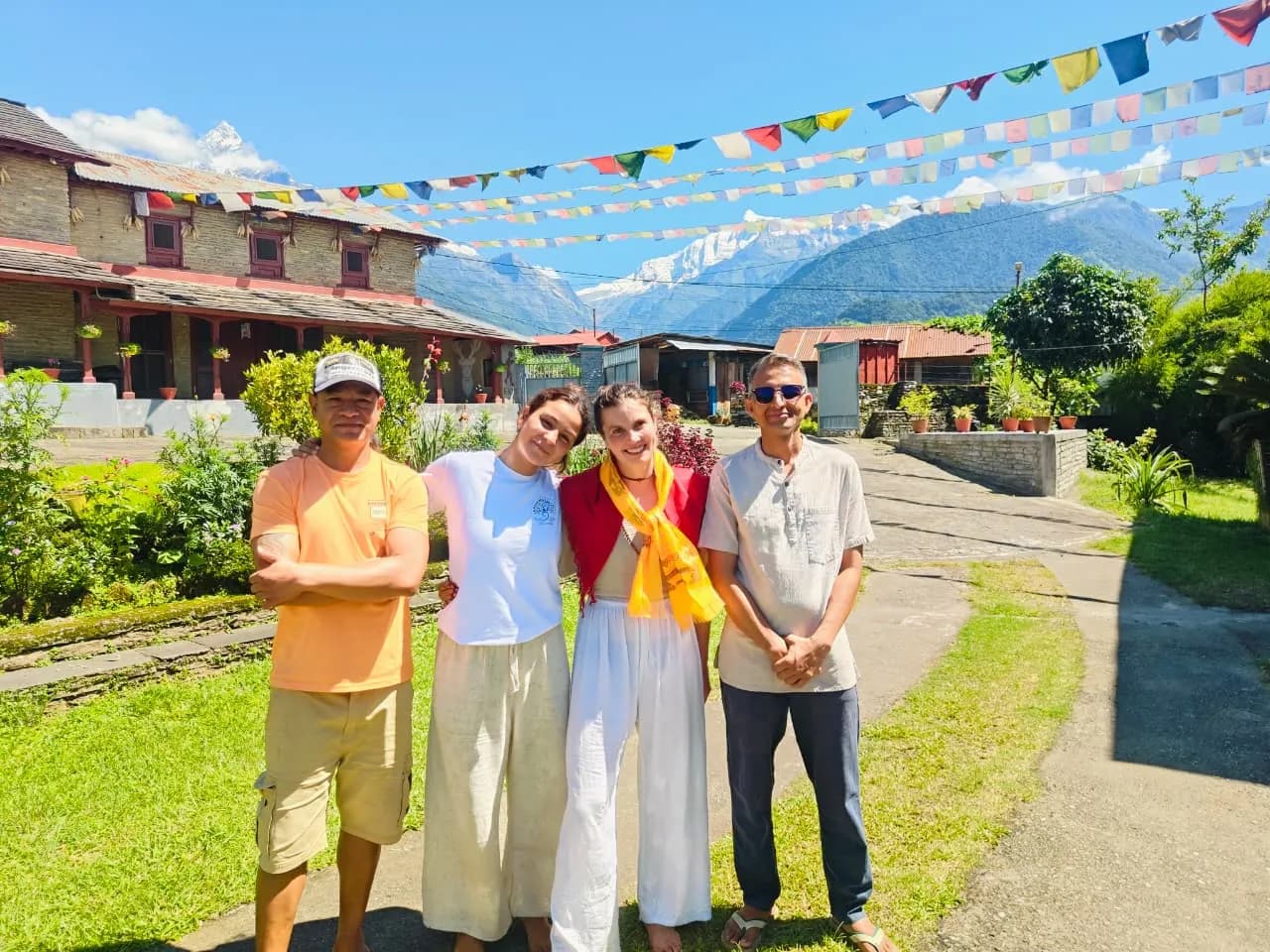
Taught by 3 Yogis
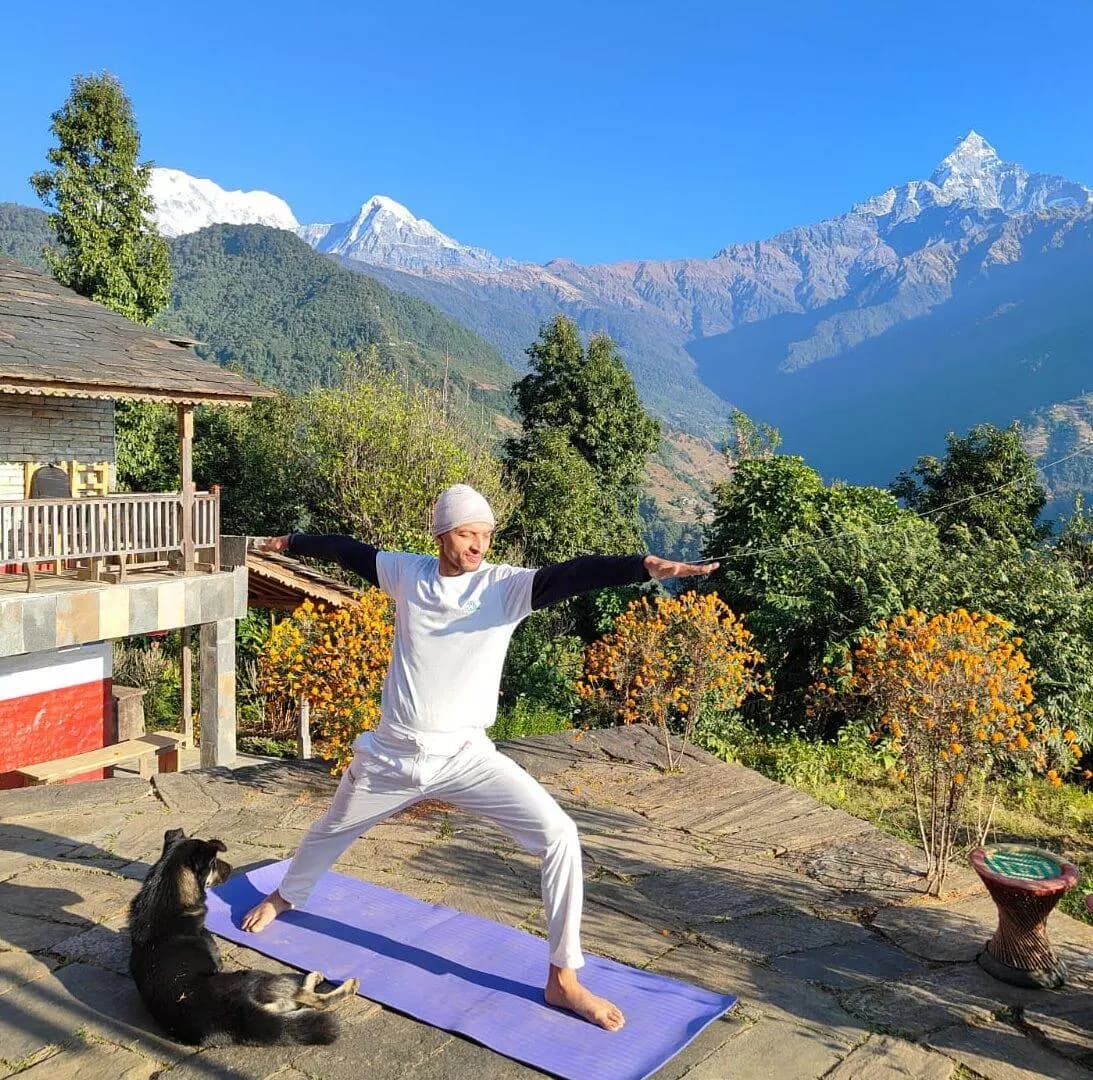 SwamiFounder & Spiritual Head
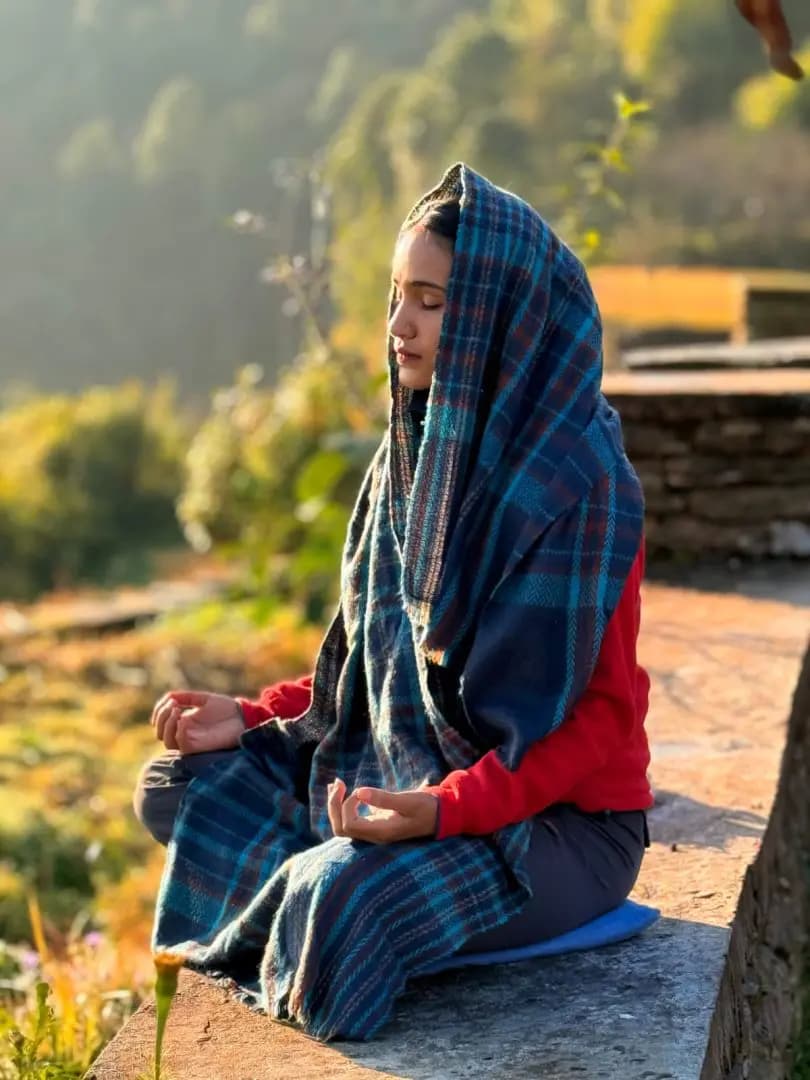 DeepikaYoga & Anatomy Teacher
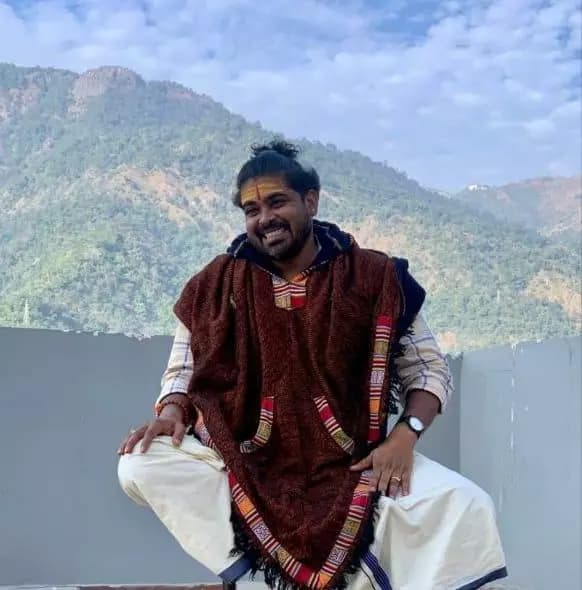 RatheeshGuest Yoga Teacher
Why Bodhidham
Why choose Bodhidham?
- i.Traditional lineage-based teaching from experienced yogis
- ii.Family Environment
- iii.Organic food grown on a local farm.
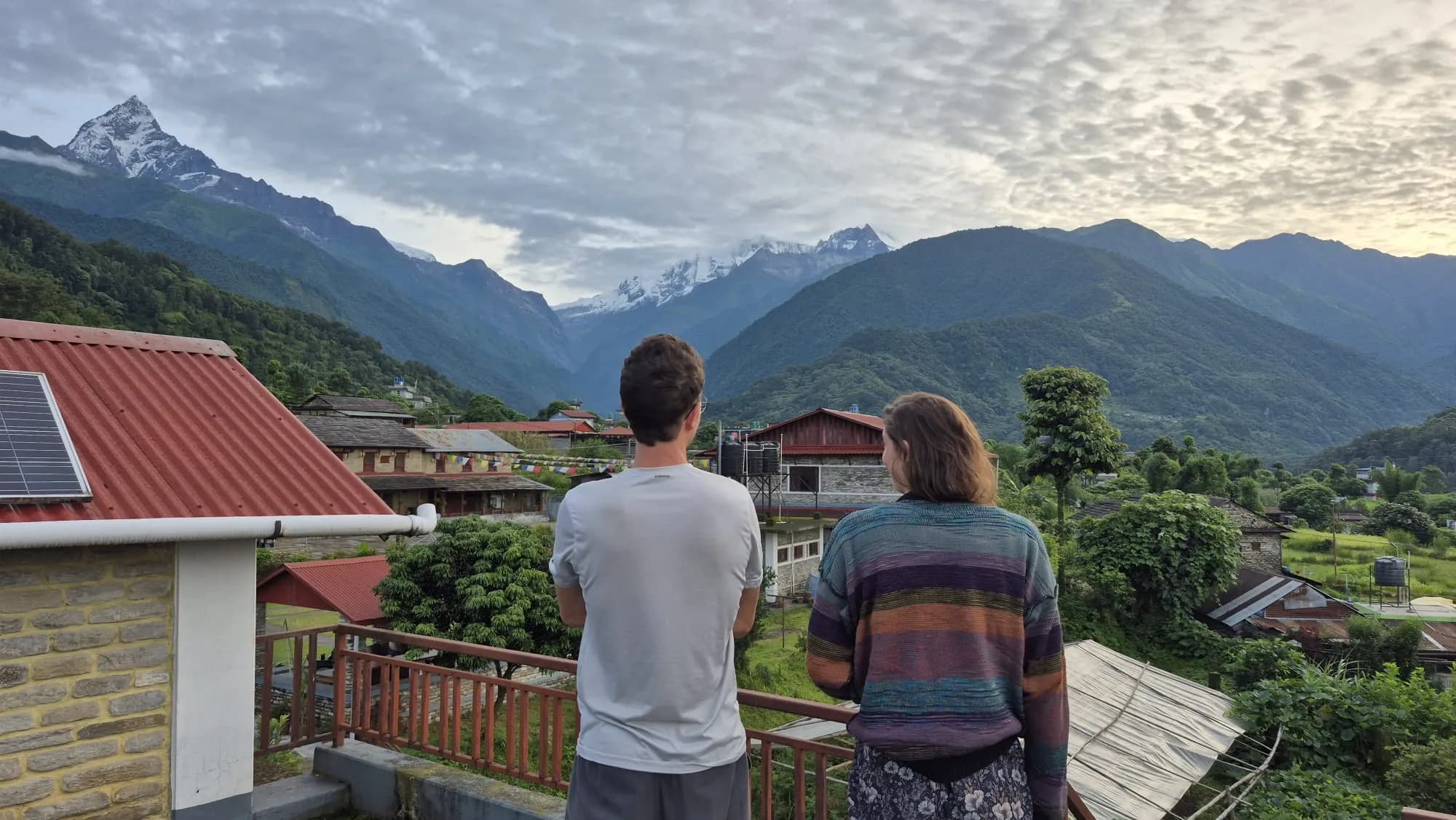
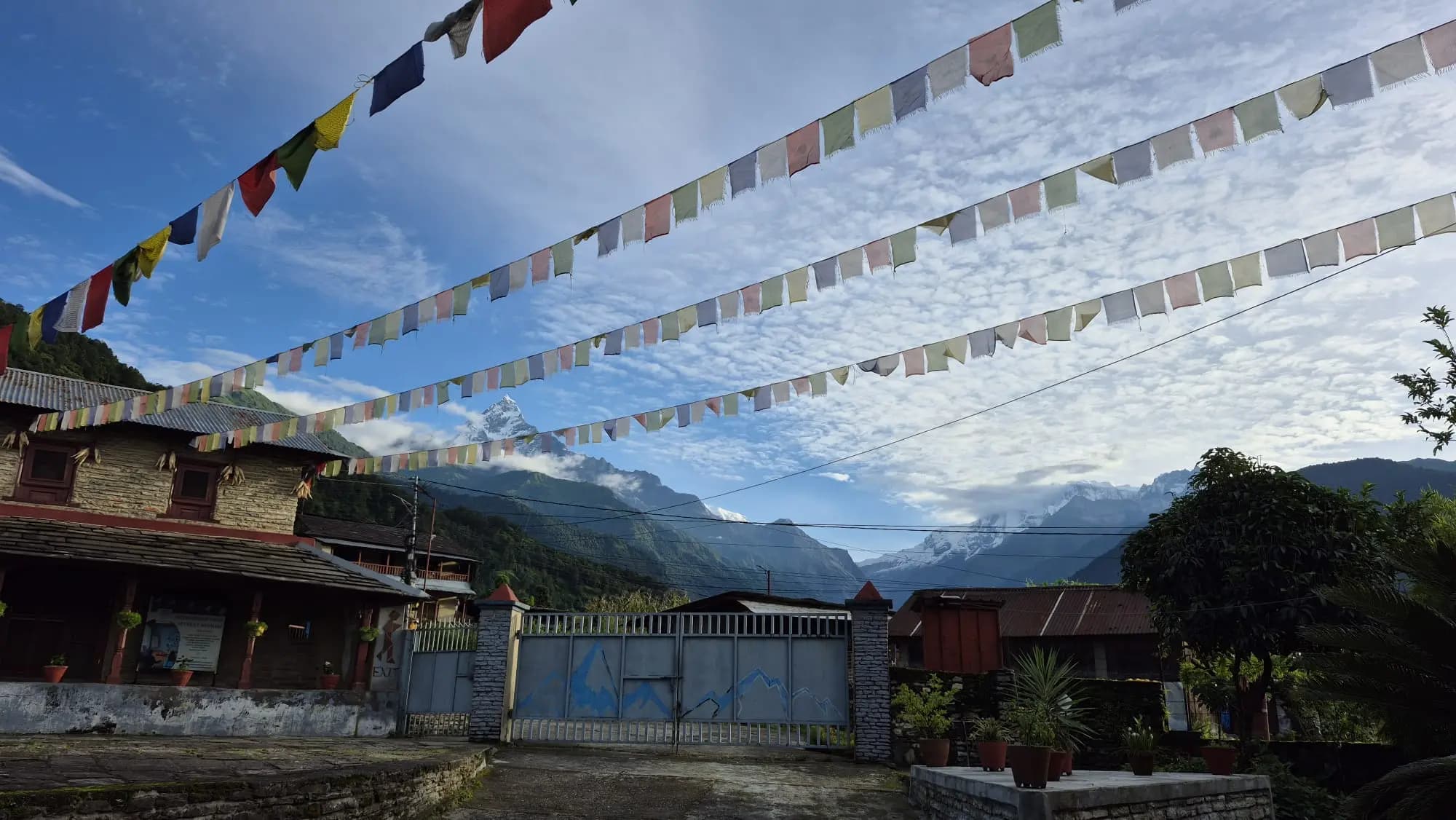
- iv.Away from the city. At the height of 1320 m, Ghachowk Village.
- v.Pollution-Free Location, Best AQI.
- vi.In a lap of the holy mountain, Machhapuchhre.
Bank details & booking
How to reserve your seat.
To confirm your booking, a 25% advance of the total program fee is required. The remaining 75% is due on arrival, before the program begins.
Bank transfer
Exact bank details are shared by WhatsApp/email once your dates are confirmed.
Before you book
Frequently asked
Do I need any experience with sound healing or yoga?
+
No. This is a restful retreat open to everyone, and all the sessions are guided. You do not need to know anything about sound healing, Ayurveda, or yoga beforehand. It is just as suitable for a complete first-timer as for someone who already knows these practices and wants a calm few days with them.
What actually happens in a sound healing session?
+
You lie down comfortably while a practitioner plays Tibetan singing bowls, crystal bowls, and gongs around the room. There is nothing for you to do. The tones and vibrations help the mind settle, and most people find it deeply relaxing, similar to a guided rest. It is best understood as a tool for calm and stillness rather than a medical treatment.
What is the Ayurvedic massage like, and how should I prepare?
+
The massage is Abhyanga, a warm herbal oil massage, with the approach chosen to suit your dosha after a personal consultation. The retreat also includes one Shirodhara session, a slow stream of warm oil poured over the forehead. The oils mean you will want loose, older clothing for treatment days, and it is worth telling the practitioner in advance about any skin sensitivities, allergies, or health conditions.
Is four days long enough to feel the benefit?
+
For a rest-focused retreat, yes. Four days is enough to slow down, sleep well, and leave feeling rested, which is what this retreat is designed for. It is intentionally short so it can fit into a longer trip. If you want a deeper or longer reset, our week-long retreats give more time, and we are happy to suggest one.
What does the price include?
+
The price covers 3 nights accommodation on the ashram in a shared or private room, three organic vegetarian meals a day, all sound healing and meditation sessions, two Ayurvedic massage treatments, one Shirodhara session, a dosha consultation, course materials, and pickup and drop-off in Pokhara. It does not cover international flights or your Nepal visa.
Our kitchen
Three sattvic meals, mostly from the farm.
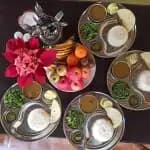
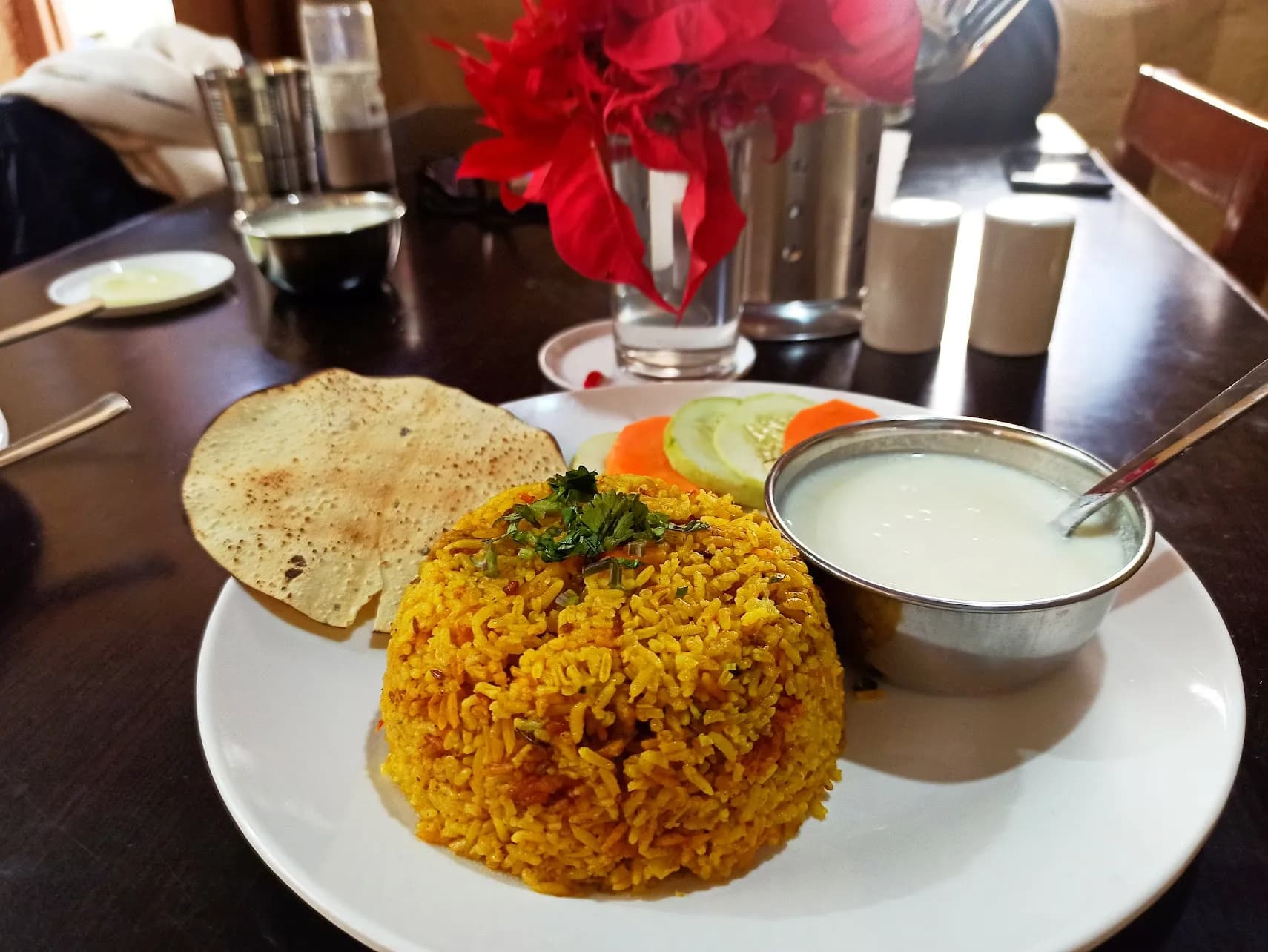
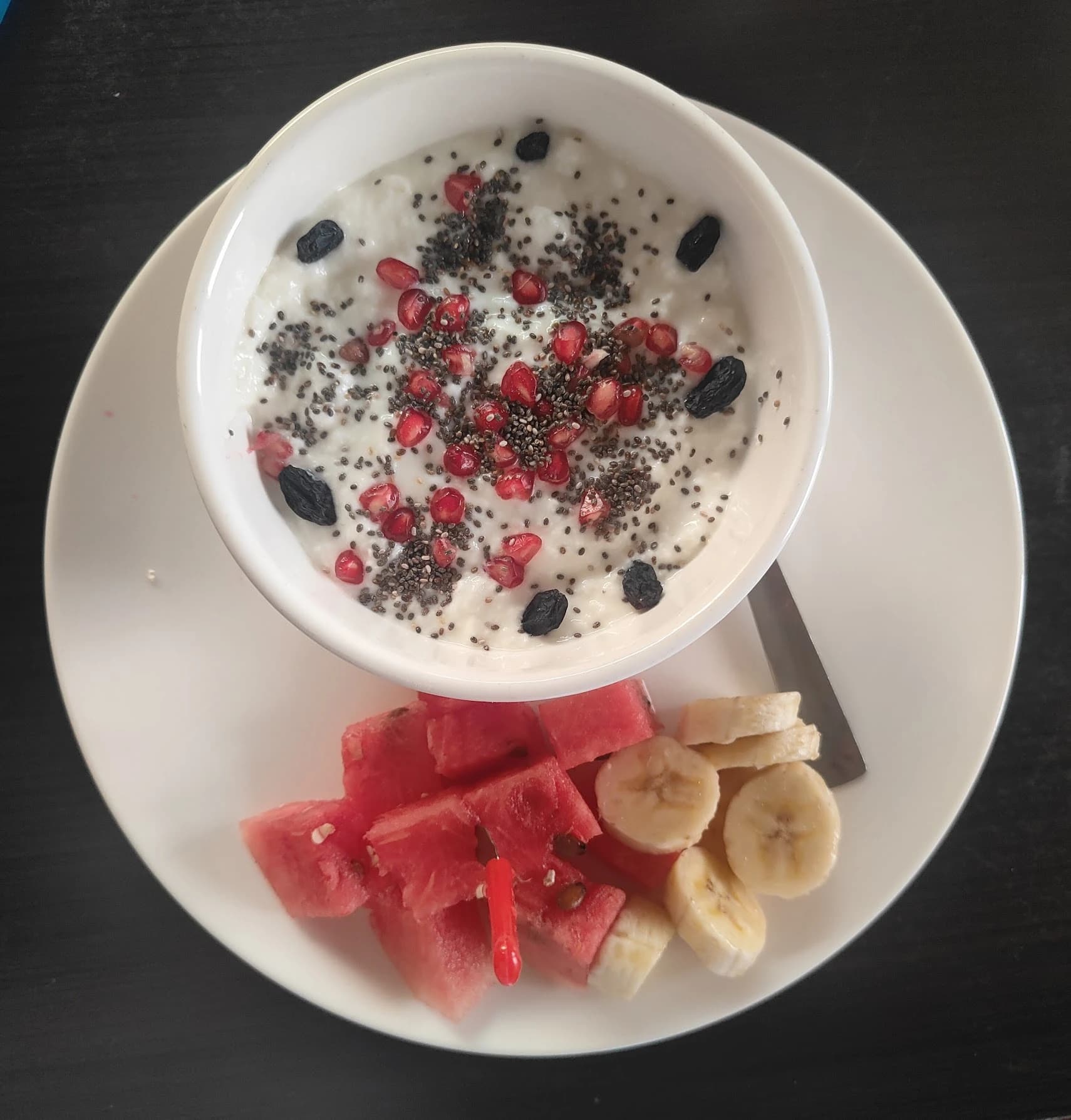
All meals at Bodhidham are organic, freshly prepared and vegetarian, following Sattvic (yogic) dietary principles. Breakfast includes oats, fruits and herbal teas. Lunch is the main meal, dal bhat with seasonal vegetables.
Dinner is lighter with soups, bread or rice with vegetables. Special dietary requirements (vegan, gluten-free, allergies), accommodated with advance notice.
- Herbal Tea: Provided With Each Meal.
- Source: Mostly own organic farm
- Meals: Three a day, included
- Special diets: Vegan & gluten-free on request

Around Bodhidham
Ashram premises and Accommodation
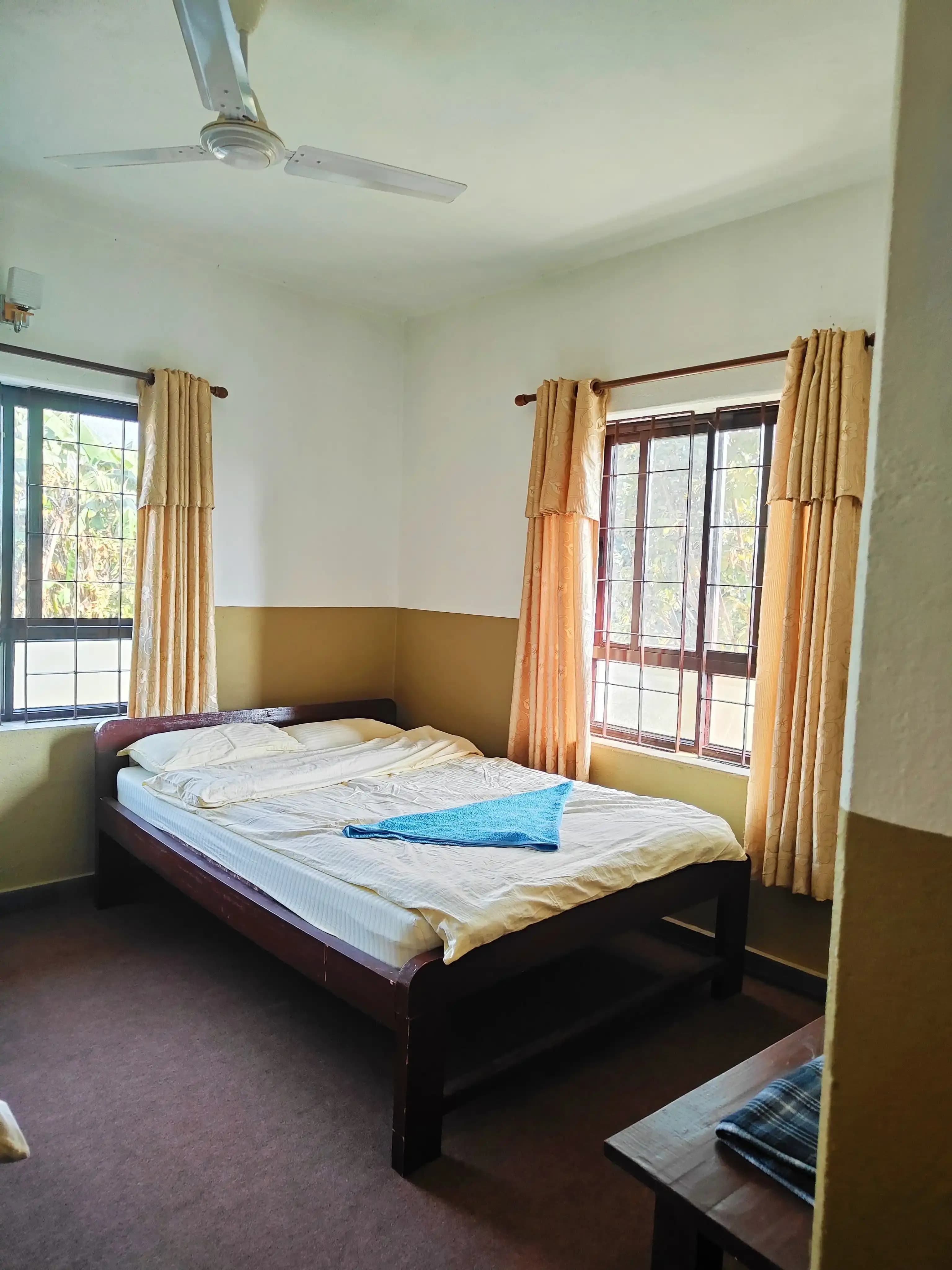
We offer you both private and twin sharing rooms by allowing you to choose what best suits for your comfort and budget.
Guided by the principle that cleanliness is next to godliness, our rooms are kept clean, simple, and comfortable with all basic amenities provided.
- Hot Water: 24/7 hot water is available in the bathrooms.
- Beds: Bedsheets and towels are changed regularly.
- Toiletreies: Basic toiletries are provided by the Ashram.
- Room: Rooms are cleaned routinely to maintain a peaceful and hygienic living space.
Know before you arriveVisa Best season What to bring Health Read the ashram guidelines
The practical side of it.
A few honest notes before you book. Most students fly into Kathmandu and either fly or bus to Pokhara, and we collect you from the airport or the bus park, free.
Visa on arrival at Kathmandu (Tribhuvan) for 80+ nationalities. USD 30 (15 days) / 50 (30 days) / 125 (90 days). Bring 2 passport photos and USD cash.
September to November and February to May are the clearest. Monsoon (June to August) is quieter and often better priced. We run year-round.
Modest yoga clothes, warm layer (mornings are cool), refillable water bottle, journal. Mat, blanket and bolster are provided.
No mandatory vaccines. If on prescription medication, bring a supply. Pokhara has good clinics; we are 20 minutes from the city hospital.
Similar retreats
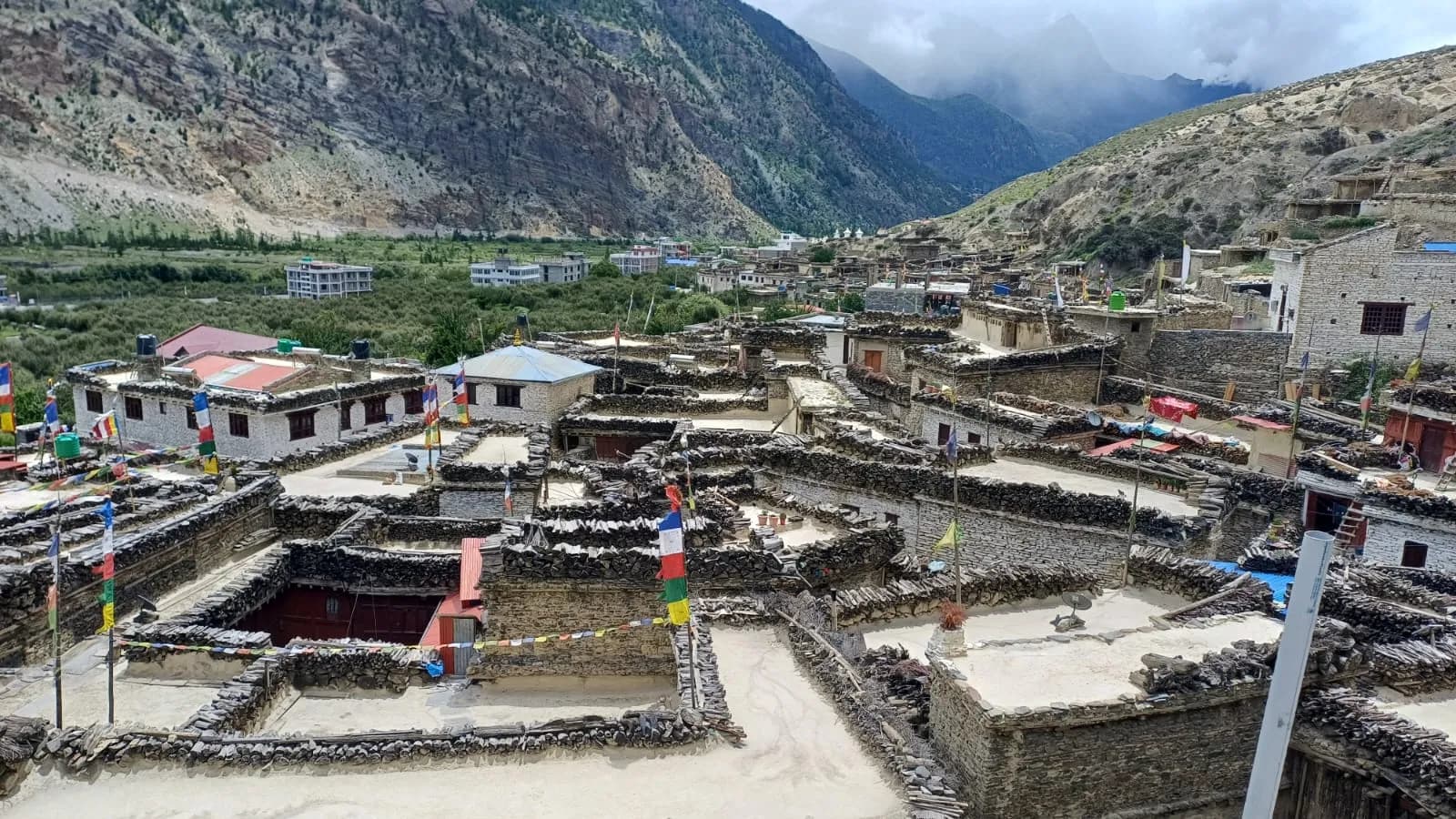
7-Day Spiritual Retreat in Nepal - Muktinath Yoga Tour
7 days€1299
View retreat →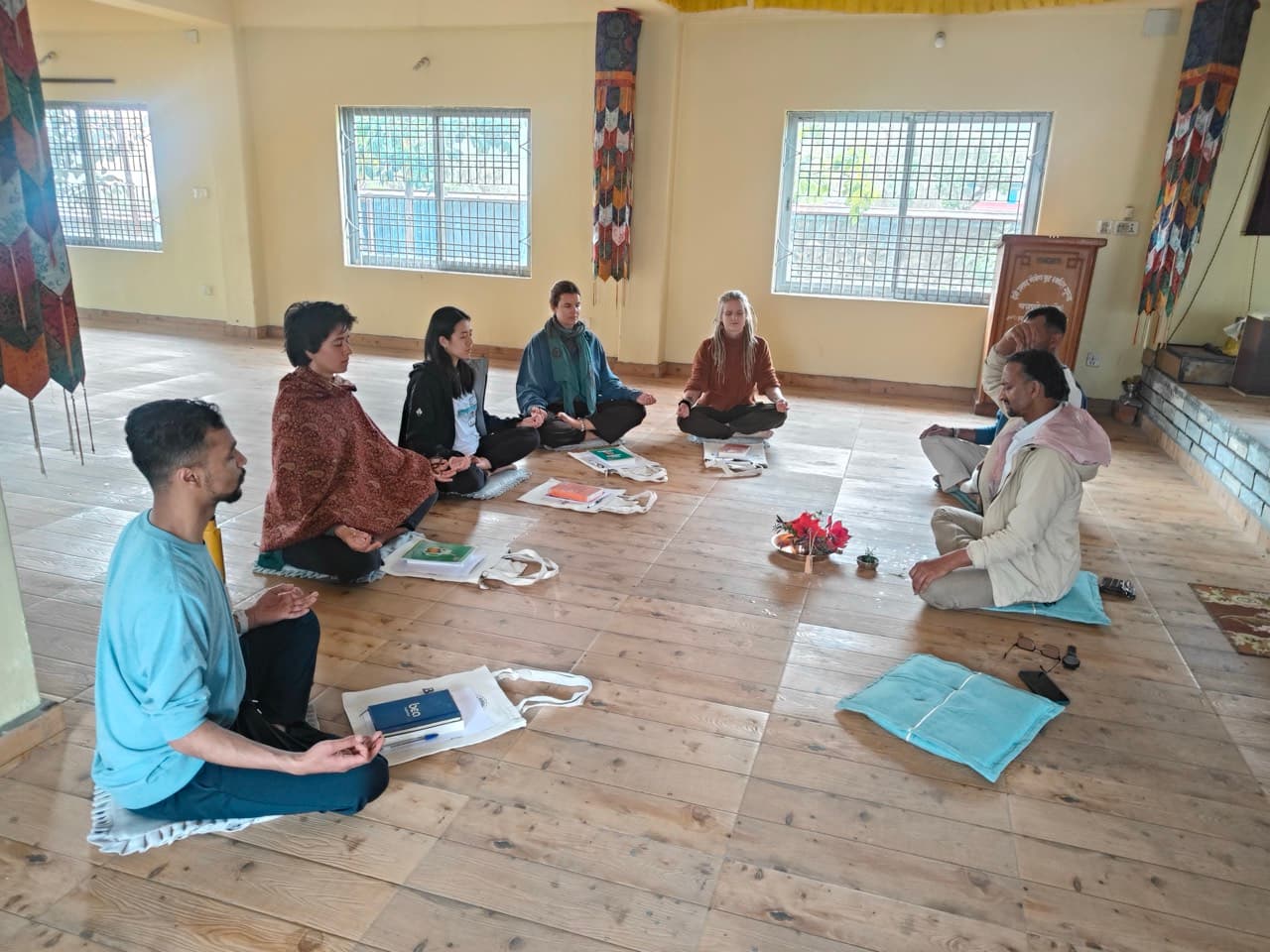
Transformative Traditional Yoga Course
3 Months€4999
View retreat →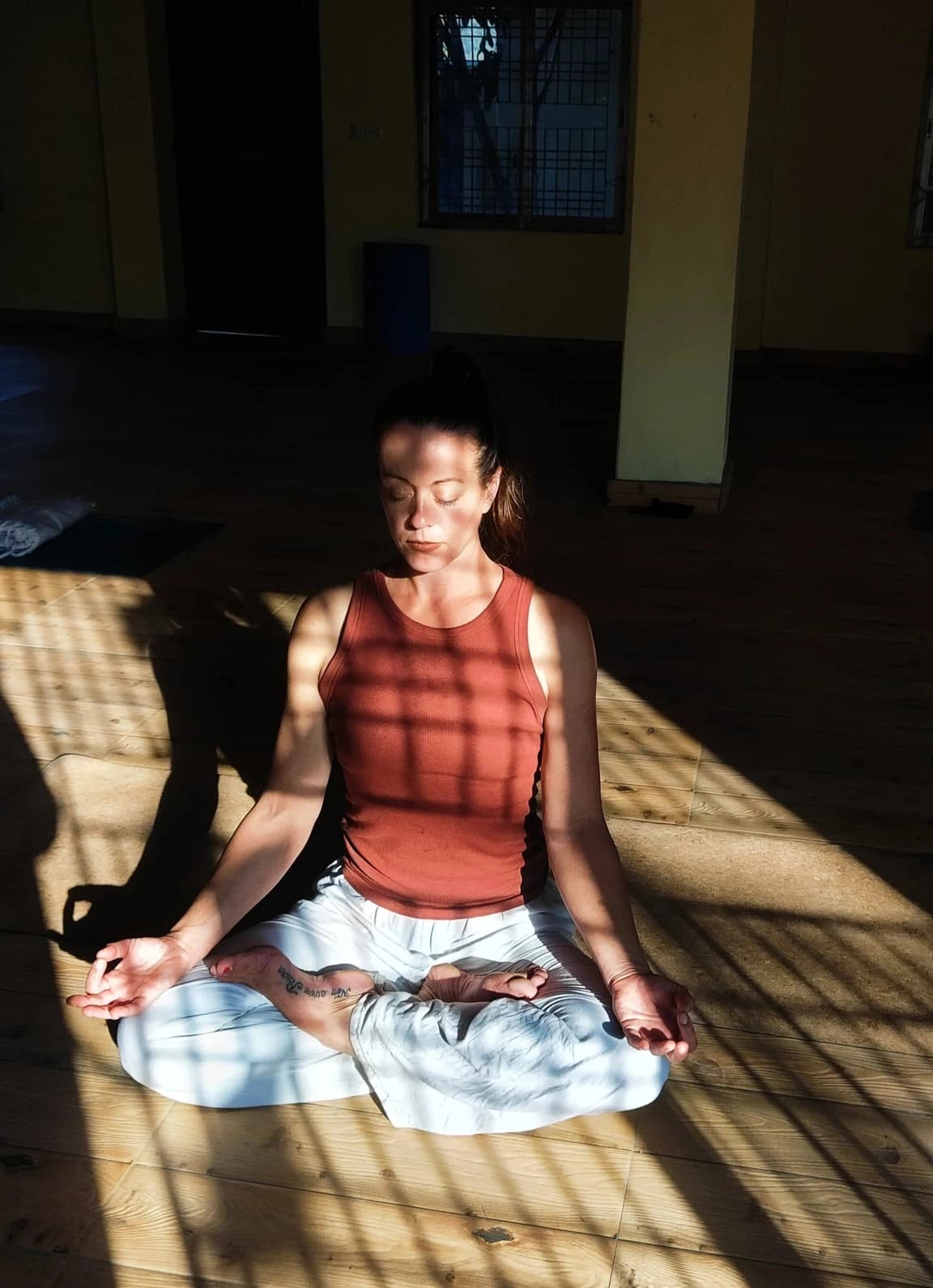
Chakra Workshop & Healing Retreat
8 days€505
View retreat →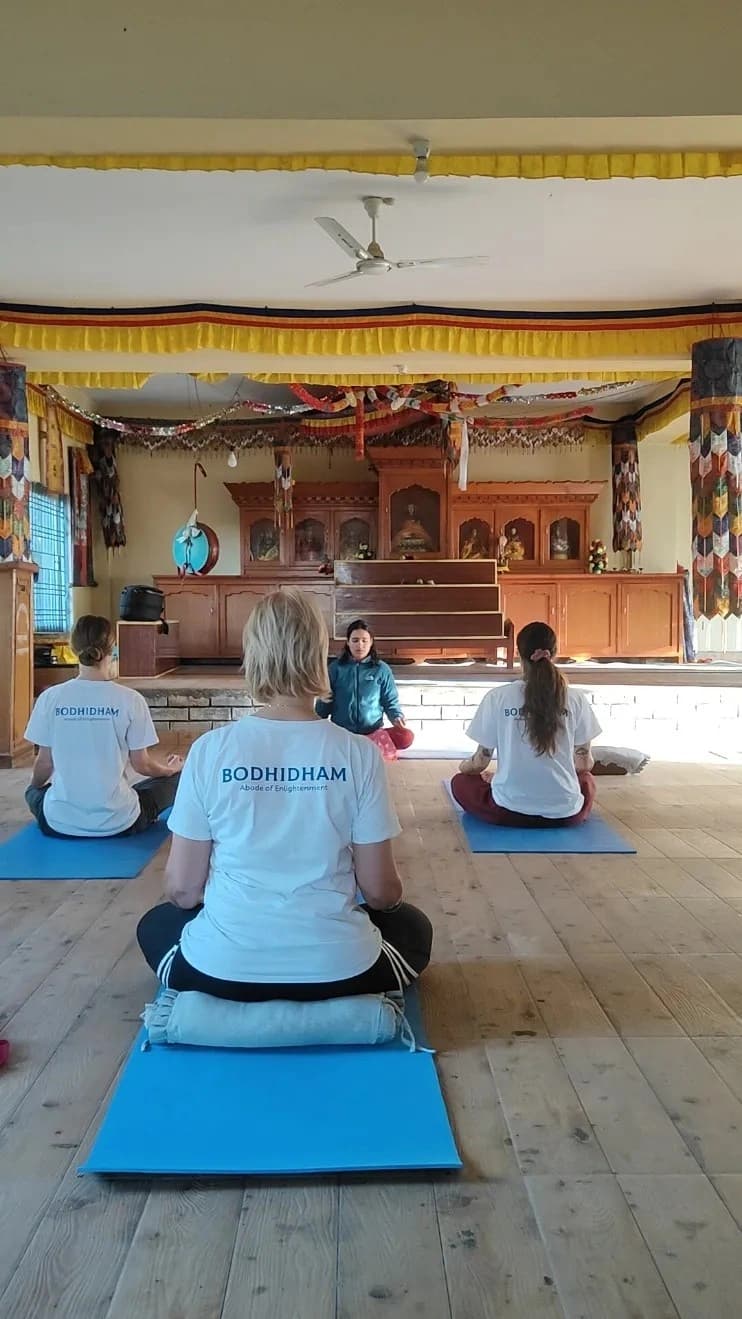
Ayurveda Healing Retreat
6N/7D €485
View retreat →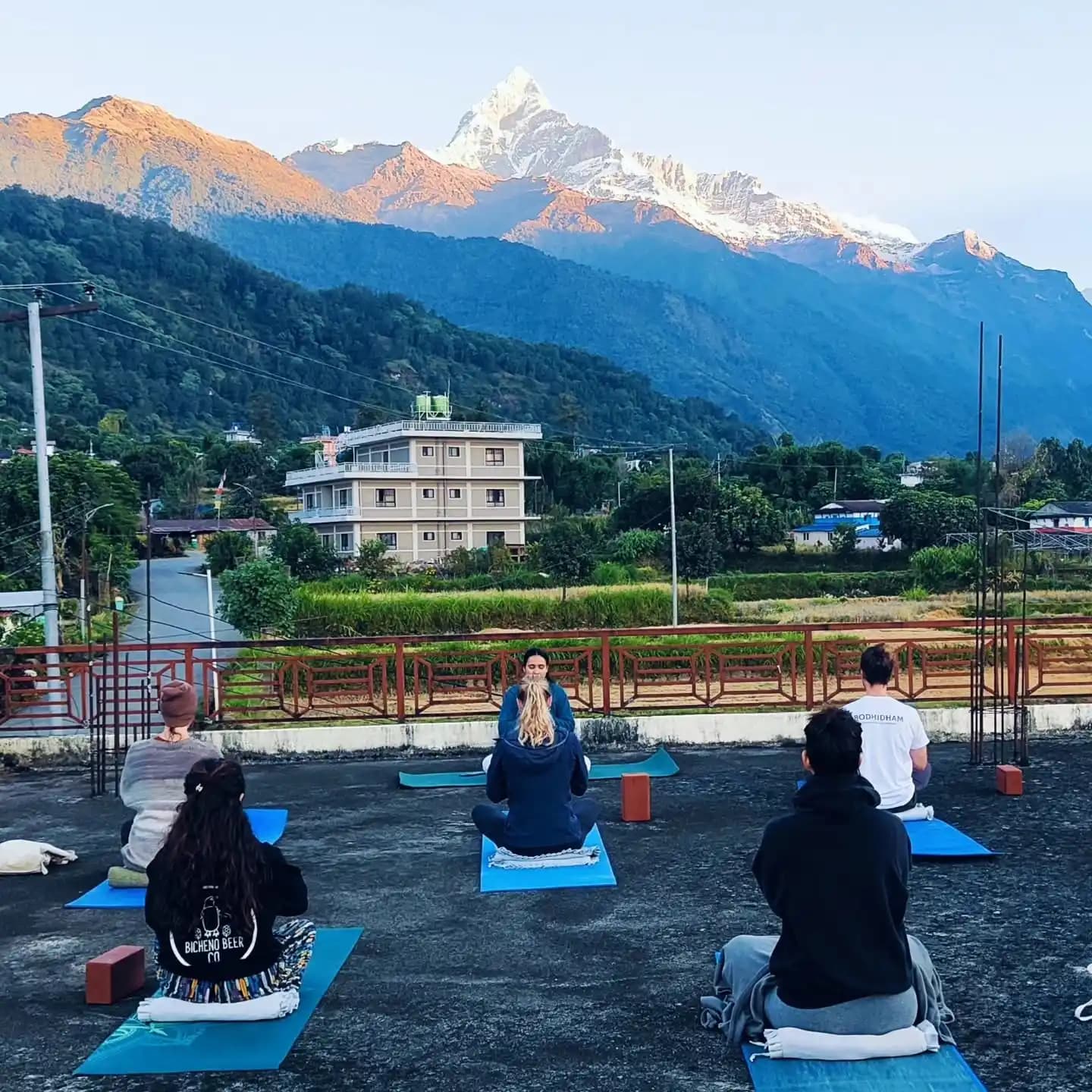
Long Term Retreat at Bodhidham
1 to 3 months€1550
View retreat →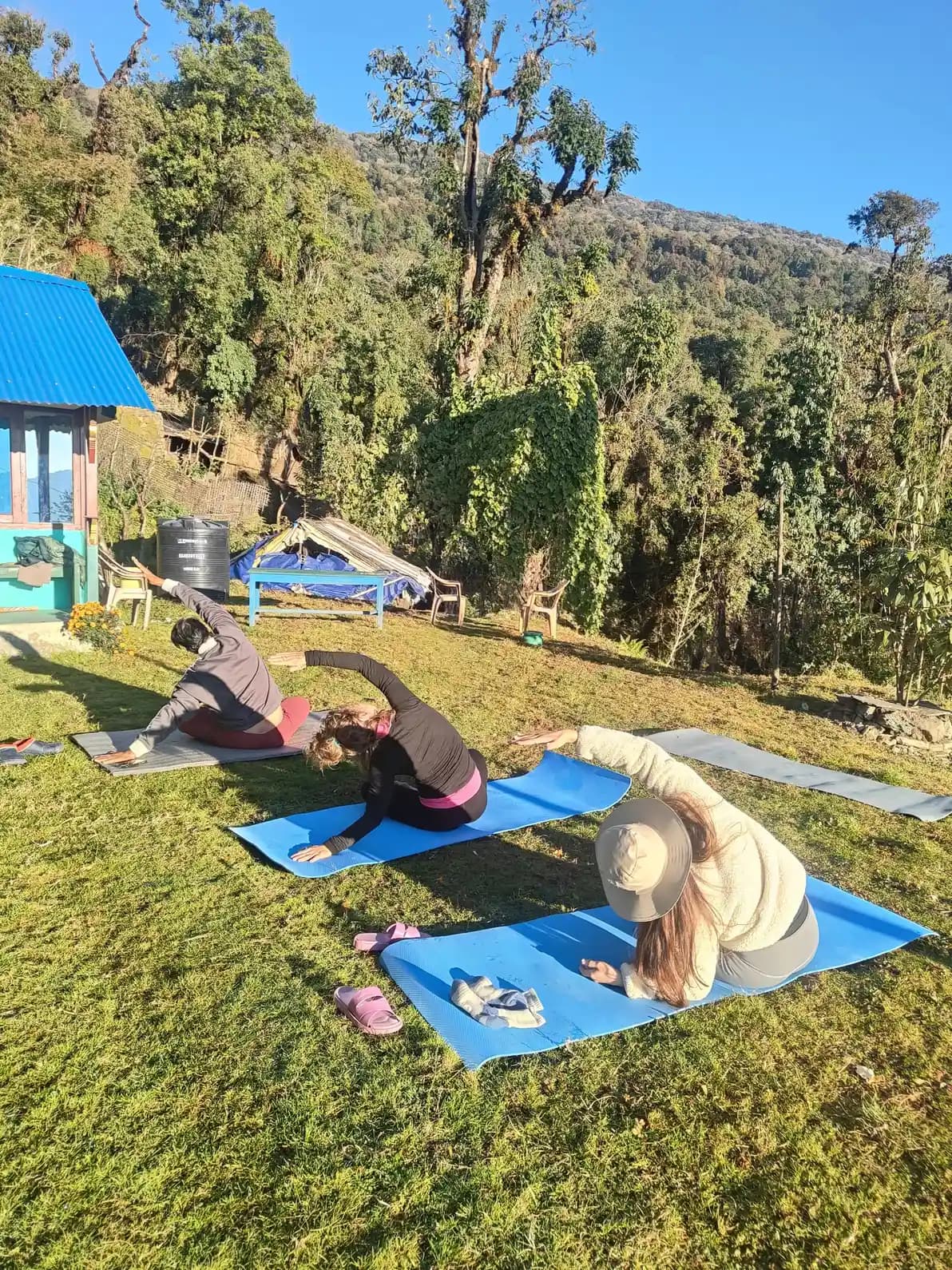
Home Stay Yoga Retreat
2N/3D€245
View retreat →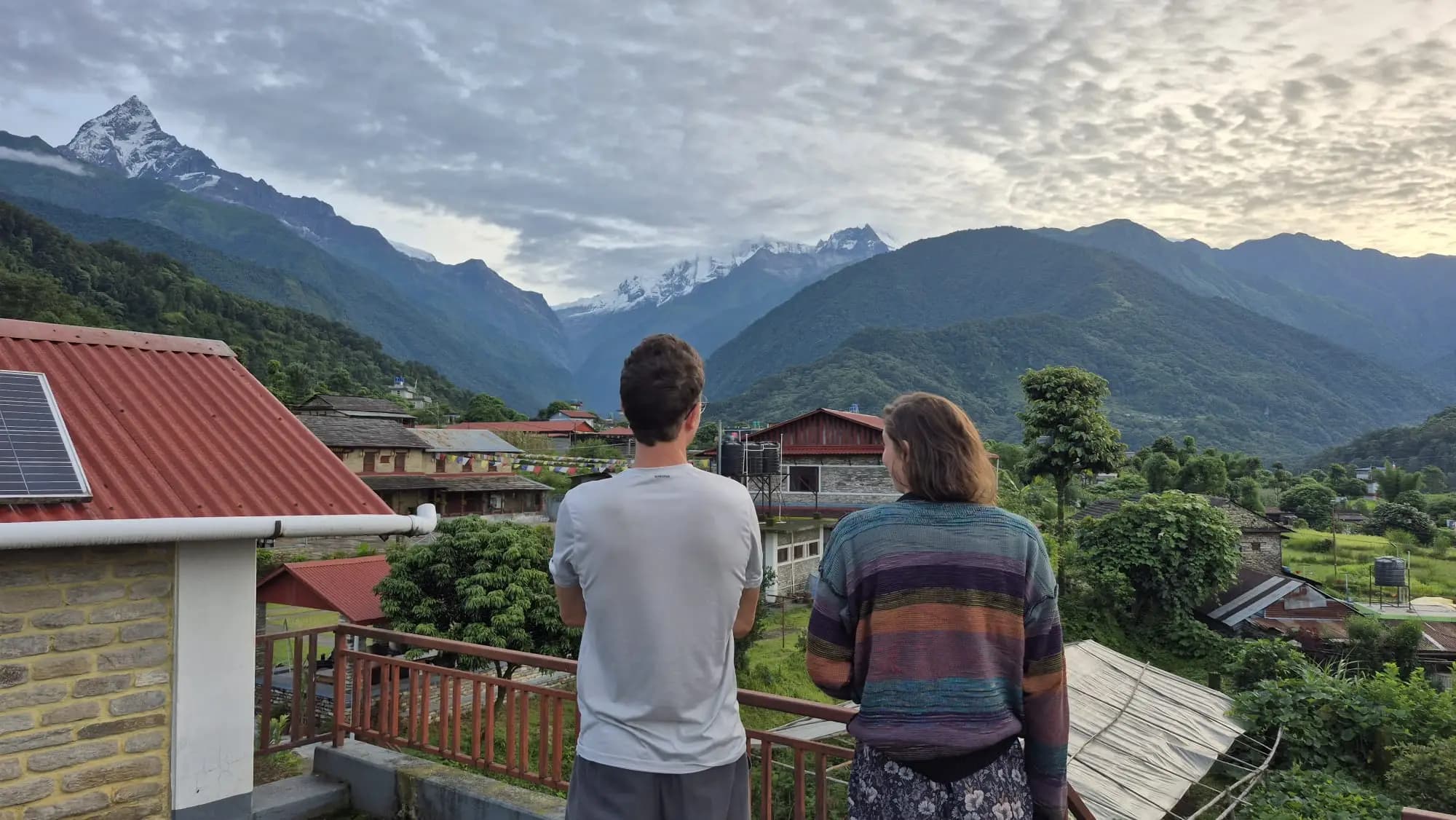
Mountain View Yoga & Meditation Retreat in Nepal
6N/7D€430
View retreat →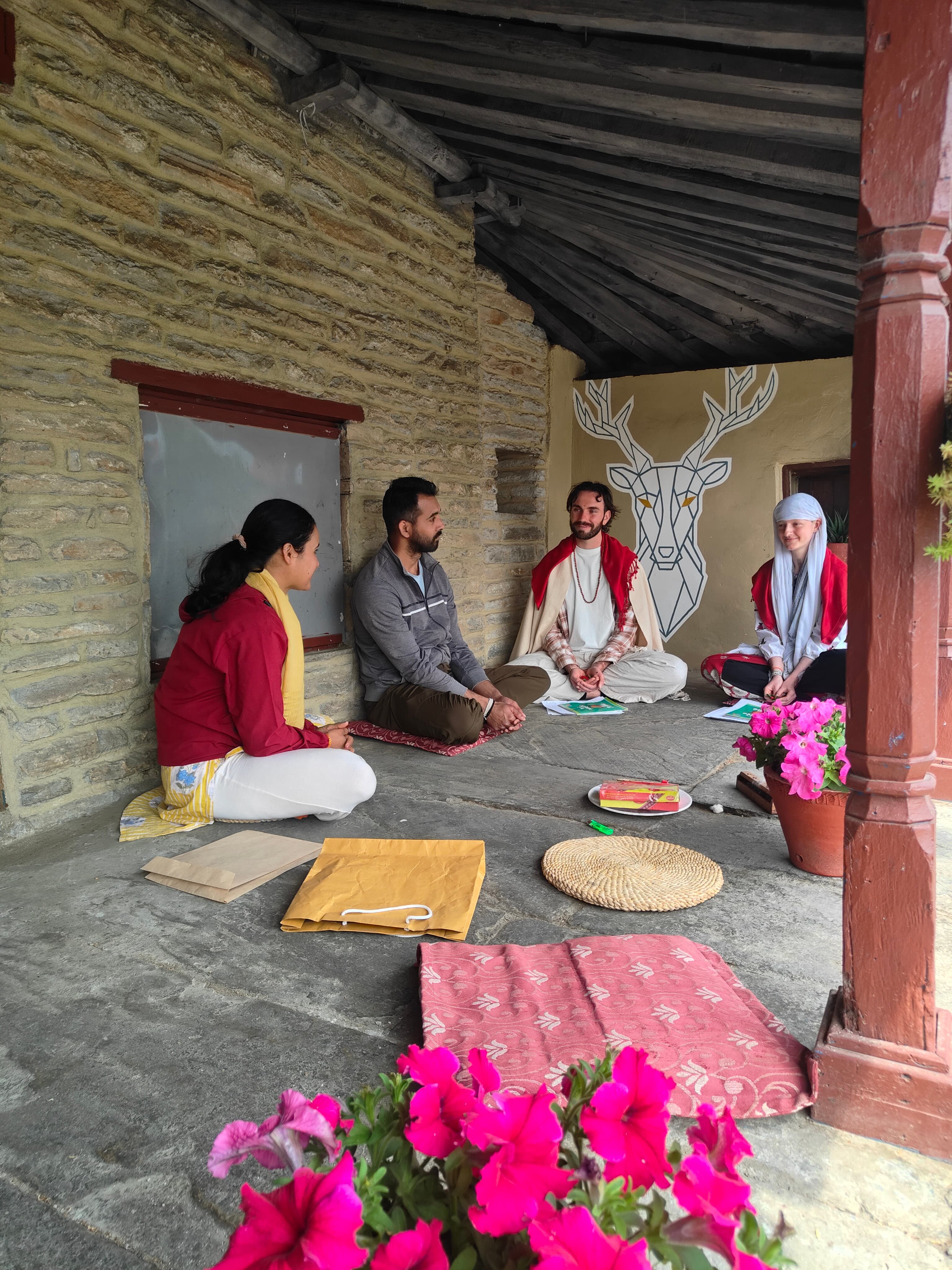
Detox Yoga Retreat in Nepal
6 nights / 7 days€430
View retreat →