

- Bank
- Nepal bank — details shared on enquiry
- Account name
- Bodhidham Yoga School and Spiritual Retreat
- Account number
- Provided on booking confirmation
- SWIFT
- Provided on booking confirmation
- Branch
- Pokhara, Nepal
Transformative Traditional Yoga Course
Duration3 Months
LocationGhachowk, Pokhara
SessionsYoga, meditation & philosophy
Daily practiceMorning & evening meditation
IncludedAll-inclusive
FocusHatha, Raja, Karma & Bhakti Yoga
What this retreat is
A complete reset, without leaving Pokhara
The Transformative Traditional Yoga Course is a three-month residential course at Bodhidham Yog Dhyan Ashram in Ghachowk, a quiet Himalayan village above Pokhara. It is for students who want to study yoga the way the tradition understands it: as a science of the body, breath, mind, emotions, intellect, conduct and consciousness, and not only as a set of postures.
Over three months, you study and practise the four major streams of traditional yoga (Hatha, Raja, Karma and Bhakti) alongside introductions to Vedanta, Vedic philosophy and Ayurveda. Just as important, you have time. Time to establish a daily practice, to study the teachings more than once, to observe the mind, to take part in service, and to let what you learn become part of how you live.
Why a three-month traditional course?
Four streams of traditional yoga: Hatha, Raja, Karma and Bhakti Yoga, studied together as one tradition rather than as separate styles.
Hatha Yoga beyond exercise: Asana, pranayama, mudra, bandha and shatkarma, understood as preparation for meditation and not only as physical practice.
A systematic study of the mind: Raja Yoga from yama and niyama through pratyahara, dharana and dhyana, with self-observation and yogic psychology.
The wider Indian knowledge traditions: Introductions to Vedanta, Vedic philosophy and Ayurveda, so you understand yoga in its own intellectual and spiritual landscape.
Time for real immersion: Three months to build a steady daily discipline and let the teachings settle, instead of compressing a vast tradition into a few weeks.
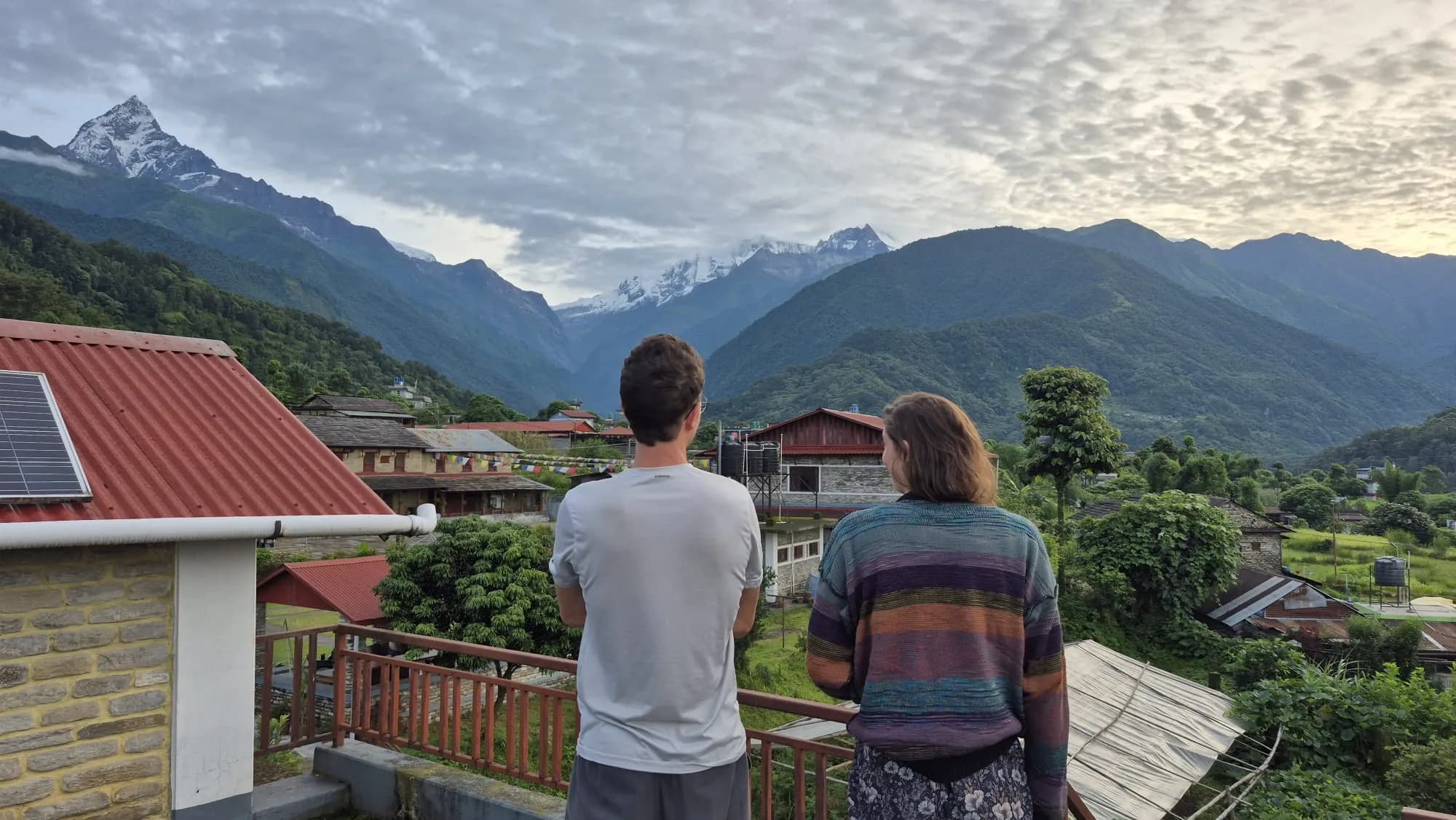
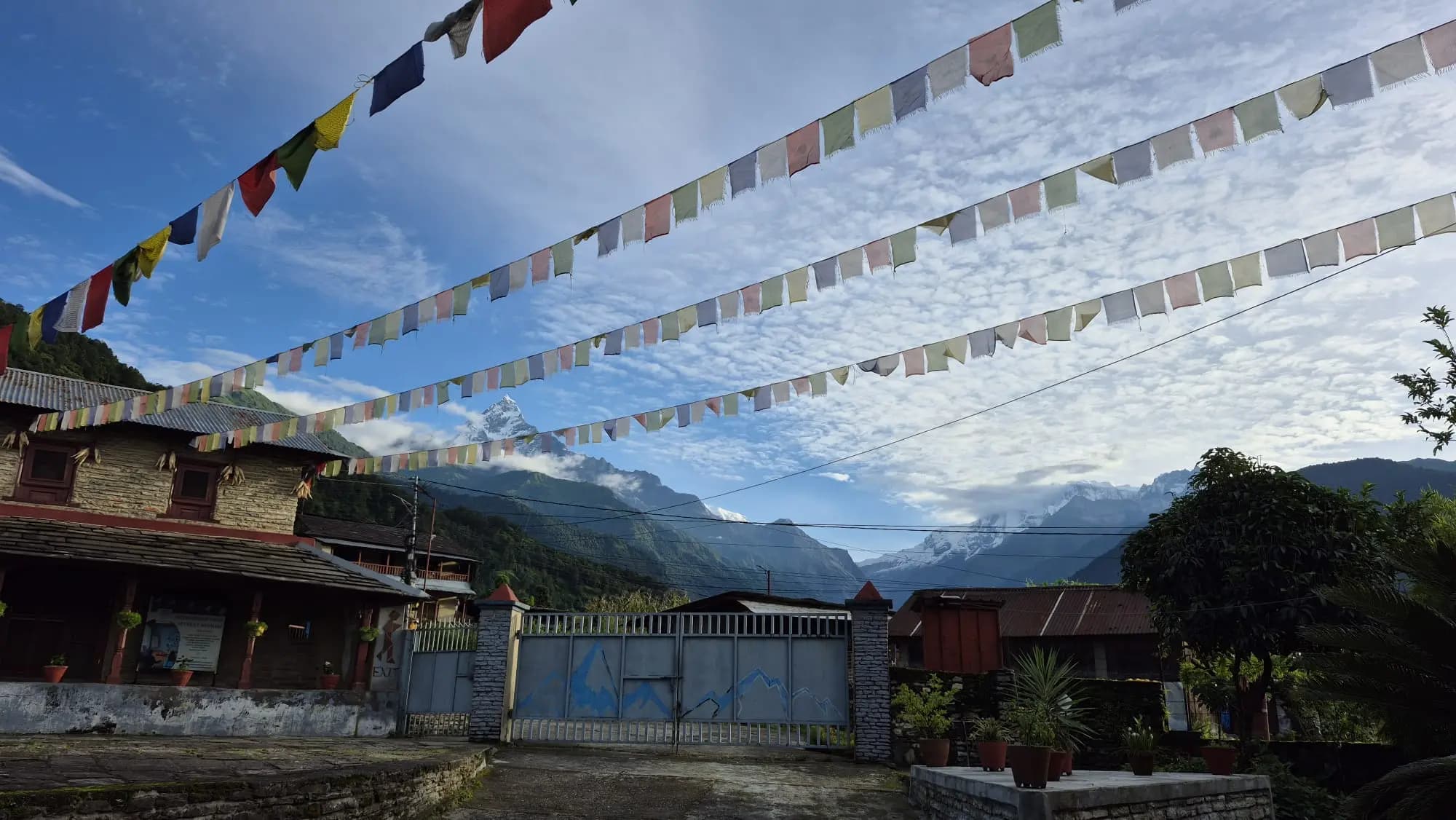
Life in a traditional ashram: Daily meditation, karma yoga, kirtan and sattvic meals from our farm, in Ghachowk village beneath the holy mountain Machhapuchhre.
Daily plan
Your week, spelled out
The shape of every day at Bodhidham is the same as it has been for over a decade.
A typical day
the rhythm every day follows- 1Early morning Wake before sunrise, shower, and sit for morning meditation in the quiet before the day begins.
- 2Late morning Study: yoga philosophy, Vedanta, Vedic philosophy or Ayurveda.
- 3Late afternoon Practice and inner work: asana, concentration and self-observation.
- 4Morning practice Shatkarma, pranayama and traditional Hatha Yoga.
- 5Afternoon Karma yoga, self-study and rest.
- 6Evening Mantra, kirtan or satsang, followed by a light dinner.
- 7Breakfast A warm sattvic breakfast from the farm, eaten slowly.
- 8Night Meditation before sleep, so the day closes as it began, in stillness.
Day by day
open any day for the full scheduleMonth 1: Foundation and DisciplineArriving and settling. – Beginning service.
Month 1: Foundation and Discipline schedule Arriving and settling. You settle into ashram life and let go of the pace you arrived with.Building a daily discipline. Early rising, meditation, practice, and study become a routine rather than an effort.Foundations of practice. You learn the foundations of Hatha Yoga, pranayama, and meditation, and how each prepares the mind.Meeting the teachings. You begin studying the philosophy behind the practice and where yoga sits within the wider tradition.Beginning service. Karma yoga becomes a natural part of your day.Month 2: Deepening and StudyA steadier practice. – Time to ask.
Month 2: Deepening and Study schedule A steadier practice. With the routine established, practice goes deeper, and meditation grows longer and steadier.Studying the mind. Self-observation becomes a daily habit, and you begin to see your own mental patterns clearly.Returning to the teachings. You meet the teachings again, and they reveal more the second time.Heart and action. Service, mantra, and kirtan become lived practice rather than ideas.Time to ask. There is room to question, discuss, and clarify with your teachers.Month 3: Integration and ContinuityIntegration. – Continuing the path.
Month 3: Integration and Continuity schedule Integration. Body, breath, mind and study come together into one coherent practice.Reflection. Time in reflection and stillness lets three months of learning settle.A practice of your own. You shape a sustainable daily practice to carry home.Completion. The course closes with the Bodhidham Certificate for students who complete it successfully.Continuing the path. You leave with a foundation for lifelong study, not an ending.
Retreat Overview
The Bodhidham Transformative Traditional Yoga Course is a residential immersion created for those who want to experience yoga as a daily way of living, a rhythm that supports the body, steadies the mind, and awakens the spirit in everyday life.
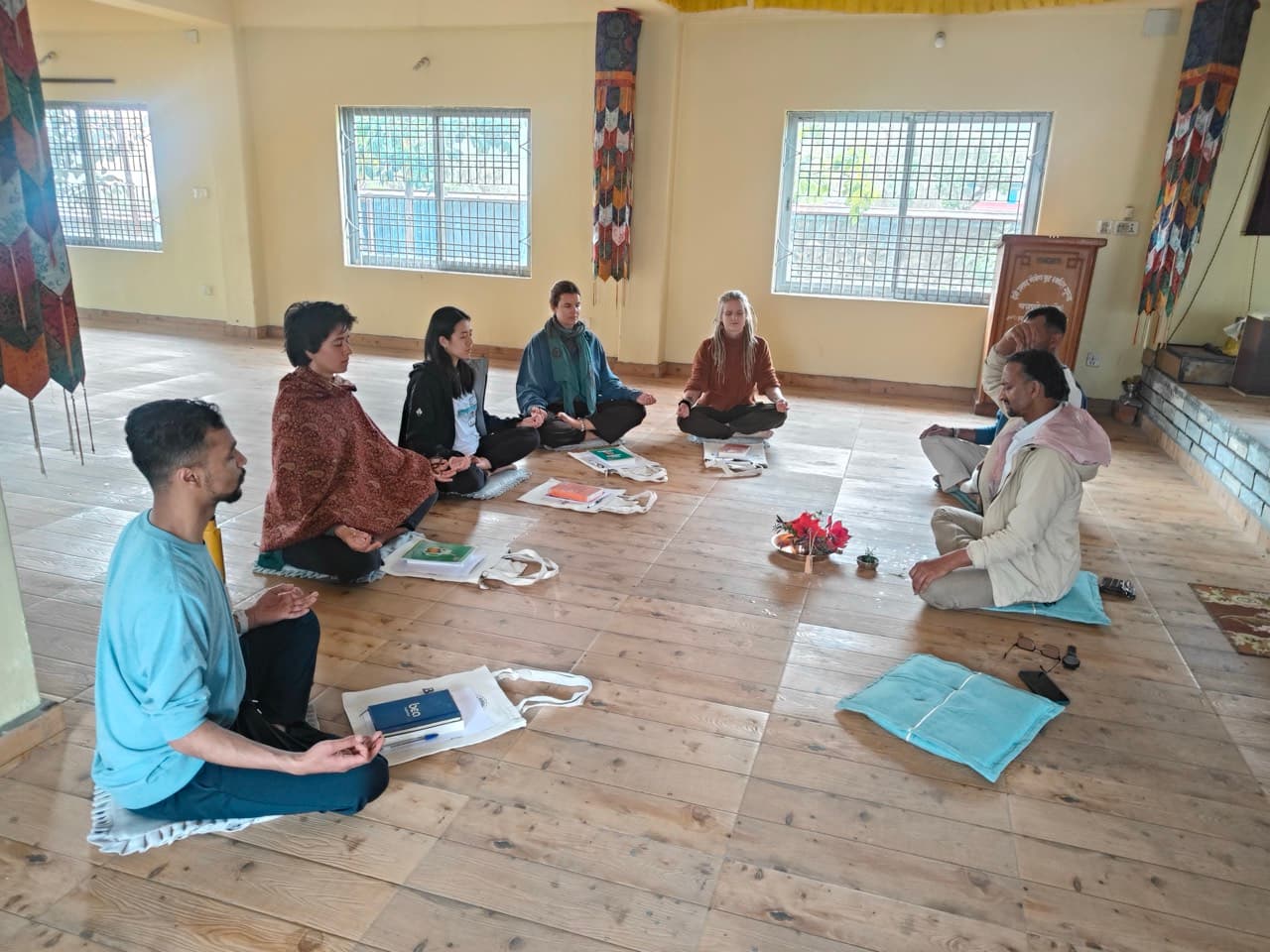
The practice is rooted in classical Hatha Yoga and supported by two daily meditation rituals. Each morning begins with guided meditation before breakfast and before the distractions of the day begin. Each evening closes with guided sleep meditation, allowing the body to relax, the breath to settle, and the mind to enter rest with awareness.
Around these two daily anchors, you practise Hatha Yoga, pranayama, mantra, yogic philosophy, mindful reflection, and a simple yogic lifestyle. Organic farm meals, peaceful surroundings, small-group learning, and the Himalayan atmosphere all support the deeper intention of the course: transformation and spiritual awakening through consistency, silence, breath, and daily practice, drawing you closer to the divinity within.
A holistic study of yoga
The course brings together the major streams of traditional yoga, with introductory studies of the wider Indian knowledge traditions.
Hatha Yoga
You explore traditional Hatha Yoga practice, including:
- Asana
- Pranayama
- Mudra and bandha
- Shatkarma (yogic cleansing practices)
- Subtle-body concepts
- Preparation for meditation
- The traditional principles and purpose of Hatha Yoga
The emphasis is not on performing postures, but on understanding their place within the larger yogic process.
Raja Yoga
The study of the mind and the inner dimensions of yoga:
- Yama and niyama
- Pratyahara
- Dharana and dhyana
- Samadhi
- Concentration and meditation
- Self-observation
- Understanding mental patterns
- Yogic psychology
You begin to explore yoga as a systematic approach to understanding and transforming the mind.
Karma Yoga
The yogic approach to action, responsibility, and selfless service:
- The philosophy of action
- Selfless service
- Attachment and expectation
- Discipline and responsibility
- Action as a means of inner purification
- Bringing yogic awareness into everyday life
Bhakti Yoga
The path of devotion, and of transformation through the heart:
- Devotion and surrender
- Prayer
- Mantra
- Kirtan and sacred sound
- Traditional approaches to Bhakti
- The relationship between devotion and spiritual practice
Introduction to Vedanta
Vedanta is one of the most profound philosophical traditions concerned with the nature of the Self, consciousness, and reality. You are introduced to its foundational concepts:
- Atman and Brahman
- Self-inquiry
- The nature of reality
- Knowledge and liberation
- The relationship between individual and universal consciousness
This is an introduction, intended to lay a foundation for continued study.
Introduction to Vedic philosophy
Yoga is part of a much broader philosophical and spiritual heritage. You are introduced to foundational ideas in Vedic philosophy, including:
- Dharma
- Karma
- Purushartha
- Consciousness
- The nature of human life
- Knowledge, action, and spiritual development
- The wider philosophical context of yoga
This helps you understand yoga within its traditional intellectual and spiritual landscape.
Introduction to Ayurveda
The course introduces the fundamental principles of Ayurveda, a traditional perspective on health, lifestyle and balance:
- The five elements
- The doshas
- Prakriti
- Daily routine and discipline
- Lifestyle
- Food and wellbeing
- How lifestyle supports yogic practice
The purpose is an introduction to Ayurvedic principles, not professional Ayurvedic training.
Transformation through immersion
What makes a three-month course different is not the number of subjects it covers. It is the time it gives you for immersion.
You have time to establish a daily practice and feel the effect of consistent discipline. To study the teachings repeatedly. To observe the mind, deepen meditation, take part in service, and gradually bring yogic principles into everyday life.
Knowledge is not simply delivered here. It is studied, practised, reflected on, and lived. That is the essence of transformative education.
More than teacher training
The aim is not simply to teach you how to conduct a yoga class. The deeper intention is to help you become a serious student of yoga:
- To understand Hatha Yoga beyond physical exercise
- To approach Raja Yoga beyond meditation techniques
- To experience Karma Yoga beyond the concept of service
- To approach Bhakti Yoga beyond devotional expression
- To encounter Vedanta beyond philosophical terminology
- To understand Ayurveda beyond lifestyle trends
And to see yoga as part of a much larger tradition of human inquiry and transformation.
The Bodhidham Certificate
On successful completion of the course, you receive a Bodhidham Certificate. It recognises that you have completed the three-month programme and taken part in its curriculum, practices and residential life.
The certificate is a recognition of study and completion, not a claim of mastery of the vast science of yoga. Yoga is not mastered through a certificate. It is a lifelong path of study, practice, and transformation.
Why three months?
We do not claim that three months is enough to master yoga. It is not.
But we believe it is a more reasonable beginning for serious yogic education than trying to compress a vast tradition into a few weeks. Three months gives you space:
- To slow down
- To establish discipline
- To practise consistently
- To study deeply
- To ask questions
- To observe yourself
- To experience the teachings
- And to begin going beyond the surface of yoga
Who is this course for?
This course is for anyone who wants to understand yoga as a complete tradition rather than a workout. It suits practitioners who have completed a 200-hour or 300-hour training and felt there was far more to learn, teachers who want real depth behind what they teach, and sincere beginners who are ready to commit to three months of steady discipline.
It asks for commitment more than flexibility. If you are looking for a short break or a quick credential, one of our shorter retreats will suit you better.
The Bodhidham vision
At Bodhidham Yog Dhyan Ashram, we believe the future of yoga education should not be measured only by the number of certificates issued or hours completed. It should be measured by the depth of understanding, the sincerity of practice, and the quality of transformation that education makes possible.
We seek to preserve the traditional values of yoga while creating an accessible and meaningful place of study for contemporary students.
Beyond the certificate. Beyond the hours. Beyond the postures. Into the deeper science of yoga.
Ready to live yoga as a way of life?
If you feel the pull toward real change and a deeper, more spiritual practice, this quiet Himalayan journey may be exactly what you are looking for. Reach out, and we will help you decide if it is right for you.
Ready to step out of the noise?
Reserve your seat at Bodhidham.
Inside the retreat
A glimpse of our days
 4.9★ from 140+ studentsVerified
Reviews from our students
Pricing & what’s included
Everything in. Nothing hidden.
Every plan includes sessions, sattvic meals, accommodation and free Pokhara pickup. Pick the room that fits you.
Shared / Couple
Sharing room
€4999per person
- Best for couples & solo travellers
- Twin beds, shared bath
All-inclusive of stay, three sattvic meals, every session and free pickup from Pokhara airport or bus park. 25% deposit confirms your seat.
Cost includes & excludes12 included·5 excluded
Show allHide
Cost includes & excludes
12 included·5 excluded
Included in your fee
- Accommodation on the ashram for the full three months, in a shared or private room
- All yoga, meditation, philosophy and study sessions in the curriculum
- Kirtan, mantra and cultural evenings
- Hot water 24 hours a day, and regular fresh linens and towels
- Three organic, sattvic vegetarian meals a day, mostly from our own farm
- Course materials
- Weekly excursions to caves, temples, waterfalls and mountain villages
- Wi-Fi on campus
- Herbal tea with every meal
- Karma yoga and participation in ashram life
- Free pickup from Pokhara airport or bus park
- A Bodhidham Certificate on successful completion
Not included
- International and domestic flights to and from Pokhara
- Personal expenses
- Nepal visa fees, including any visa extension
- Optional therapies, massages, side trips or activities outside the course
- Travel and medical insurance, including emergency evacuation
The teaching team
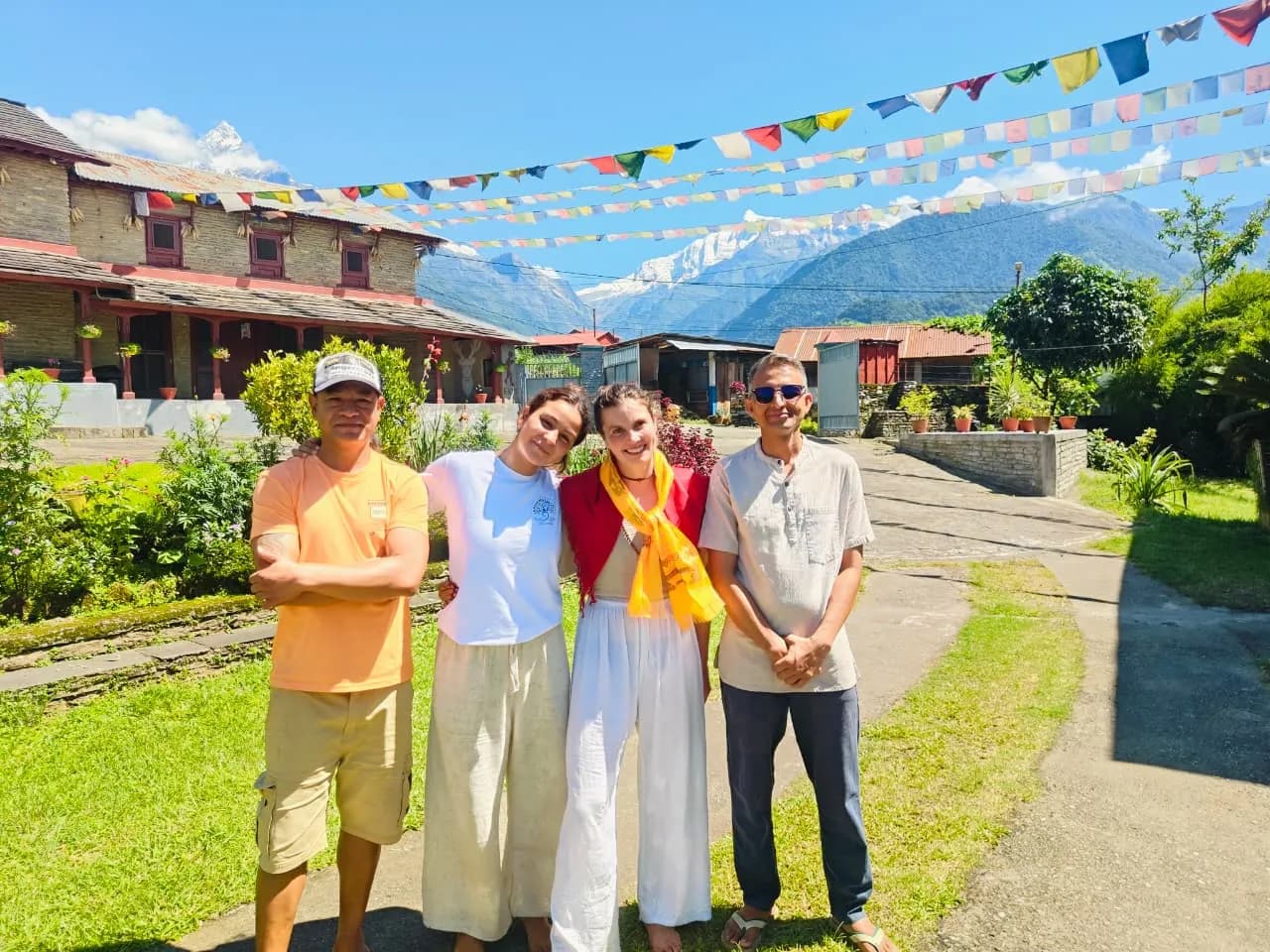
Taught by 3 Yogis
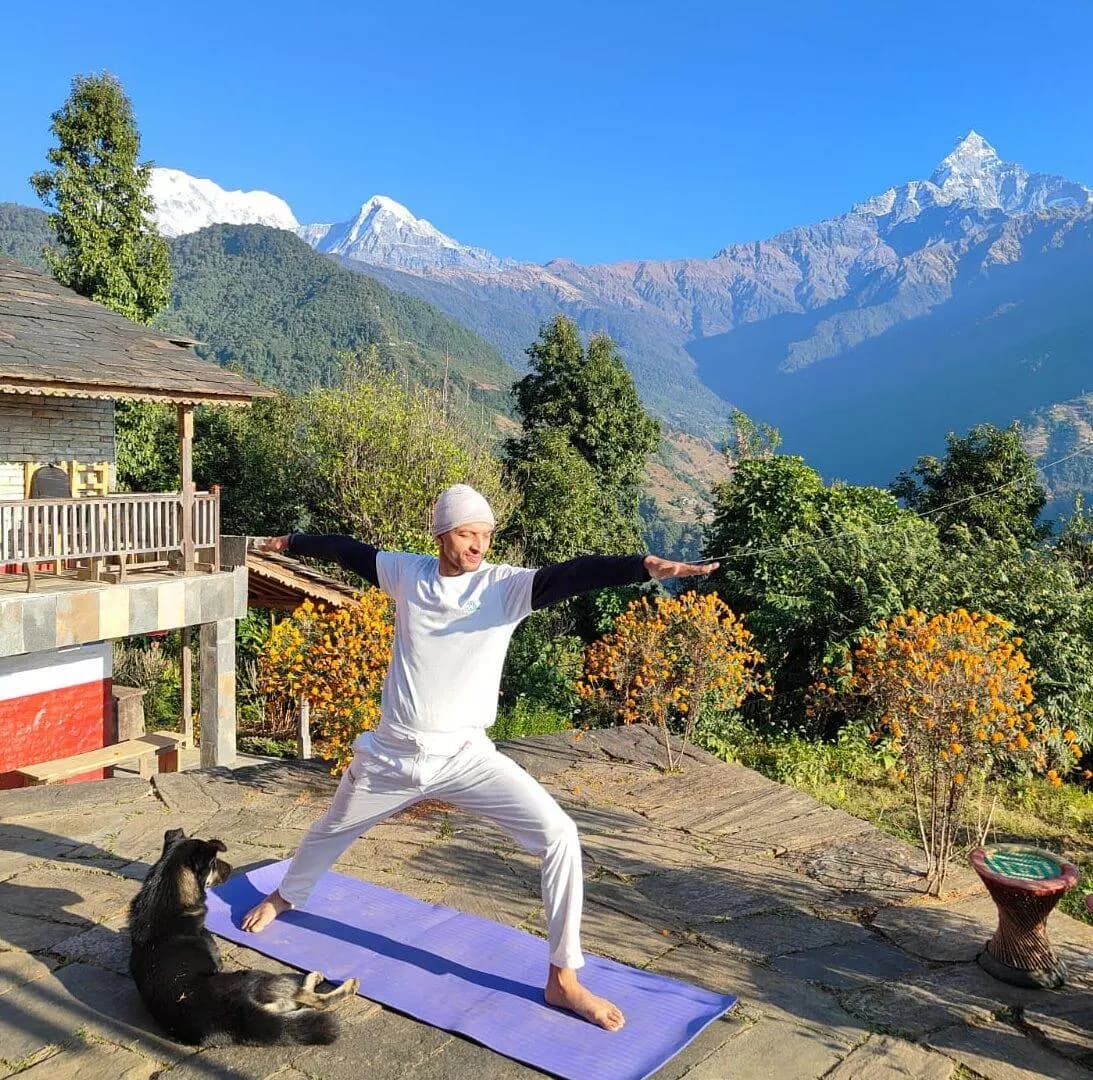 SwamiFounder & Spiritual Head
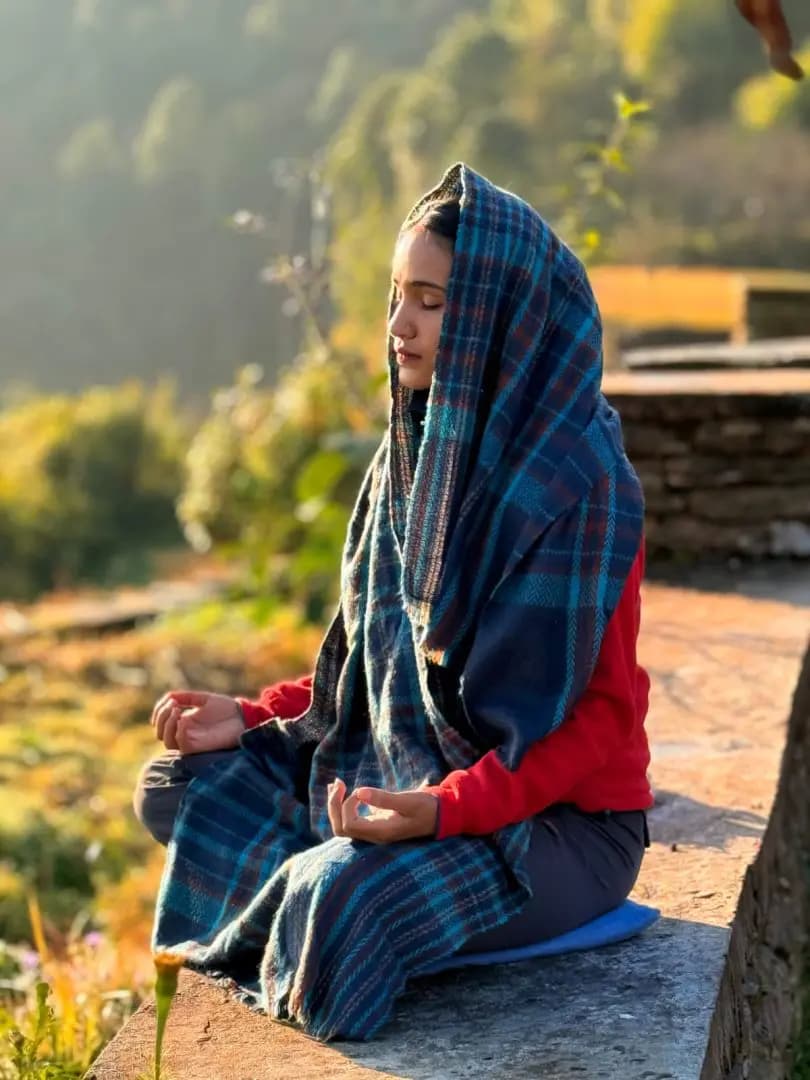 DeepikaYoga & Anatomy Teacher
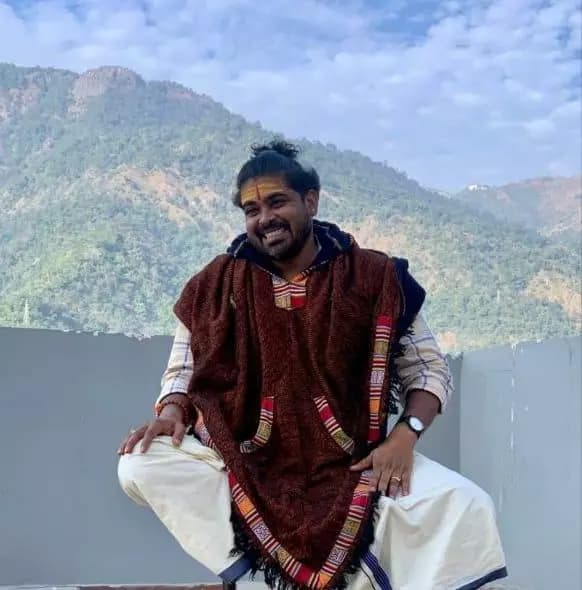 RatheeshGuest Yoga Teacher
Why Bodhidham
Why choose Bodhidham?
- i.Traditional lineage-based teaching from experienced yogis
- ii.Family Environment
- iii.Organic food grown on a local farm.
- iv.Away from the city. At the height of 1320 m, Ghachowk Village.
- v.Pollution-Free Location, Best AQI.
- vi.In a lap of the holy mountain, Machhapuchhre.
Bank details & booking
How to reserve your seat.
To confirm your booking, a 25% advance of the total program fee is required. The remaining 75% is due on arrival, before the program begins.
Bank transfer
Exact bank details are shared by WhatsApp/email once your dates are confirmed.
Before you book
Frequently asked
Is this a yoga teacher training?
+
Not in the conventional sense. The aim is not simply to teach you how to conduct a yoga class. It is to help you become a serious student of yoga, with a real understanding of its practice, philosophy and way of life. That depth is a strong foundation if you later choose to teach, but teacher certification is not what this course is for.
Is the course registered with Yoga Alliance?
+
No. You receive a Bodhidham Certificate, not a Yoga Alliance RYT credential. If you specifically need an RYT 200, our 200-hour Yoga Teacher Training runs until the end of 2026. From 2027, Bodhidham's yoga teacher trainings are replaced by this three-month course.
What does the Bodhidham Certificate recognise?
+
It recognises that you successfully completed the three-month course and took part in its curriculum, practices and residential life. It is a recognition of study and completion, not a claim that you have mastered yoga. Yoga is a lifelong path, and no certificate masters it.
Why three months instead of 200 or 300 hours?
+
Because yoga is too vast to compress into a few weeks. Three months is not enough to master yoga, and we do not claim it is. It is a more reasonable beginning: enough time to slow down, build discipline, practise consistently, study the teachings more than once and begin to live them.
Do I need yoga experience?
+
No. The course welcomes sincere beginners as well as experienced practitioners and teachers. What matters more than experience is a genuine willingness to follow the daily discipline of ashram life for three months.
What style of yoga is taught?
+
Traditional Hatha Yoga, together with Raja, Karma and Bhakti Yoga. The Hatha practice is steady and meditative rather than fast-paced, because its purpose here is to prepare the body and breath for meditation and inner work.
Will I qualify in Ayurveda or Vedanta?
+
No. Vedanta, Vedic philosophy and Ayurveda are taught as introductions. They show you where yoga sits within the wider Indian knowledge traditions and give you a foundation for further study. The Ayurveda component is not professional Ayurvedic training.
How is this different from the Long Term Retreat?
+
The Long Term Retreat is a flexible personal stay of one month or more, built around daily practice and ashram life. This course is a structured three-month curriculum covering Hatha, Raja, Karma and Bhakti Yoga, Vedanta, Vedic philosophy and Ayurveda, and it ends with a Bodhidham Certificate for students who complete it.
Will a 90-day visa cover the course?
+
A 90-day tourist visa on arrival may not cover three months of study plus your travel days. Tourist visas can be extended at Nepal's Department of Immigration, which has an office in Pokhara. Check your arrival and departure dates against your visa before you book.
Is the food suitable for special diets?
+
Yes. All meals are organic and vegetarian. Vegan and gluten-free options can be arranged if you tell us in advance.
Is it safe and suitable for solo travellers, including women?
+
Yes. Many of our students travel alone. A small, caring community, a peaceful village setting and free pickup from Pokhara mean you are looked after from the moment you arrive.
Our kitchen
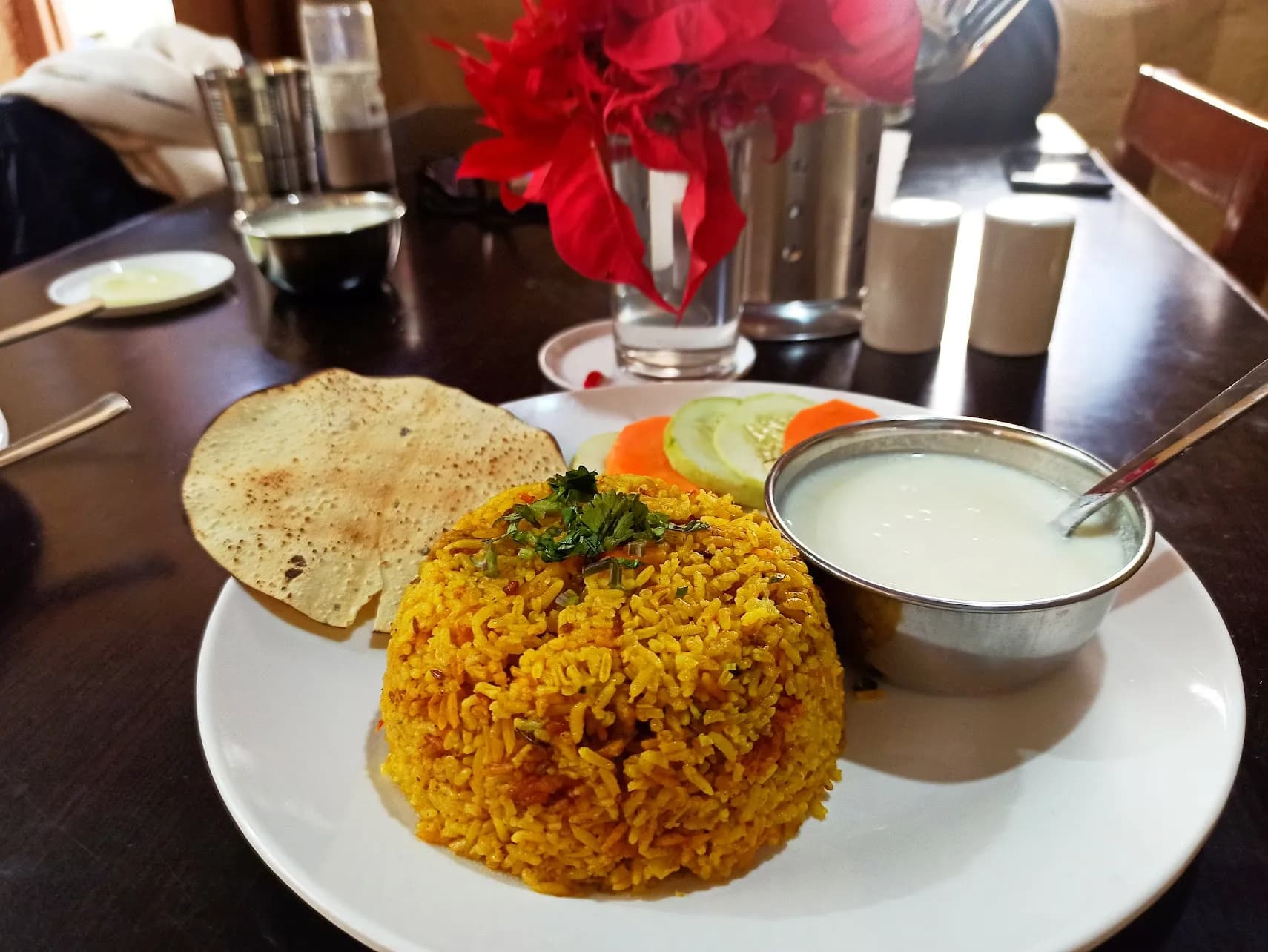
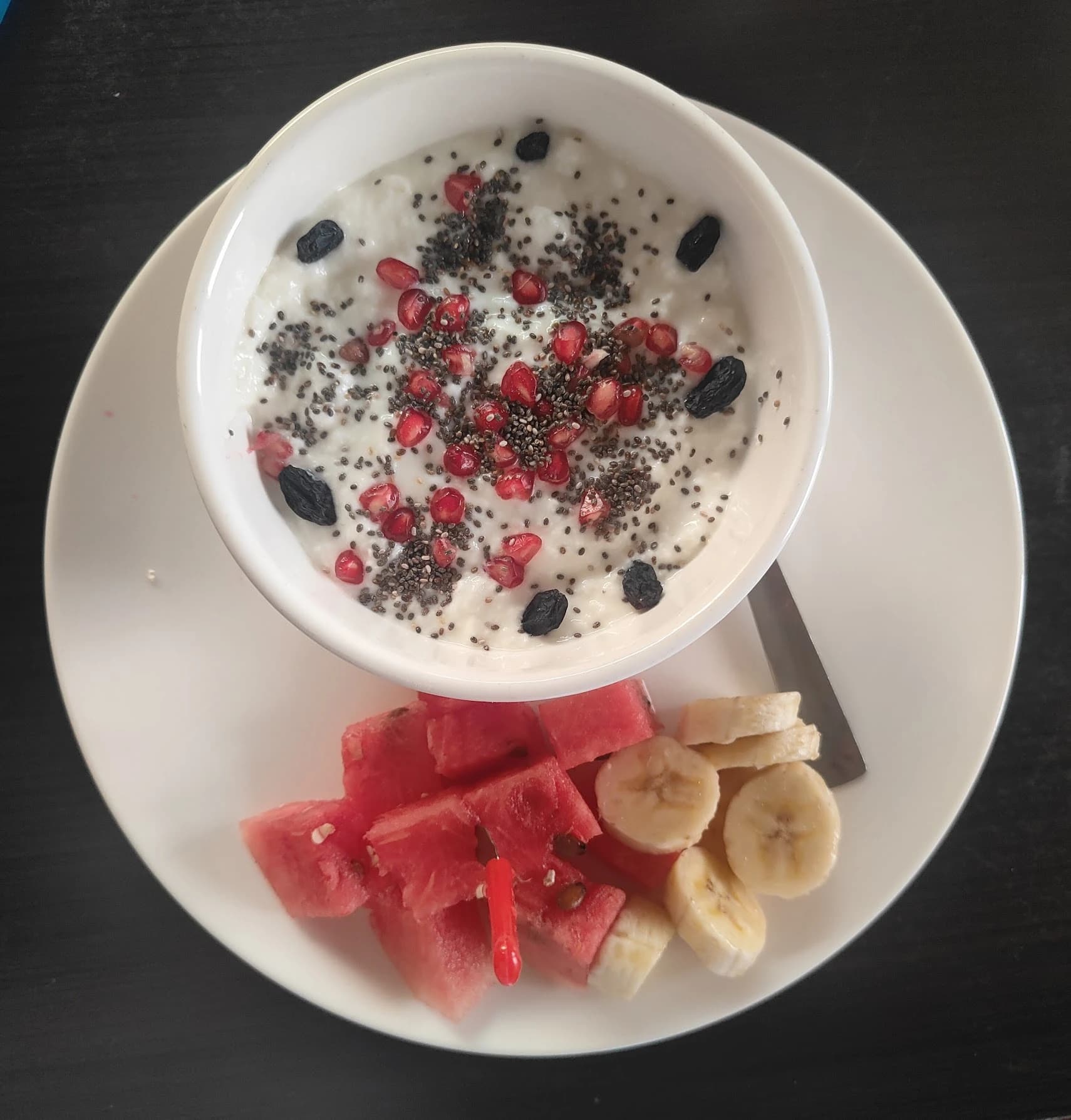
Three sattvic meals, mostly from the farm.
All meals at Bodhidham are organic, freshly prepared and vegetarian, following Sattvic (yogic) dietary principles. Breakfast includes oats, fruits and herbal teas. Lunch is the main meal, dal bhat with seasonal vegetables.
Dinner is lighter with soups, bread or rice with vegetables. Special dietary requirements (vegan, gluten-free, allergies), accommodated with advance notice.
- Herbal Tea: Provided With Each Meal.
- Source: Mostly own organic farm
- Meals: Three a day, included
- Special diets: Vegan & gluten-free on request

Around Bodhidham
Ashram premises and Accommodation
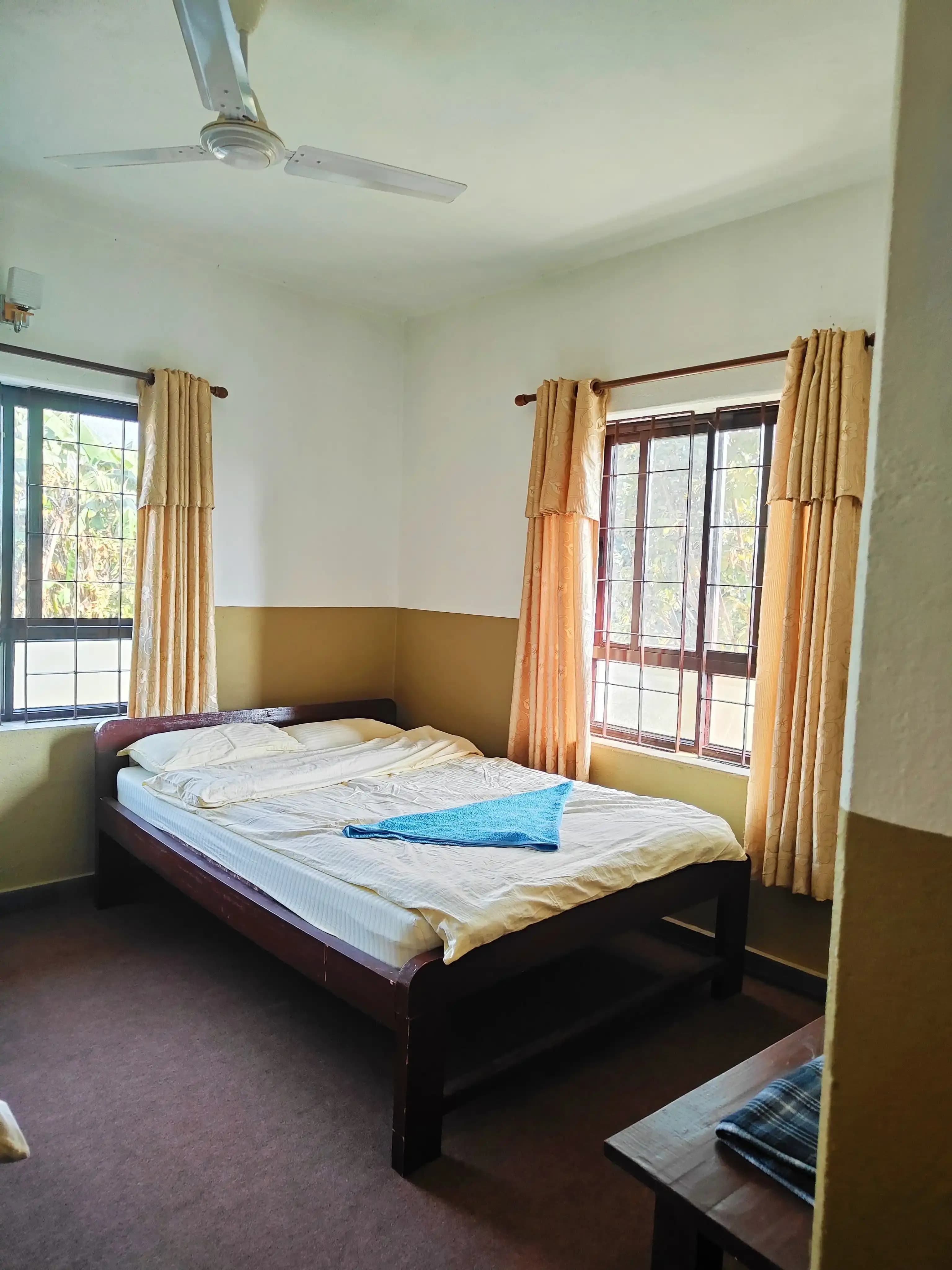
We offer you both private and twin sharing rooms by allowing you to choose what best suits for your comfort and budget.
Guided by the principle that cleanliness is next to godliness, our rooms are kept clean, simple, and comfortable with all basic amenities provided.
- Hot Water: 24/7 hot water is available in the bathrooms.
- Beds: Bedsheets and towels are changed regularly.
- Toiletreies: Basic toiletries are provided by the Ashram.
- Room: Rooms are cleaned routinely to maintain a peaceful and hygienic living space.
Know before you arriveVisa Best season What to bring Health Read the ashram guidelines
The practical side of it.
A few honest notes before you book. Most students fly into Kathmandu and either fly or bus to Pokhara, and we collect you from the airport or the bus park, free.
Visa on arrival at Kathmandu (Tribhuvan) for 80+ nationalities. USD 30 (15 days) / 50 (30 days) / 125 (90 days). Bring 2 passport photos and USD cash.
September to November and February to May are the clearest. Monsoon (June to August) is quieter and often better priced. We run year-round.
Modest yoga clothes, warm layer (mornings are cool), refillable water bottle, journal. Mat, blanket and bolster are provided.
No mandatory vaccines. If on prescription medication, bring a supply. Pokhara has good clinics; we are 20 minutes from the city hospital.
Similar retreats
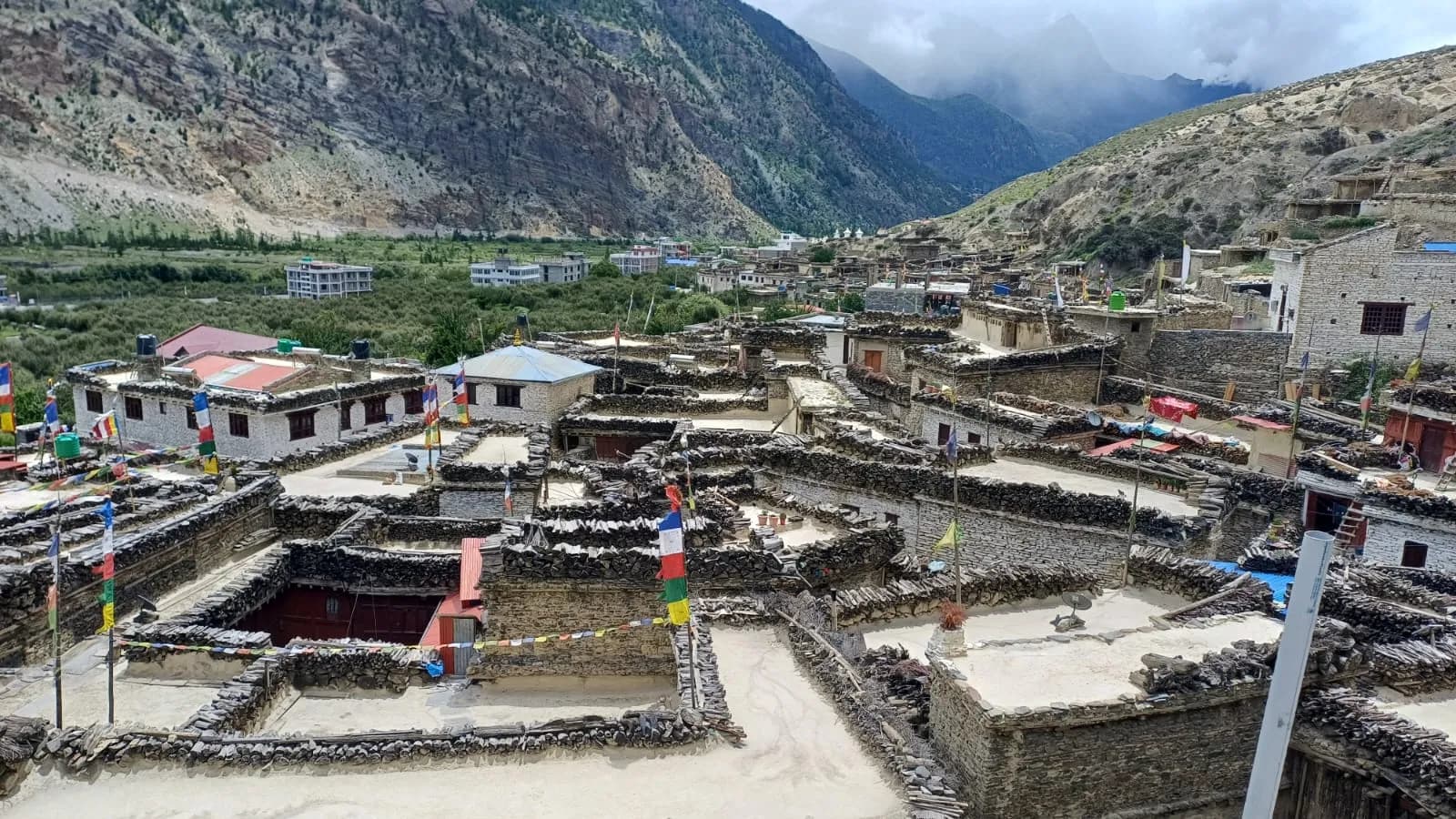
7-Day Spiritual Retreat in Nepal - Muktinath Yoga Tour
7 days€1299
View retreat →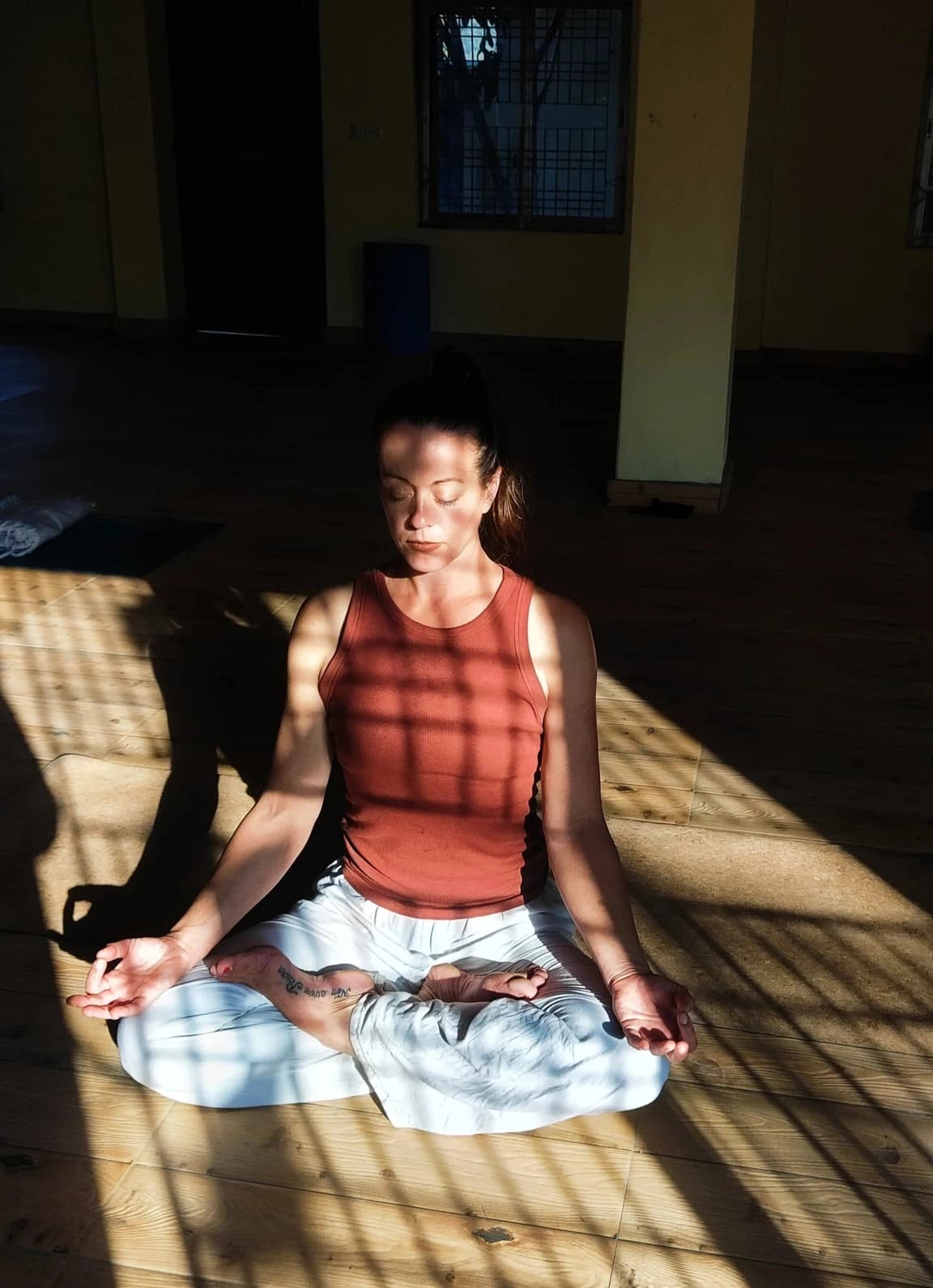
Chakra Workshop & Healing Retreat
8 days€505
View retreat →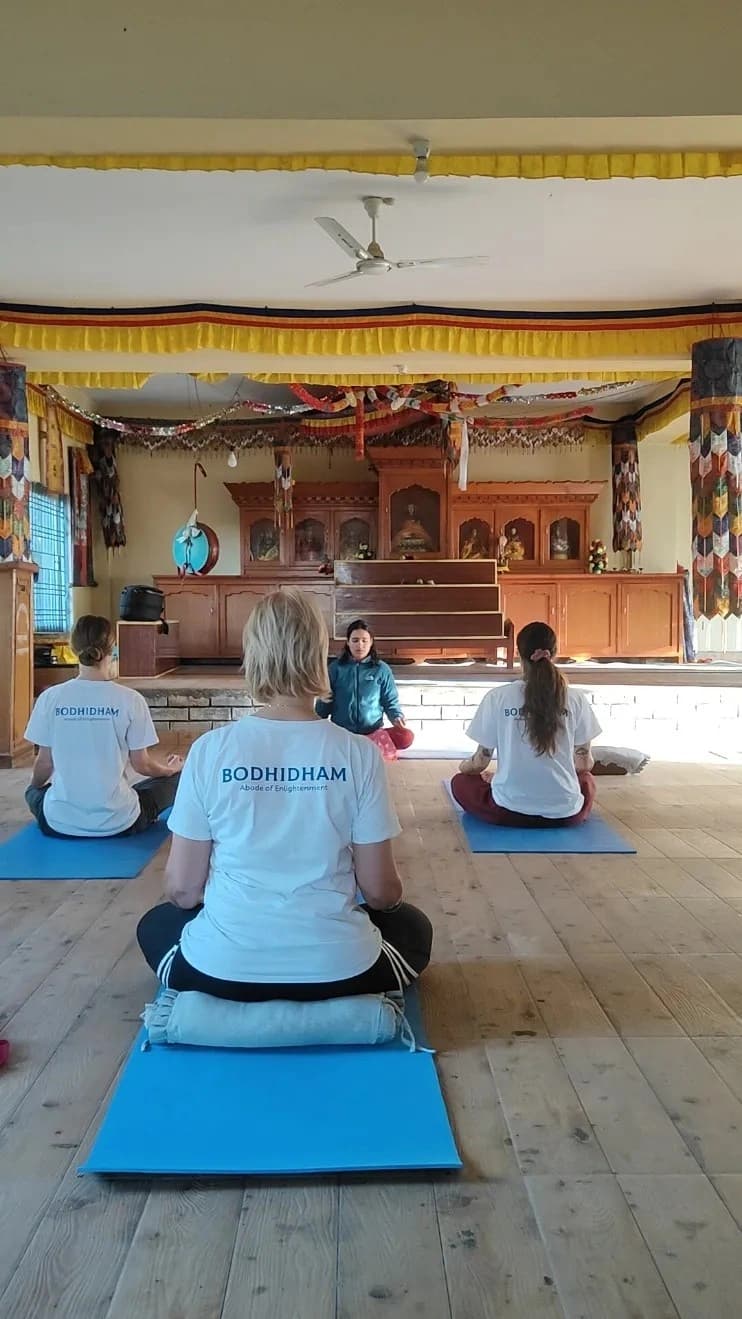
Ayurveda Healing Retreat
6N/7D €485
View retreat →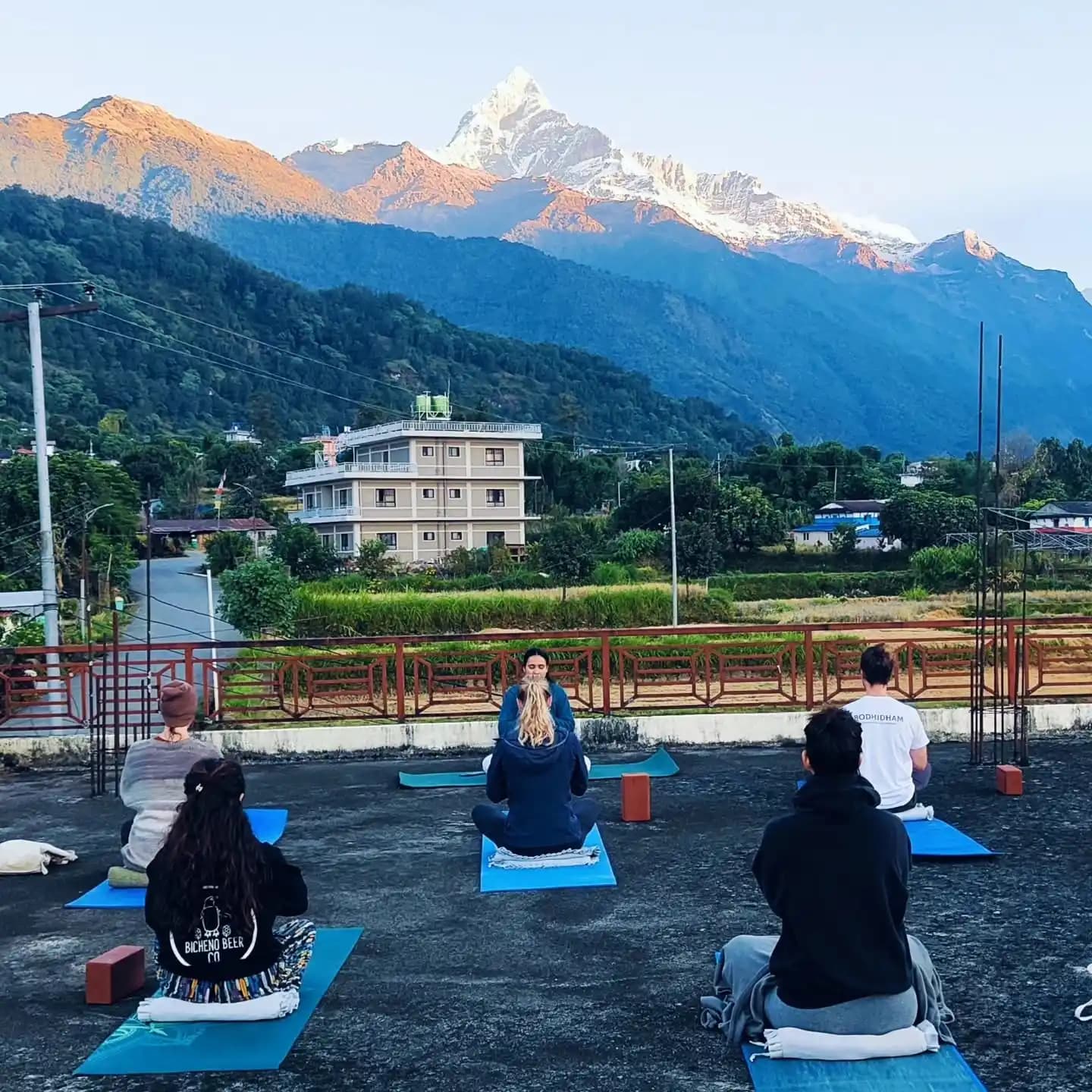
Long Term Retreat at Bodhidham
1 to 3 months€1550
View retreat →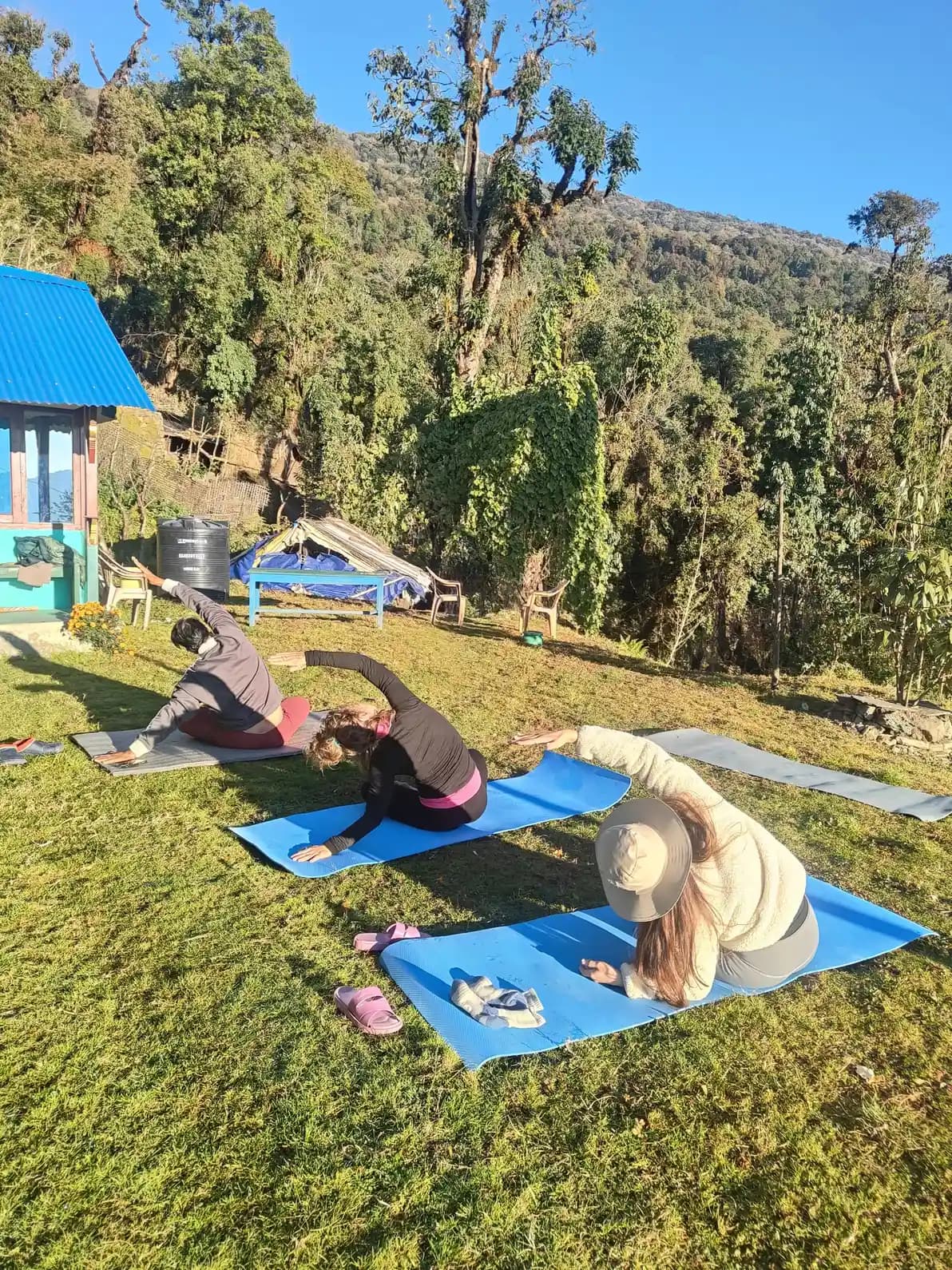
Home Stay Yoga Retreat
2N/3D€245
View retreat →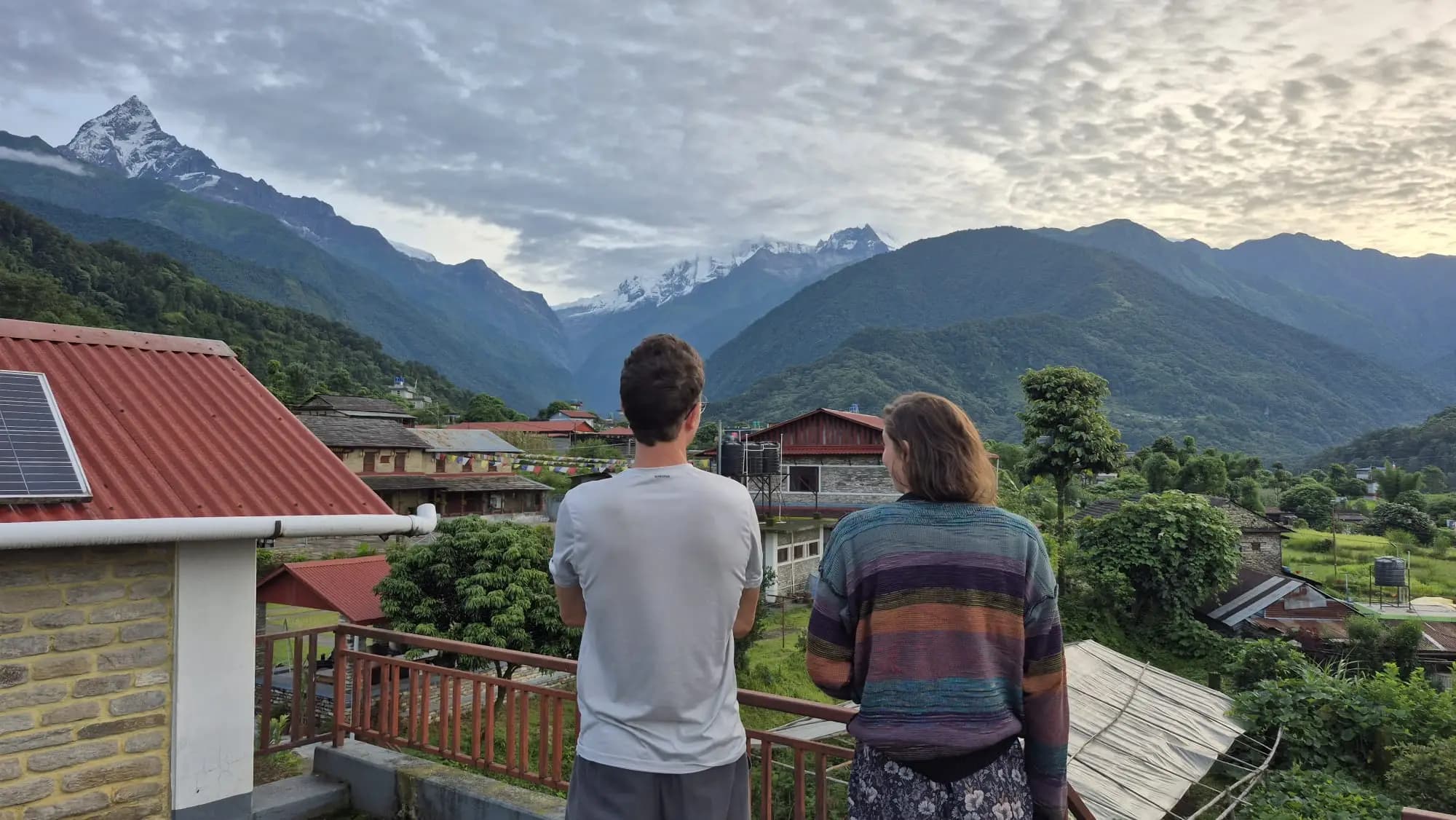
Mountain View Yoga & Meditation Retreat in Nepal
6N/7D€430
View retreat →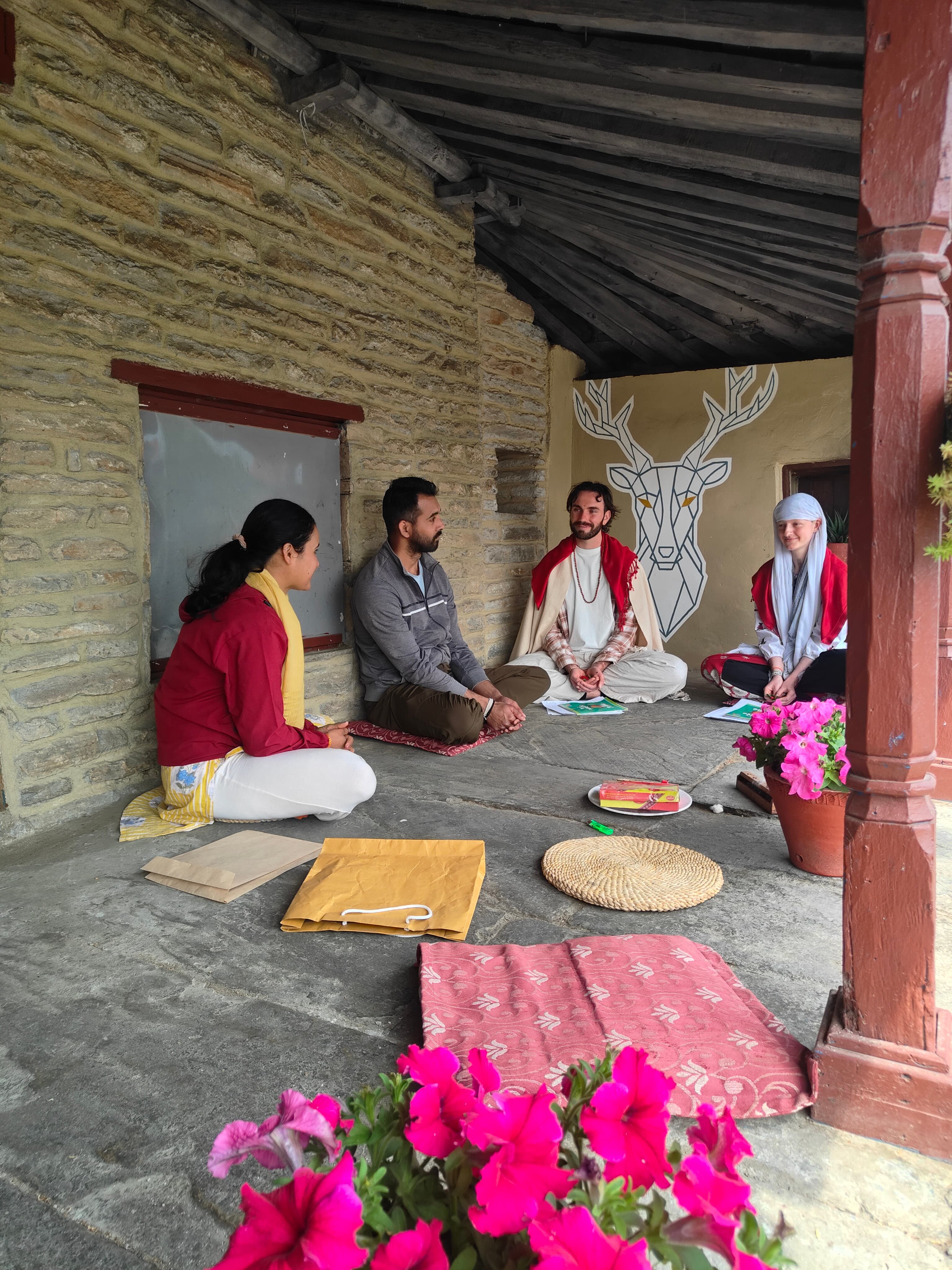
Detox Yoga Retreat in Nepal
6 nights / 7 days€430
View retreat →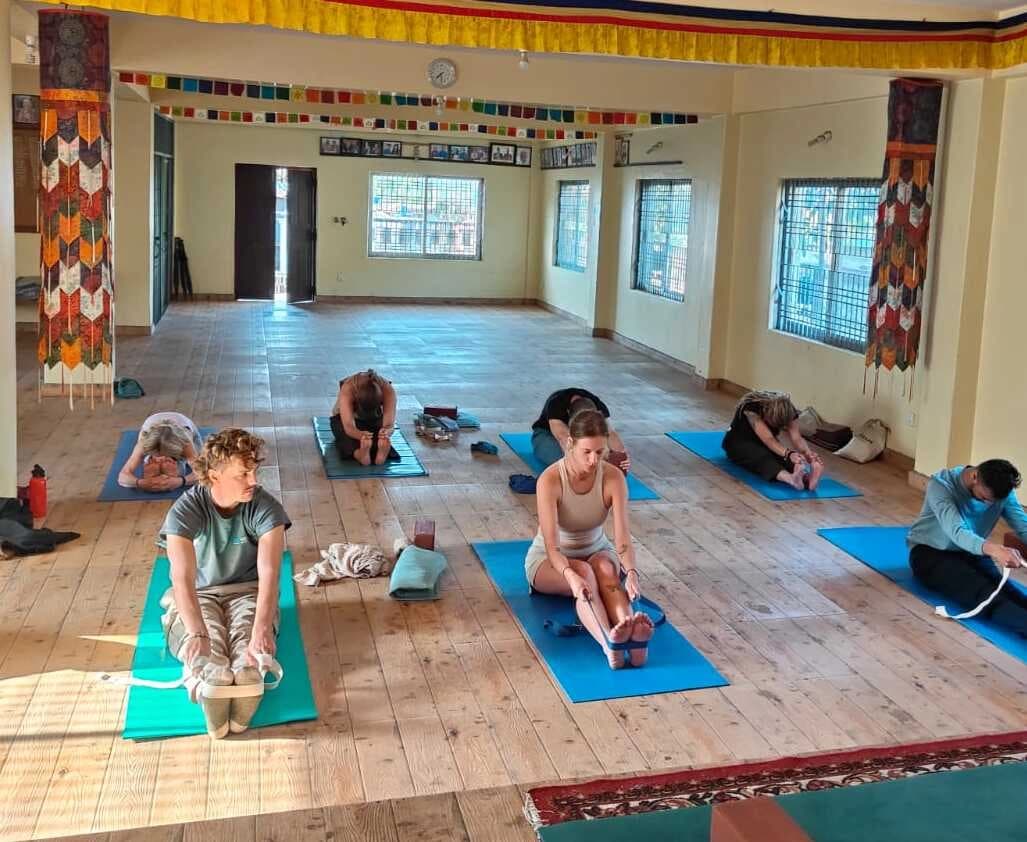 you can increase the no of stay
Intense Yogasana & Meditation Retreat
7 days€380
View retreat →